

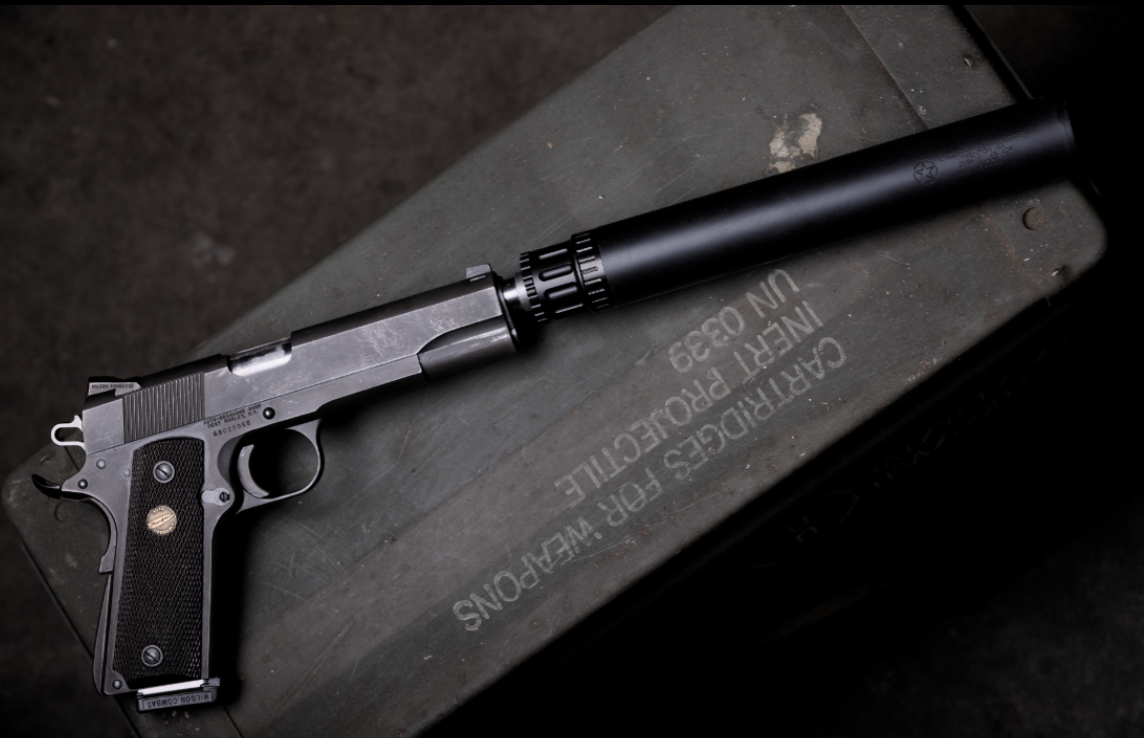
Firearm suppressors reduce a shot’s recoil to safe levels, so shooters don’t risk their hearing ability even if they practice for hours. This device has been around for over a century and gained immense popularity from action films where someone would fire without making a sound and stay mysterious.
Today, recreational shooters and hunters are the top two categories owning and using firearm suppressors. The goal is to avoid noise pollution and protect their hearing. However, purchasing a suppressor has been quite a process. To buy it, one must meet the requirements set by the Bureau of Alcohol, Tobacco, Firearms and Explosives (ATF), including the payment of a $200 tax stamp. However, as these requirements continue to change, staying updated about the system is in your best interest.
This article explains the updated regulations regarding firearm suppressors – keep reading to know if you can buy a suppressor without paying $200!
Can You Buy a Suppressor Without a Tax Stamp?
The short answer: Not in 2025.
The long (and better) answer: You can buy a suppressor without the $200 tax stamp starting January 1st, 2026. That’s because Congress passed a bill in 2025 that eliminates this federal tax, as reported by The Firearm Industry Trade Association (NSSF).
Donald Trump’s “One, Big, Beautiful Bill (OBBB)” is now law, and one of its biggest changes is cutting the National Firearms Act (NFA) tax stamp fee for suppressors, short-barreled rifles, and short-barreled shotguns. Their tax stamp has effectively gone from $200 to $0, and the change takes effect on January 1, 2026.
The update marks the end of a tax that has been in place for more than 90 years, and starting in 2026, Americans buying a suppressor will no longer have to pay the $200 fee. However, all other federal rules and background checks will still apply.
Almost 80 years back, $200 was a significant amount, and it kept suppressors a luxury for shooters. But because the amount has been the same to date, more users could experience its benefits over the decades.
The History of $200 Tax Stamp
Firearms suppressors were invented in the early 1900s to control noise pollution; interestingly, the person who invented the first commercially successful car muffler, as per Britannica. A few decades after the invention, customers could purchase suppressors by catalog mail order, and there was no regulation on them.
However, in 1934, these devices were highly regulated after the National Firearms Act of 1934 (NFA). After this act, if someone wanted to purchase a gun suppressor/silencer, they must file paperwork and pay the NFA (National Firearms Act) transfer/manufacture tax, which has always been $200.
The buyer also submits an ID and passes an ATF background check to get an approval (which used to come only after the agency returned the approved “tax stamp”). After getting this stamp, a buyer could legally possess the suppressor.
Since the tax stamp was to regulate these accessories in the countries, there’s also a central database keeping tabs on these things. For example, reports reveal that there are 4.86 million suppressors circulating in the country, owned by law-abiding Americans. Also, there are speculations that after the $200 tax stamp is removed, more firearm enthusiasts will get these gadgets for a better shooting experience.
What the Big, Beautiful, Bill Changes

The important part to understand is that only the tax is changing; the process stays the same. If you want to buy a suppressor after the tax is removed, you’ll still need to submit an ATF Form 4 (for purchases of suppressors) or Form 1 (if you’re making one yourself).
Besides that, you must provide a passport-style photo, fingerprints, and personal identification information. The ATF will run a background check, and you’ll need to wait for their approval before the suppressor is legally yours. Once the process is done, the approved form, complete with its stamp (now issued without the fee), will be your proof of ownership.
In other words, the paperwork doesn’t disappear, and there will also be a waiting period, even if it’s much shorter because of electronic processes. Dealers may also continue charging transfer fees, and you’ll be required to comply with state laws, which in some places ban suppressors altogether.
According to industry estimates, a suppressor on average costs $850 at retail. Adding the previously mandatory $200 stamp took these gadgets’ prices to $1000+. But now, you can save that amount and pay the device’s actual retail price.
What Does a ‘$0 Tax’ Suppressor Change Mean for the Market?
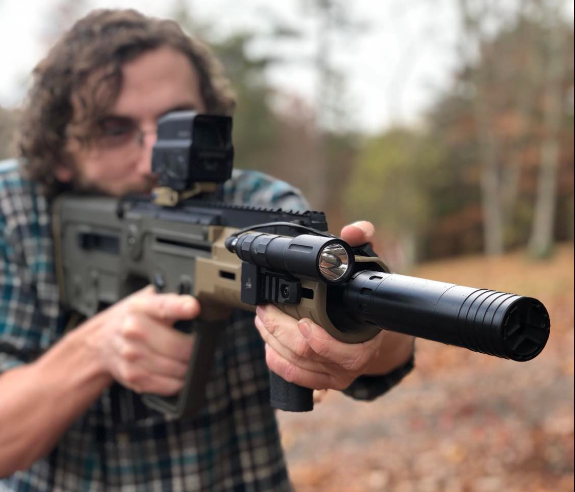
Our extensive experience in the firearm industry says that when the $200 tax goes away, suppressor demand will spike fast. Since manufacturers and dealers cannot instantly double production or stock, some models and parts will sell out.
For buyers, that means short-term shortages. For instance, common items may be backordered for weeks, rare models may take months, and some accessories might even be hard to find.
Also, the higher demand will likely affect how long you wait for legal approval, as the ATF must process more Form 1 and Form 4 filings. Historically, surges in filings make approval times longer, and even with eForms (which make approval times shorter), the agency will have to update things to reflect the law change, which can slow things down at first.
If you want to get hold of a tax-free suppressor without any chaos, here are some quick tips:
-
- If you want a specific model, order early (in November-December) and accept a delivery timeline by the provider.
-
- Ask about eForms because dealers who file electronically see faster processing.
-
- Budget for extras, as some dealers may charge transfer/handling fees.
-
- If your first choice is sold out, pick a similar, in-stock model or join a waitlist.
-
- Keep paperwork clean, as incomplete filings cause delays. Double-check fingerprints and important form fields.
Plan your purchase as a months-long process, not a same-week trip to the shop.
- Keep paperwork clean, as incomplete filings cause delays. Double-check fingerprints and important form fields.
-
- Watch ATF notices and trusted industry groups for timing and implementation details.
Who Needs Firearm Suppressors?
The National Institute for Occupational Safety and Health (NIOSH) says that any sound above 140 decibels (dB) causes us immediate hearing loss. Notably, handguns and rifles mostly create a muzzle report well above 140dB, which is why people in law enforcement agencies prioritize hearing safety with noise-blocking gadgets and firearm suppressors.
Besides the military and police, recreational shooters are the top users of firearm suppressors. Since shooting 10s and 100s of rounds in one go results in impactful recoil, and not protecting ears can cause irreversible damage. That’s the reason shooters invest in high-quality suppressors to protect themselves and also have more control over the shots, as a suppressor can help with that.
Do Hunters Need Suppressors?
Yes, and suppressors are already used in hunting because of two things: hearing and focus. Hunters rarely wear earplugs because listening to the woods (like birds, movement, and other signs) is a core part of tracking game.
But it’s also true that an unsuppressed gunshot is loud enough to cause permanent hearing damage. Therefore, a hunter needs a suppressor to lower the peak report enough that their ears are better protected without blocking sounds. With a good-quality suppressor, a hunter can stay aware of their surroundings and still take a shot without fumbling for ear protection.
However, using suppressors for hunting is not legal everywhere. According to NSSH, suppressors are legal to possess in 42 states, and 40 states allow their use while hunting.
Suppressors also change the shooting experience as they reduce felt recoil and muzzle rise, so the rifle tends to move less at the shot. That lets you get back on target faster for a follow-up shot and keep your crosshairs steadier.
Get Your Next Suppressor Tax-Free From the Pros
The brains behind Liberty Cans love suppressors, silencers, and all things firearms. Now that the $200 stamp requirement is written off, we expect more firearm lovers to acquire these gadgets and feel how different shooting feels with them.
No matter which shotgun or rifle you own, our range of capable cans will suit you just right. Let us know what you’re looking for and get it delivered at your doorstep, legally and after all requirements are met.
Let’s load up and shoot like we love it!
FAQs
Here are some FAQs about how to buy a suppressor without a tax stamp in 2025.
How many decibels does a suppressor reduce?
A suppressor typically reduces peak sound by roughly 20–35 decibels, but it does not make the gun silent. It’s better to use hearing protection for bystanders and long sessions.
Will a suppressor change my gun’s accuracy or point of impact?
Yes. A suppressor can slightly alter barrel harmonics and gas flow, which shifts the point of impact. The change is usually small but unpredictable, so always re-zero and test accuracy after mounting a suppressor.
Do I need special ammo when using a suppressor?
You don’t need special ammo, as regular rounds work. Notably, supersonic rounds still make a sonic crack while subsonic ammo is relatively quieter.