

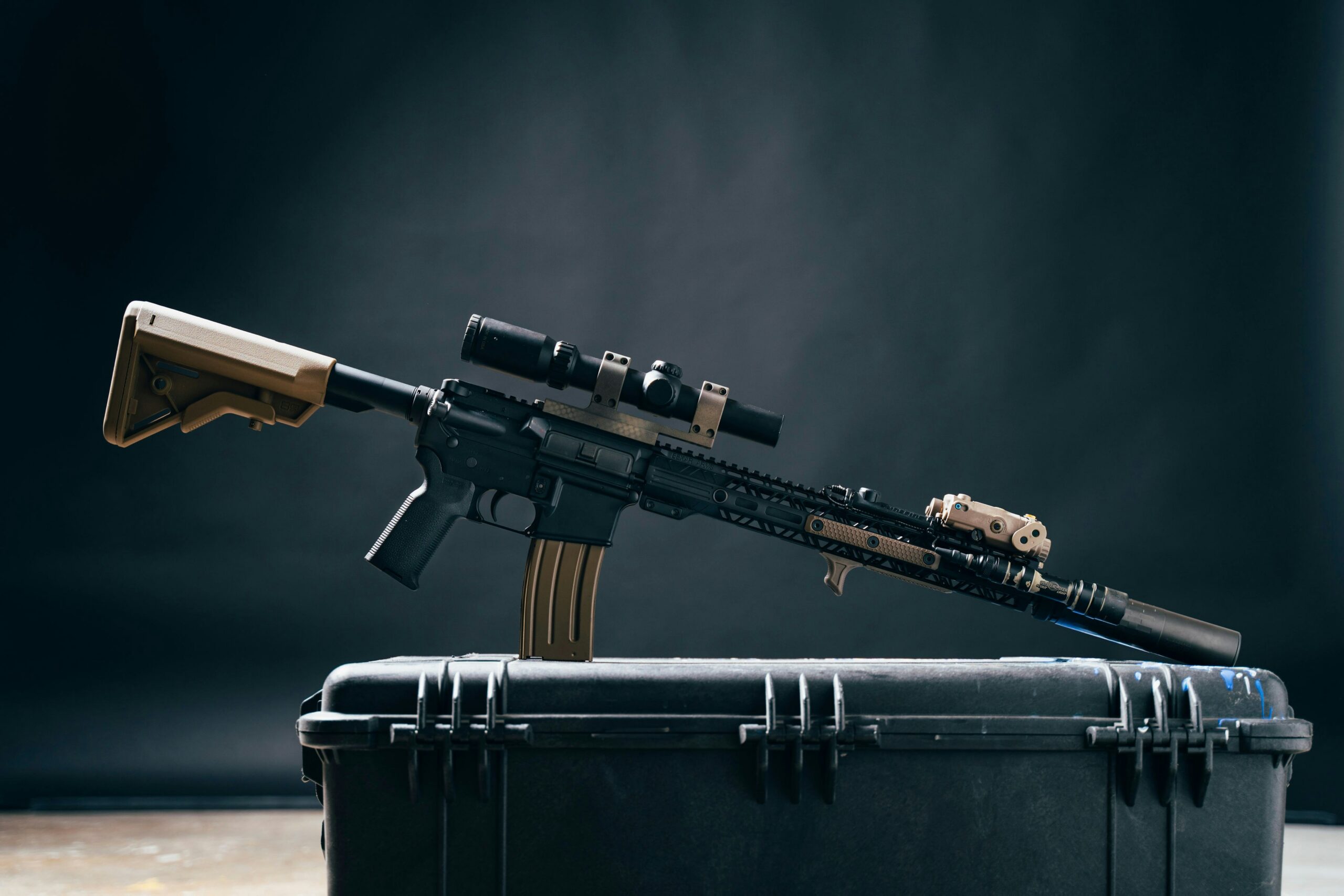
A 22 cal suppressor is one of the most versatile pieces of gear you can add to your rimfire setup. Whether you’re a first-time buyer or a seasoned shooter with a full collection of .22s, the right can opens up a new level of shooting comfort across multiple platforms.
If you’ve ever wondered whether one suppressor can handle all your rimfire hosts, you’re in the right place. Let’s break it down.
Why the 22 Cal Suppressor Dominates Rimfire Suppression
Sound Reduction Advantages Over Other Calibers
The .22 LR cartridge is, simply put, the easiest round to suppress. It operates at significantly lower pressure than centerfire calibers. That means less energy for a suppressor to manage, and dramatically reduced noise as a result.
Quality suppressors running subsonic .22 LR can bring sound levels into the 110 to 120 dB range. OSHA’s impulse noise limit is 140 dB. Suppressed .22 LR with subsonic ammo regularly falls well below that mark, which is difficult to achieve with most centerfire calibers even with a suppressor.
Subsonic Ammunition and True Hearing-Safe Performance
Subsonic .22 LR travels below the speed of sound. That eliminates the supersonic crack a faster round produces. Paired with a well-designed 22 cal suppressor, sound levels can drop below OSHA’s 140 dB impulse noise threshold.
That’s why suppressed rimfire is widely described as hearing safe for outdoor use. That said, hearing damage is cumulative. Many audiologists still recommend protection for extended shooting sessions.
Subsonic and standard velocity loads are widely available and affordable. That combination of low cost and significantly reduced noise is a big reason suppressed rimfire shooting has grown so popular.
Rimfire Dirty Ammo Problem and What It Means for Your Can
Here’s something that catches new owners off guard: rimfire ammo is notoriously dirty. Lead and carbon buildup after a few hundred rounds of .22 LR is significant compared to centerfire calibers.
This isn’t a dealbreaker, but it does mean your suppressor needs to be user-serviceable. A can you can disassemble, clean, and reassemble easily is a practical necessity, not just a nice-to-have. Plan to clean every 500 to 1,000 rounds to keep performance consistent.
Rimfire Platforms That Pair Well With a 22 Cal Suppressor
Semi-Auto Pistols (.22 LR Handguns and Threaded Barrels)
A suppressed .22 pistol is compact, lightweight, and nearly silent with the right ammo. It’s hard to beat for target practice or small game. Most modern .22 LR pistols come with threaded barrels from the factory or accept aftermarket threaded barrels.
The main thing to watch is suppressor length and weight. A heavy, long can on a small-frame pistol affects balance. It can also interfere with cycling on some semi-auto designs. Shorter, lighter suppressors are generally the better choice for pistol use.
Bolt-Action and Semi-Auto Rimfire Rifles
Rifles are where a 22 cal suppressor really shines. Longer barrels allow more powder to combust before gas exits the muzzle. That reduces muzzle blast and gives the suppressor less energy to manage.
Bolt-action platforms are particularly quiet since there’s no cycling action adding mechanical noise. Semi-auto rifles like the Ruger 10/22 are also excellent hosts. With the action cycling, you may hear more mechanical noise than the shot itself.
Multi-Caliber Crossover Hosts (.17 HMR, .22 WMR, 5.7x28mm)
Many quality 22 cal suppressors are rated beyond just .22 LR. Common compatible calibers include:
- .17 HMR
- .22 WMR
- .17 WSM
- 5.7x28mm
One suppressor, one tax stamp, and you’re covered across a wide range of rimfire and small-caliber hosts. Always verify the manufacturer’s caliber ratings before use. Exceeding the rated pressure range can damage the can or cause dangerous baffle strikes.
Key Performance Features to Evaluate in a 22 Cal Suppressor
Baffle Design and First-Round Pop
First-round pop (FRP) is that noticeably louder first shot caused by oxygen inside the suppressor igniting on firing. It’s common with rimfire cans. Good baffle design and geometry can minimize this effect significantly.
Some suppressors handle FRP better than others, depending on how internal chambers redirect and cool expanding gases. If consistent sound levels matter to you, check independent decibel test data before buying.
Materials – Aluminum vs. Titanium vs. Stainless Steel
Each material brings trade-offs worth understanding:
- Aluminum – lightweight and affordable, popular in entry-level cans, less ideal for hotter calibers or sustained rapid fire
- Titanium – best balance of weight and strength, more expensive, holds up better to heat over a long service life
- Stainless steel – often used for blast baffles where pressure hits hardest, even in aluminum or titanium builds
User-Serviceability and Cleaning Intervals
Rimfire ammo is dirty. A suppressor that can’t be taken apart is a ticking clock on performance. User-serviceable designs let you remove, clean, and inspect baffles without shop equipment.
Most quality 22 cal suppressors disassemble by hand or with a wrench. Ultrasonic cleaners work well for deep cleaning. Suppressor-safe solvents and brushes get the job done too. A well-maintained can will last for decades.
Full-Auto Ratings and Sustained Fire Capability
Not all rimfire suppressors are rated for full-auto fire. If you’re running a high round count in a short session, heat buildup matters. Full-auto ratings typically indicate higher heat tolerance and more robust construction overall.
Even without a full-auto host, a full-auto rated suppressor signals better materials and build quality across the board.
Mounting and Compatibility Across Your Rimfire Lineup
Standard 1/2×28 Thread Pitch for Most 22 Cal Suppressor Hosts
The vast majority of threaded .22 LR barrels in the US use a 1/2×28 thread pitch. This is the same standard used on .223/5.56 rifle muzzles, making mounting straightforward for most modern rimfire hosts.
Older or imported firearms may use different thread pitches. Always confirm your barrel’s threading before ordering. A quick check of the manufacturer spec sheet saves a lot of frustration.
Adapter Systems for Cross-Platform Use
Adapter systems let you run a single suppressor across multiple hosts with different thread pitches or muzzle devices. Some suppressors ship with quick-detach mounts or include adapters for common pistol and rifle configurations.
If you’re building a multi-host setup, look for a can with a solid adapter ecosystem. Swapping between a pistol and a rifle in seconds is a real practical advantage.
Weight and Length Considerations by Host Type
A suppressor ideal on a rifle may feel awkward on a compact pistol. Weight and length affect balance, handling, and cycling reliability on blowback-operated pistols.
General guidelines by host type:
- Pistols – 4 to 6 inches, 3 to 5 ounces works well
- Rifles – longer cans offer better suppression; the bulk tradeoff is less noticeable
- Both – a mid-size can often serves both platforms adequately
NFA Ownership in 2026 – What’s Changed and What Hasn’t
The biggest shift in suppressor ownership in decades took effect January 1, 2026. The federal $200 NFA tax stamp dropped to $0 under the “One Big Beautiful Bill Act” (H.R. 1), signed into law July 4, 2025.
What stayed the same:
- ATF Form 4 submission still required
- Fingerprints and photo still required
- Background check still required
- ATF approval before possession still required
The financial barrier is gone. The process remains. ATF eForm 4 approvals have also dropped dramatically. Many individual submissions are seeing approvals in as few as 3 to 15 days.
Suppressors are legal for civilians in 42 states. Eight states, California, Delaware, Hawaii, Illinois, Massachusetts, New Jersey, New York, and Rhode Island, plus the District of Columbia, prohibit civilian ownership. Always confirm your state’s laws before purchasing.
What Makes a Quality-Built 22 Cal Suppressor Worth Owning
American-Made Construction and Machining Standards
Domestically manufactured suppressors are built to strict NFA compliance standards. American-made cans also benefit from stronger warranty support, accessible customer service, and parts availability.
When investing in a suppressor for the long term, provenance matters. A can machined from quality materials by experienced craftsmen is a better long-term value.
Lifetime Warranties and Long-Term Durability
The best suppressor manufacturers back their products with lifetime warranties. A rimfire can maintained properly should outlast multiple host firearms. That makes the purchase less about cost and more about getting the right one the first time.
Look for manufacturers who stand behind their work with real support, not just language buried in fine print.
Liberty Suppressors’ Approach to Rimfire Design
Liberty Suppressors builds American-made suppressors in Trenton, Georgia, and their commitment to craftsmanship shows in every can they produce. Every Liberty suppressor goes through a complete build, test fire, disassembly, paint, and final inspection before it ships.
There are no stamped or spun components tossed together in a Liberty can. The attention to baffle design and fitment shows in the performance and longevity of their products. For shooters who want a suppressor built the right way, Liberty is worth a serious look.
Conclusion
The 22 cal suppressor is the gateway to a quieter, more enjoyable rimfire experience across pistols, rifles, and multi-caliber platforms. With the $200 federal NFA tax eliminated in 2026 and ATF approval times now measured in days, there has never been a better time to get into suppressed rimfire shooting.
Whether you’re protecting your hearing on the range or staying quiet on a small game hunt, a quality can makes a real difference. Liberty Suppressors offers American-made options built to last, backed by a team that takes craftsmanship seriously. Browse their lineup at libertycans.net and find the right 22 cal suppressor for your setup.
Frequently Asked Questions (FAQs)
1. Can one 22 cal suppressor work on both a pistol and a rifle?
Yes. Most use a standard 1/2×28 thread pitch, which fits the majority of threaded .22 LR pistols and rifles. Adapter systems make cross-platform use even easier.
2. Do I still need a tax stamp to buy a suppressor in 2026?
The $200 federal tax dropped to $0 on January 1, 2026. You still need ATF approval, Form 4, fingerprints, a photo, and a background check. The cost barrier is gone. The process is not.
3. How often should I clean a rimfire suppressor?
Every 500 to 1,000 rounds is the standard guideline. Rimfire ammo is dirty, so a user-serviceable suppressor is essential for long-term performance.
4. Will a 22 cal suppressor work on .17 HMR or .22 WMR?
Many do. Common ratings include .17 HMR, .22 WMR, and 5.7x28mm. Always verify the manufacturer’s specs before use to avoid exceeding the rated pressure range.
5. Is suppressor ownership legal in my state?
Legal in 42 states. Prohibited in California, Delaware, Hawaii, Illinois, Massachusetts, New Jersey, New York, Rhode Island, and the District of Columbia. Federal approval does not override state law.