

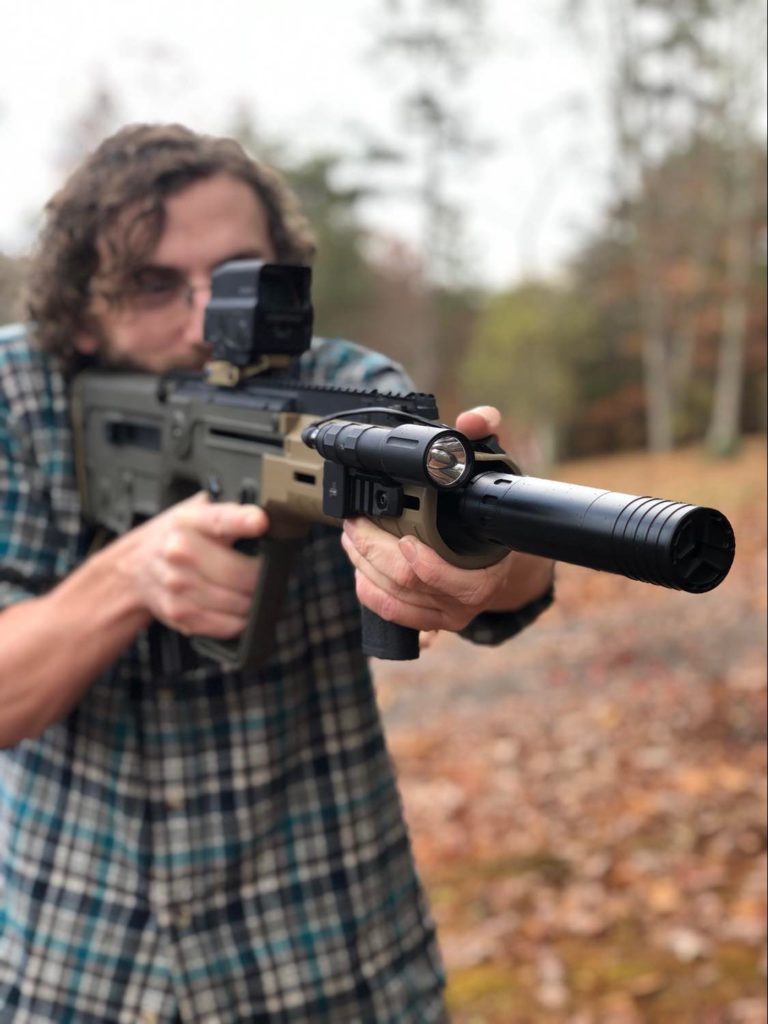
Short-barreled rifles, or SBRs, are one of the most popular firearms today because of the maneuverability they offer while still delivering real rifle power. People like buying and making these rifles because they offer faster target transitions, easier movement, and superior one-handed handling.
However, getting a short-barreled registered for legal use is quite a detailed process, and the reason it was implemented was legitimate. So, if you want to own or make this truck gun (it’s often nicknamed that because, despite being a rifle, it’s short enough to toss behind the seat), we hear you.
This article makes the SBR registration process simpler and lists the mandatory steps needed to acquire this NFA toy. Keep reading and enjoy the thrill of owning this powerful rifle!
What are SBRs?

The Bureau of Alcohol, Tobacco, Firearms, and Explosives (ATF) defines short-barreled rifles as those with barrels shorter than 16 inches and buttstocks. Put simply, it’s the same type of firearm you’d recognize as a rifle, but cut down to a more compact size.
These rifles’ barrels are shorter for easier handling in tight spaces while still delivering rifle-caliber performance. No wonder shooters find them appealing and are ready to go through the lengthy registration process.
One thing to know here is that some rifles roll off the factory line already built as SBRs. These are originally made with shorter barrels and stocks, so the compact size is intentional.
However, some start life as standard rifles and are later converted into SBRs by swapping in a shorter barrel or upper receiver. Some AR pistols also get reconfigured into SBRs by adding a shorter barrel or a stock.
But whether these are factory-made or modified, the core idea is the same: a full-power rifle in a shorter, handier package.
How to Register a Short-Barreled Rifle With the ATF?
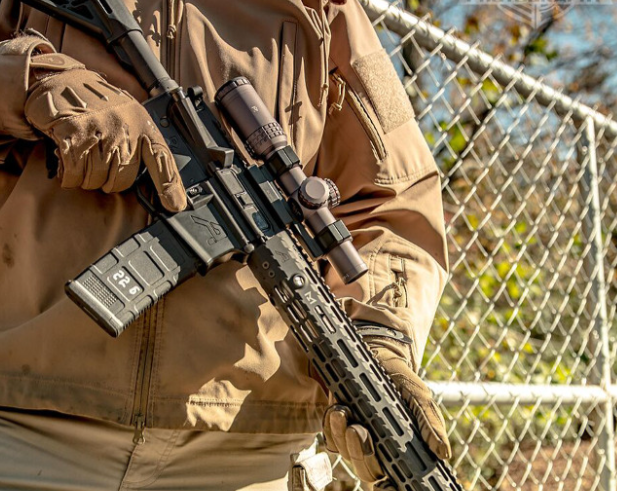
Short-barreled rifles are worth the effort because they:
-
- Give rifle power with a compact footprint
-
- Offer faster swings
-
- Are suppressor-friendly
-
- Can be managed with one hand
If you want the flex of owning these stubby machines, know that they are regulated under the National Firearms Act (NFA) enacted in 1934 by the ATF, and there is a detailed process to get them.
The NFA was the first major US law to crack down on certain guns. Instead of banning them, the government made them a hassle to own by piling on paperwork and registration rules. The idea was to make ownership so costly and inconvenient that fewer people would bother.
If you have already decided to register an SBR, here are the steps to follow to meet the legal requirements:
-
- Check Legality
The first thing to check is whether you can legally own an SBR in your state. Because while the federal law says SBRs are legal with proper registration, some states (like California and New York) ban them outright, and others have certain restrictions.
Look up your state’s firearm laws or call a local gun shop that sells NFA items to confirm if SBRs are legal in your area, and only then move forward.
-
- Decide: Make it or Buy/Transfer
Next, you need to know that there are two ways civilians get SBRs. The first is making your own SBR. For example, if you already have an AR-15 rifle or lower receiver, you can build it into an SBR by adding a short barrel and stock with proper tools. If that’s your plan, you use Form 1 (which is ATF’s application to make and register a firearm).
The second is buying a factory-made SBR from a gun shop or private seller like Liberty Suppressors . For that, you use Form 4, i.e., the application for tax paid transfer.
Form 1 usually has faster approval times, especially when submitted electronically. You get the approval and modify an existing gun into an SBR (if all supplies are available). On the other hand, the Form 4 often takes longer since the transfer must clear before you can take the gun home. Pick an option that fits your plan before you start paperwork.
-
- Choose Ownership Structure
Next, you decide if you’re registering the SBR as an individual or under an NFA trust. Individual registration means you alone can legally possess and use the rifle, so it’s simpler and quicker.
But if you go with an NFA trust, it’s a legal document that allows multiple people (like family members or friends) to also legally handle the SBR. If you don’t want the SBR locked to just you, a trust is useful, but it’ll cost money to set up and requires fingerprints and photos from every trustee. That’s why individual registration is the easiest path for most first-time buyers.
-
- Select the Rifle Or Pick an NFA Dealer
If you’re building an SBR, you’ll need the lower receiver’s serial number and manufacturer details, besides the specs for the short barrel you plan to use. All of it will go directly on the application. But if you’re buying, pick an SBR you want from an NFA dealer.
Dealers who sell suppressors and machine guns also handle SBRs, so they’ll walk you through their side of the paperwork. Then, they’ll hold your selected rifle until your approval comes back.
-
- Complete the Correct ATF Application Form
ATF’s paperwork requirements are the most crucial aspect of this registration because this framework is put in place to regulate firearms. So once you select the SBR you want/will build, fill the form. On Form 1, enter the firearm details like its make, model, serial number, caliber, the new barrel and your rifle’s length.
If you’re purchasing, the dealer will likely fill in the gun’s details in Form 4, and you will complete the buyer information. Either way, you can fill these forms through the ATF’s eForms portal (much faster) or on paper (slow). And if you’re using an NFA trust, you’ll also include “Responsible Person” forms for every trustee.
-
- Gather Required Documents
Every NFA application requires proof of identity. The documents required at this step include a passport-style photo (taken within the last year) and FBI fingerprint cards. You can get prints done at a local police station or the sheriff’s office, or a private fingerprinting service. If you’re registering with a trust, all responsible people listed must provide their fingerprints and photos.
-
- Don’t Need to Include the $200 NFA Tax Stamp Anymore
Here comes a good news about the $200 tax stamp that has always been applicable to all NFA items. This fee has been the same since 1934, but now, after Congress passed the ‘One, Big, Beautiful Bill, SBRs are free of this burden. Now, you can purchase short-barreled rifles (and suppressors) without a $200 tax, which has been mandatory for almost a century. But starting January 1st, 2026, buyers wouldn’t have to pay it. If you want to save that 200, wait until January to get your new rifle.
-
- Submit the Application Package
Once all the above steps are clear, send it all in. In online filing (which we recommend because of its shorter approval times), upload your documents through the ATF’s eForms site and pay digitally. If you’re going through a dealer for a Form 4, they’ll likely help assemble and submit everything for you.
Once submitted, your application officially enters the ATF’s system. Also, part of the SBR registration process includes notifying your local Chief Law Enforcement Officer (CLEO) as a courtesy notification—you mail a copy of the application to the CLEO (sheriff or police chief) and keep proof that you sent it.
-
- Wait for the ATF Background Check and Approval
Then comes the approval wait, which can vary a lot. For example, e-filed Form 1 applications can sometimes be approved in a few weeks, but Form 4 transfers take several months. The ATF doesn’t have a guaranteed timeline, so patience is part of the game. And once your SBR is approved, you can buy or build it, depending on the form you sent to ATF.
Conclusion
Short-barreled rifles are attitude in steel. They hit with rifle power but move like a pistol, so you get that sweet spot between control and chaos. Sure, the paperwork is a grind, but the payoff is a compact rig that handles like a dream.
And once your pocket rocket is here, buy the best suppressor to make it quieter while experiencing its powerful impact. Liberty Suppressors hold the best kind of suppressors and silencers to make your firearm experience more controlled and less chaotic.
Let us know what you need and have it delivered at your doorstep—quality always guaranteed!
FAQs
Why is there a tax and registration for short-barreled rifles?
The NFA’s tax and registration were meant to deter easy ownership and give authorities a paper trail. It creates an official record for accountability and traceability.
Why do people make or buy SBRs?
They do it because they want rifle power in a compact package. SBRs provide faster handling, easier carry, and a better suppressed setup. Builders also like the custom look and the practical benefit.
Is an SBR deadlier than a long rifle?
No. An SBR is not inherently more lethal because its short barrels reduce bullet velocity and range. Notably, their perceived danger comes from their concealability.