

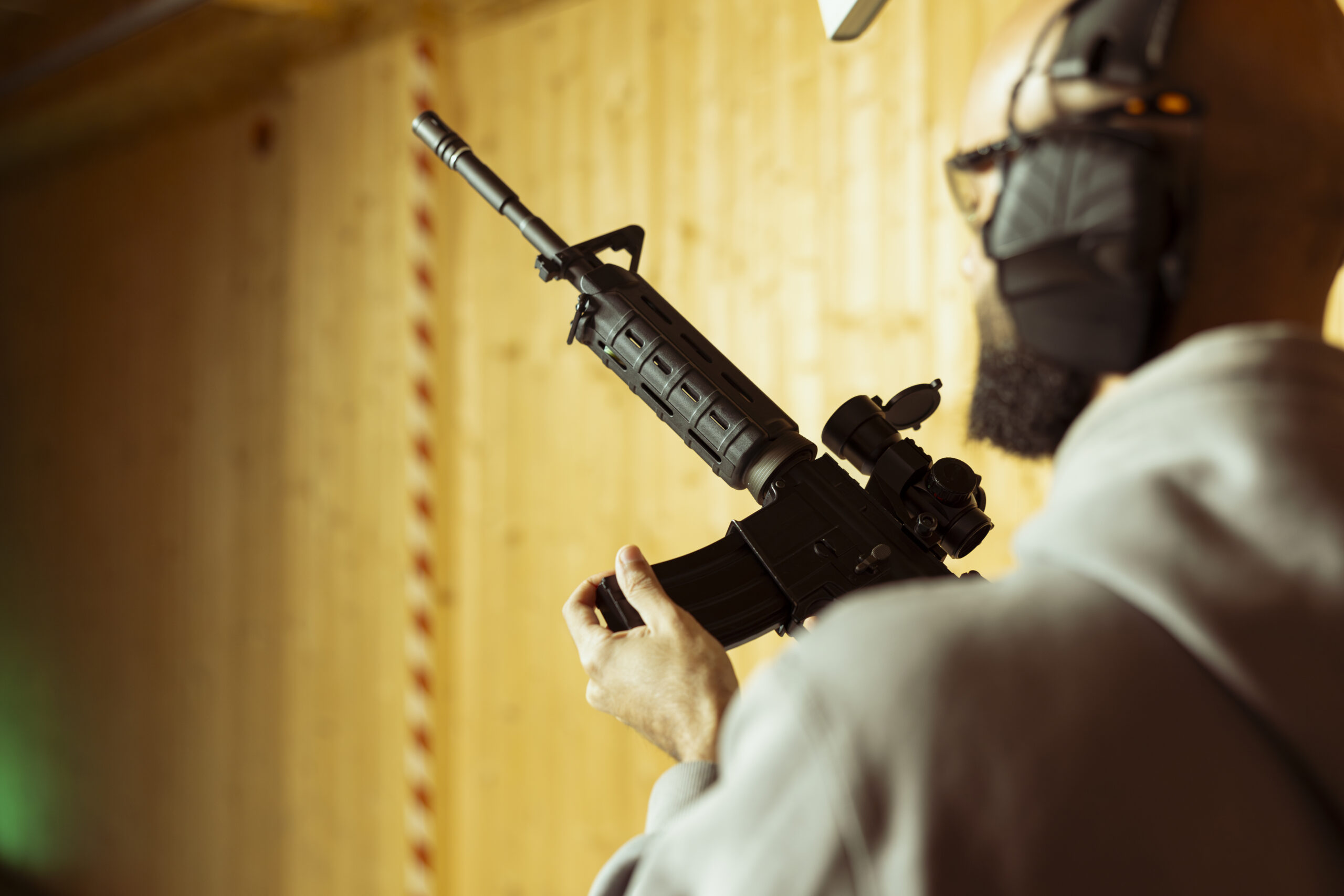
The best 9mm PCC suppressor can completely transform how a pistol-caliber carbine performs. It turns a loud, hard-cycling range gun into a smooth, hearing-safe platform. But with so many options out there, it is easy to feel overwhelmed fast.
What barrel length do you need? Does your action type matter? What mounting system should you use? These are the questions most PCC owners ask before buying, and they are the right ones to ask.
This guide breaks it all down. It covers what specs to look for and how to match a suppressor to your platform. It also highlights which Liberty Suppressors cans are built for 9mm PCC use.
Why PCCs Are Ideal Suppressor Hosts
PCCs happen to be one of the best possible suppressor hosts, and the reasons are straightforward.
Fixed-barrel PCCs do not require a recoil booster assembly. On a tilting-barrel pistol, suppressor weight interferes with cycling and a booster is needed. Fixed barrels have no such issue, which simplifies the setup and removes one more failure point.
The longer barrel also does real work for suppression. More barrel length means more dwell time and more gas expansion inside the bore. Less pressure vents at the muzzle, and that translates to lower sound levels at the shooter’s ear.
Action type matters too. Blowback systems are simple and reliable but tend to vent more gas rearward. Roller-delayed and radial-delayed PCCs run cleaner and are generally more comfortable suppressed.
As for caliber, 9mm is the obvious choice. It is widely available, affordable, and suppresses well at carbine velocities. It is one of the easiest calibers to make genuinely hearing safe on a carbine-length barrel.
Key Specs That Matter on a 9mm PCC Suppressor
Not all cans are created equal. The specs on a product page can be misleading if you do not know what to look for. Here is what actually matters:
- Sound reduction. The hearing-safe threshold is 140 dB or below at the shooter’s ear. On a 9mm PCC with subsonic ammo, a quality can should bring you under that mark. The Liberty Centurion measures approximately 135 dB sustained with 9mm.
- Length and weight. Five to seven inches long and under ten ounces is ideal for a PCC. You want the can to add performance without hurting handling.
- Materials. Titanium tubes keep weight low. Stainless steel baffles handle the heat and fouling 9mm generates. Liberty uses titanium tubes paired with stainless steel cores on models like the Centurion and Cosmic.
- User-serviceability. 9mm is a dirty caliber. Carbon buildup in a sealed can is a real concern. Take-apart suppressors let you clean the baffles and keep performance consistent. All of Liberty’s pistol-caliber cans are user-serviceable by design.
- Full-auto rating. If your PCC cycles hard or you run long strings, make sure the can is rated for it. A full-auto-rated suppressor handles sustained heat and pressure beyond what most semi-auto platforms produce.
Mounting Systems for PCCs
Getting the right mount matters as much as choosing the suppressor. The wrong system creates alignment issues and cycling problems.
Direct thread is the simplest option. If your barrel has standard 1/2×28 threading, a direct-thread fixed barrel adapter gets you running without extra hardware. Compact and no moving parts.
3-lug mounts are the go-to for MP5-style and HK-platform PCCs. Liberty makes a stainless steel 3-lug mount with a black nitride coating. It is designed specifically for the HK MP5 family. It adds just over an inch and is one of the shorter 3-lug options available. Note: the 3-lug mount is rated for pistol-caliber carbine use and subsonic rifle rounds only. It is not rated for supersonic rifle ammunition.
Quick-detach (QD) systems let you swap the suppressor between hosts without tools. If you run multiple guns, QD is worth the investment. Liberty’s mounts are cross-compatible across the Mystic X, Cosmic, and Centurion.
Fixed barrel adapters (FBAs) are required for some fixed-barrel setups. This is particularly true when running a 9mm can on a rifle-caliber host. Always check the caliber rating chart before running crossover calibers.
One rule that applies across all mount types: always verify alignment before the first shot. A misaligned can causes baffle strikes, and baffle strikes ruin suppressors.
Subsonic Ammunition and the Best 9mm PCC Suppressor Performance
Ammunition choice is one of the biggest levers for improving suppressed performance. A great suppressor paired with the wrong ammo will still disappoint.
Subsonic 9mm, typically anything below approximately 1,100 feet per second, eliminates the supersonic crack that adds significant noise. On a PCC, subsonic ammo combined with a quality can brings sound levels down dramatically. Results often range into the territory of a loud pellet gun.
Supersonic 9mm still benefits from a suppressor. You get meaningful muzzle blast reduction and recoil softening. But the supersonic crack means you are not getting the full hearing-safe experience. For range use and training, supersonic is fine. For the quietest possible shooting, go subsonic.
A quick guide to grain weights for suppressed PCC use:
- 147-grain is the standard subsonic load and widely available
- 158-grain and heavier are available from specialty makers and push suppression further
- 115-grain and lighter are typically supersonic. Avoid these if maximum quiet is the goal.
First-round pop is worth understanding. When a cold suppressor fires its first round, oxygen trapped inside the baffles causes a secondary combustion. This happens as hot gases enter the can on that initial shot. This creates a noticeably louder first shot. After that, oxygen is displaced and performance levels out. Most suppressors cannot fully eliminate first-round pop, though some baffle designs manage it better than others.
Matching the Best 9mm PCC Suppressor to Your Platform
Blowback PCCs like straight AR-9 builds and Glock-mag blowback lowers tend to vent more gas rearward when suppressed. This can mean more gas blowback and increased fouling. They are not bad suppressor hosts. But if blowback is a concern, look for a can with good backpressure management. An adjustable buffer weight can also help if your platform supports one.
Roller-delayed and radial-delayed PCCs such as MP5-style guns, B&T platforms, and the CMMG Banshee run with less gas blowback. The CMMG Banshee uses CMMG’s patented Radial Delayed Blowback system, not straight blowback. The delayed action slows the bolt so more gas vents forward. These are among the most comfortable 9mm PCCs to shoot suppressed.
The Liberty Centurion works well on both platform types. At 5.3 inches without the booster installed, it adds minimal length and weight.
Occasionally want to run your 9mm can on a 300 Blackout carbine? Barrel length minimums apply:
- Subsonic 300 BLK: 7.5-inch barrel minimum
- Supersonic 300 BLK: 10.5-inch barrel minimum
For anything hotter than 9mm on a short barrel, the Mystic X or Sovereign are better fits.
Liberty cans also work well on Glock-mag lowers and AR-9 builds with threaded barrels and fixed barrel adapters. Running a 3-lug host? Liberty’s 3-lug mount adapts the Centurion, Mystic X, and Cosmic to those platforms directly.
Frequently Asked Questions (FAQs)
1. Do I need a booster for a 9mm suppressor on a PCC?
No. Boosters are only needed on tilting-barrel pistols. Fixed-barrel PCCs do not require one.
2. What is the quietest 9mm suppressor setup for a PCC?
A full-length, take-apart suppressor paired with 147-grain or heavier subsonic 9mm on a roller-delayed or fixed-barrel PCC. The Liberty Mystic X on a fixed-barrel host with subsonic ammo is a hard combination to beat.
3. Can I use a 9mm suppressor on other calibers?
Yes, within rated limits. The Liberty Centurion handles 9mm, 22LR, and subsonic 300 BLK on appropriate barrel lengths. The Mystic X and Cosmic cover a wider range. Always check the caliber compatibility chart for your specific model.
4. How long does it take to get a suppressor approved?
As of January 1, 2026, the $200 federal NFA transfer tax on suppressors was eliminated. The Form 4 process and ATF approval remain in place. Before the tax change, eForm 4 approvals averaged 2 to 16 days. With the post-elimination surge in demand, times are expected to vary. Check the ATF’s published processing times for current averages.
5. Do I need an NFA trust to buy a suppressor?
No, but a trust allows multiple people to legally possess the suppressor and simplifies future transfers. Speak with a Class III dealer about which option fits your situation.
Building a competition PCC, a home defense carbine, or just a quieter range setup all starts in the same place. The right can makes all the difference. Finding the best 9mm PCC suppressor starts with matching the right suppressor to your platform.