

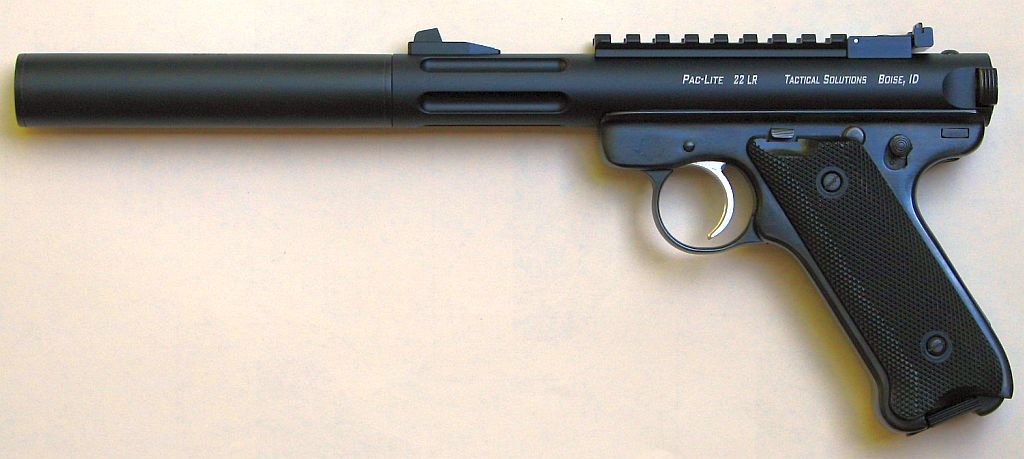
A 22 pistol with suppressor is one of the most practical suppressed setups you can build. It is easier to get into than most people think. Whether you are protecting your hearing at the range, running training drills, or keeping backyard plinking low-key, this combination checks a lot of boxes at once.
This covers why .22 LR works so well as a suppressor caliber, what to look for in a host pistol, how to choose the right ammunition, and what the legal process involves. You will also get a breakdown of popular suppressor-ready platforms and maintenance basics for rimfire cans.
.22 LR as a Suppressor Caliber
Subsonic Performance Without Specialty Ammunition
Most .22 LR loads already travel below the speed of sound out of a pistol-length barrel. That matters because supersonic ammunition creates a sonic crack as it breaks the sound barrier. A suppressor cannot reduce that crack. Short barrels bleed off enough velocity that standard loads often clock in subsonic. No specialty ammo required.
The result is a setup that runs quiet without forcing you to hunt down specialty loads every range trip.
Hearing Safety and Recoil Reduction
Unsuppressed .22 LR pistols still generate enough noise to cause hearing damage over time. This is especially true in enclosed spaces like indoor ranges. A suppressor brings the report down significantly. That is well below the 140 dB impulse threshold linked to single-exposure hearing risk.
The added weight at the muzzle also helps dampen muzzle rise. For newer shooters especially, that means a steadier sight picture between shots.
Cost-Efficient Shooting and Training
.22 LR is among the most affordable rimfire options available. Running hundreds of rounds in a session does not break the bank. Suppress it, and you have a quiet, low-recoil training setup built for repetition. Grip, trigger control, and sight alignment are all easier to work on when the gun stays flat and the noise stays manageable.
Suppressor-Ready Features in a .22 Pistol
Factory-Threaded Barrel and Thread Pitch Standards
The most important feature to look for is a factory-threaded barrel. The standard thread pitch for .22 caliber suppressors is 1/2×28. Some pistols come with proprietary threading and include an adapter. That works fine, but confirm the adapter is included before you buy.
Having a barrel threaded after the fact adds cost and can affect accuracy if the work is not precise. Starting with a factory-threaded pistol is the cleaner option.
Action Type and Subsonic Cycling Reliability
Not every .22 pistol cycles reliably with subsonic ammunition. That becomes a real issue when running a suppressed setup optimized for quiet loads. Blowback actions are common in .22 pistols and tend to be more forgiving. Slide weight and spring tension still play a role.
Before committing to a host, confirm it cycles both standard velocity and subsonic loads reliably. Community research and owner forums go a long way here.
Suppressor-Height Sights and Optic Compatibility
When you attach a suppressor, the can body sits above your bore line. Standard-height sights may be partially or fully blocked depending on suppressor diameter. A few things to keep in mind:
- Suppressor-height sights are raised to clear the can and give you a usable sight picture
- Many suppressor-ready pistols come with taller sights already installed
- Optic-ready slides let you mount a red dot, which eliminates the sight height issue entirely
What to Know When Pairing a 22 Pistol with Suppressor
Barrel Length and Its Effect on Muzzle Velocity
Barrel length directly affects muzzle velocity. Shorter barrels mean lower velocity, which for .22 LR is an advantage for suppressed shooting. A 4-inch pistol barrel often keeps standard velocity loads subsonic without any load changes.
Longer barrels push velocity up and can tip some loads supersonic. For dedicated suppressed use, shorter is generally the better choice.
Weight Distribution and Balance With a Can Attached
A suppressor adds meaningful weight to the front of your pistol. Depending on the can, that is anywhere from 2 to 8 ounces or more. That shifts the balance point forward, which can feel awkward on a lighter pistol.
Heavier, all-steel pistols tend to absorb the balance shift better than lightweight polymer frames. If possible, handle a suppressed configuration before committing to a host.
Common Suppressor-Ready Pistol Platforms
Several .22 LR pistols have earned a strong reputation as suppressor hosts:
Ruger MK IV / 22/45 Lite. A longtime favorite with a fixed barrel, smooth action, and simplified takedown. The 22/45 Lite uses an aluminum frame to trim weight. Both come in threaded barrel versions.
Glock 44. Built on the familiar Glock platform with a polymer frame. Threaded barrel versions pair well with lightweight rimfire suppressors. A natural training companion for Glock carry gun owners.
Walther P22 Q. Compact and lightweight with a factory-threaded barrel and included adapter. Consistent with subsonic loads and a solid entry-level host.
SIG Sauer P322. Ships with a threaded barrel adapter, suppressor-height sights, and an optic-ready slide. The 20-round capacity stands out for extended practice sessions.
Taurus TX22. Engineered with suppressed use in mind. Its blowback action is tuned to minimize gas escape, and it comes with a factory-threaded barrel at an accessible price point.
Subsonic Ammunition for a 22 Pistol with Suppressor Setup
Standard Velocity vs Dedicated Subsonic Loads
Standard velocity .22 LR ammo is typically rated around 1,070 fps from a rifle barrel. Out of a short pistol barrel, it often drops below the sound barrier on its own. That makes it a practical choice for suppressed shooting without requiring a dedicated subsonic product.
Dedicated subsonic loads run lower, around 950 to 1,050 fps. They stay subsonic across all barrel lengths and tend to be the quietest option. They do come with a tradeoff worth knowing.
Balancing Noise Reduction and Cycling Reliability
Very slow subsonic loads can fail to cycle semi-automatic pistols reliably. Common issues include:
- Stovepipes and failure to eject
- Failure to feed on the next round
- Inconsistent cycling with ultra-low-velocity loads
The sweet spot is a load quiet enough to suppress well but fast enough to run the action. Loads in the 1,000 to 1,050 fps range tend to hit that balance. Liberty’s rimfire suppressors are built to handle the fouling and gas pressures specific to .22 LR without compromising performance or reliability.
NFA Compliance and the Purchasing Process
Purchasing a suppressor requires submitting ATF Form 4, clearing a federal background check, and providing fingerprints and a photo. For decades, a $200 transfer tax was also part of that process. As of January 1, 2026, that fee is gone, eliminated under H.R. 1, the One Big Beautiful Bill Act.
What has not changed:
- ATF approval is still required before taking possession
- Fingerprints and a photo are still required with your Form 4
- Your suppressor stays with your dealer until approval comes through
- State laws still apply independently of federal changes
As for timing, the surge in applications following the tax elimination means 2026 approval times are more variable than before. Most applicants should expect a few weeks. A clean, accurate eForm 4 submission through your NFA dealer is the fastest path through the process.
Suppressors are legal to own in 42 states. Always verify your state laws before purchasing. Your NFA dealer can walk you through the full process and help set up a trust if needed.
Rimfire Suppressor Maintenance
Lead and Carbon Buildup Unique to .22 LR Cans
.22 LR ammunition burns dirty. Lead projectiles and rimfire powder leave significant fouling inside the can over time. Unlike centerfire suppressors that can go thousands of rounds between cleanings, rimfire cans need attention much sooner.
Plan on cleaning every 500 to 1,000 rounds depending on the load. Neglected buildup leads to degraded sound performance, point-of-impact shifts, and eventually stuck baffles.
Disassembly Frequency and Cleaning Methods
User-serviceable suppressors are a major advantage for rimfire shooters. Cans that come apart baffle by baffle make the process manageable. A basic cleaning routine covers:
- Soaking components in a dedicated solvent
- Scrubbing with a brush
- Drying thoroughly before reassembly
Liberty Suppressors builds their rimfire cans for end-user disassembly and cleaning. Operator manuals and cleaning guidance are available on the Liberty website. That support matters when your cleaning schedule is more frequent than what centerfire users are used to.
Conclusion
A quality host pistol, a well-matched suppressor, and the right ammunition make a 22 pistol with suppressor one of the most accessible and enjoyable suppressed setups on the market. It is hearing-safe, affordable to run, and legal to own in most states.
Liberty Suppressors builds rimfire cans in Trenton, Georgia, with user serviceability and real-world performance as the priority. Browse their rimfire suppressor lineup or call the team at (706) 661-6911 to find the right can for your host.
Frequently Asked Questions (FAQs)
1. Do I need a special pistol to use a suppressor?
It needs a threaded barrel. Many modern .22 LR pistols come factory-threaded. If yours does not, a gunsmith can thread it or you can source a threaded replacement barrel for some models.
2. Will a suppressor affect where my shots land?
It can. The added muzzle weight may shift your point of impact slightly. Re-zero your sights or optic after attaching the can for the first time.
3. Is it legal to buy a suppressor in my state?
Suppressors are legal in 42 states with federal approval. Eight states prohibit civilian ownership. Check your state laws and work with a licensed NFA dealer before purchasing.
4. How long does suppressor approval take?
Following the January 2026 application surge, expect a few weeks for most eForm 4 approvals. A clean, accurate submission through your NFA dealer keeps the process moving.
5. How often should I clean a .22 LR suppressor?
Every 500 rounds is a solid baseline. High-fouling loads may require more frequent cleaning. User-serviceable cans, like those from Liberty, make the process straightforward.