

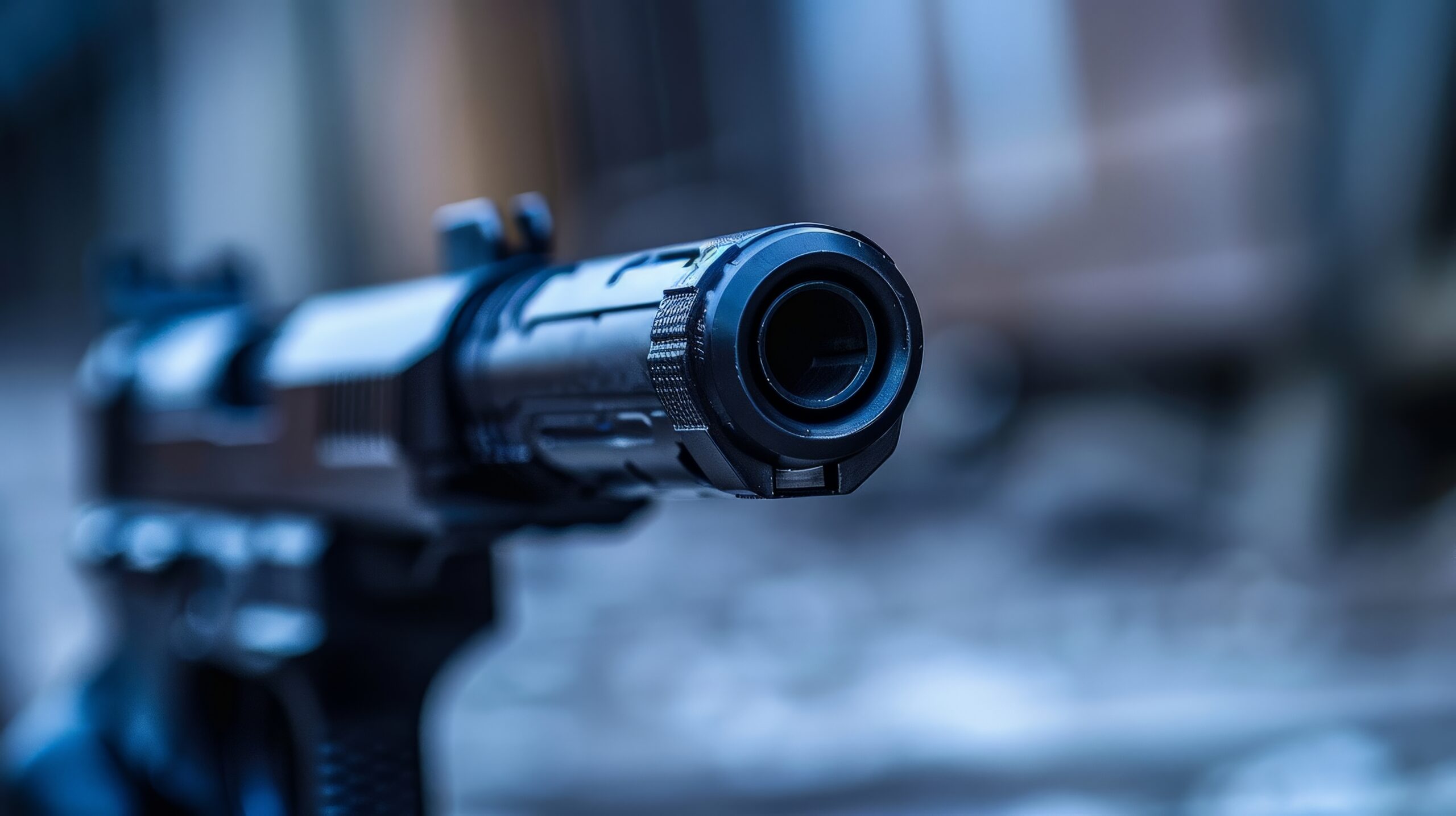
If you’ve ever searched “gun suppressor vs silencer” and ended up more confused than before, you’re not alone. It’s one of the most common questions in the firearms community, and the debate gets surprisingly heated.
Some shooters insist on one term. Others use both interchangeably. And then there’s Hollywood, which spent decades making both terms mean something completely inaccurate.
Here’s the short answer: a gun suppressor and a silencer are the same thing. No functional difference. The debate is entirely about terminology, not technology. What follows covers where these names came from and how the devices actually work. It also covers what the law says and what any of it means when you’re shopping for one.
The Same Device, Two Different Names
Walk into any gun shop or browse any firearms forum and you’ll hear both terms used freely, often in the same sentence. That’s because they describe the same product. Both names refer to the same cylindrical muzzle attachment that reduces noise when a firearm is discharged.
The confusion largely comes from movies and TV. On screen, suppressors are portrayed as near-magical gadgets that reduce gunfire to a quiet whisper. That portrayal stuck, creating the false impression that a “silencer” is a more extreme version of a “suppressor.” No such distinction exists. Neither term implies a different product or different performance.
Origin of the Term “Silencer”
Hiram Percy Maxim and the First Commercial Model
The word “silencer” didn’t come from regulators or engineers. It came from a marketing campaign.
In 1902, Hiram Percy Maxim invented the first commercially available firearm noise reduction device. He called it the Maxim Silencer and patented it in 1909. The name was designed to appeal to outdoor sportsmen, and it worked. The word caught on quickly and held firm in the public consciousness for over a century.
The science told a different story. A gunshot involves rapidly expanding gas, a supersonic bullet, and the mechanical action of the firearm. No device eliminates all of that. But the name was already set.
How the NFA Codified “Silencer” Into Law
When the U.S. government got involved, it leaned on the only word people were using at the time. The National Firearms Act of 1934 adopted “silencer” as the official legal term for this class of device. The ATF has used that same terminology ever since.
If you complete an ATF Form 4 today, it will say “silencer.” That’s the statutory language adopted more than 90 years ago. It has not been revised. Regardless of what the industry calls it, the legal paperwork sticks with the original term.
Why “Suppressor” Is the More Accurate Term
How These Devices Actually Function
A suppressor is a hollow cylindrical tube that attaches to the muzzle of a threaded barrel. Inside, a series of baffles slows, cools, and redirects the high-pressure gases produced when a round is fired. This reduces the peak sound level of the shot.
The outer tube is typically made from titanium, stainless steel, or aluminum to handle heat and pressure cycles. End caps seal the front and rear. The mounting system threads onto the barrel or a compatible muzzle adapter. What it cannot do is stop sound entirely. A supersonic bullet still breaks the sound barrier, and the firearm’s action still cycles.
The Gun Suppressor vs Silencer Difference in Sound Reduction Claims
This is where the terminology debate has real substance. Here’s what verified testing shows:
- Unsuppressed .22LR: approximately 140–145 dB
- Unsuppressed centerfire rifles (.223, .308): approximately 155–175+ dB
- Suppressed .22LR: approximately 115–130 dB, often hearing-safe
- Suppressed .223/5.56: approximately 135–145 dB
- Suppressed .308: approximately 135–150 dB
The threshold for immediate hearing damage sits at 140 dB. Virtually all unsuppressed gunfire poses a real risk with a single unprotected shot. A quality suppressor reduces that level by roughly 20 to 35 dB. The reduction is significant, but larger calibers may still benefit from added hearing protection.
The word “suppressor” accurately reflects that outcome. The device suppresses, it does not silence. That’s the core of why many firearms professionals prefer it over “silencer.”
Practical Benefits of Owning a Suppressor
Hearing Protection
The primary reason most people buy a suppressor is hearing protection. Long-term exposure to unsuppressed gunfire leads to permanent hearing loss. It doesn’t take many range sessions for damage to accumulate.
A single unprotected shot from a centerfire rifle can exceed 165 dB. That’s enough to cause permanent damage. For smaller calibers or subsonic ammunition, a suppressor can bring shots into a hearing-safe range entirely. For larger calibers, suppressors reduce risk substantially and work well alongside standard hearing protection.
Recoil Reduction and Improved Accuracy
As the suppressor manages gas exiting the muzzle, it also reduces felt recoil. Less recoil means less muzzle rise between shots. That translates directly into faster follow-up shots and tighter groups, from casual range days to precision rifle work.
Muzzle Flash Reduction and Situational Awareness
Suppressors trap and slow unburnt powder and gas before it escapes the barrel, reducing visible muzzle flash. In low-light hunting situations, this matters. A large flash can temporarily affect your vision and give away your position. Reducing it keeps you more aware of your surroundings after each shot.
Legal Requirements for Suppressor Ownership
NFA Regulation and the Current Federal Landscape
Suppressors remain federally regulated under the National Firearms Act. To legally purchase one, you must:
- Buy through a licensed FFL dealer with SOT status
- Complete ATF Form 4
- Pass a NICS background check
- Submit fingerprints and a passport-style photo
As of January 1, 2026, the $200 federal tax stamp required since 1934 was eliminated under the One Big Beautiful Bill Act (P.L. 119-21). This is the most significant shift in suppressor regulation in over 90 years. The NFA registration process remains in place, but the financial barrier is now gone.
ATF processing times have dropped sharply with the electronic eForms system. Applications with clean background checks are now processed in days or weeks. Demand has surged since the tax removal, so some delays are possible. Still, the process is far more accessible than before.
Suppressor ownership is currently legal in 42 states. Hunting rules vary by state, so confirm your local laws before purchasing.
The Gun Suppressor vs Silencer Term in ATF Paperwork
When you complete your ATF Form 4, you will see the word “silencer,” not “suppressor.” This is strictly a legal artifact from the 1934 statute. It does not reflect any technical distinction between the two terms and does not affect what you’re purchasing. You are buying the same device regardless of which word appears on the form.
Does Terminology Matter When Choosing a Suppressor
Practically speaking, no. Whether you search “gun suppressor” or “silencer,” you’ll land on the same products. Both terms are fully understood by dealers, manufacturers, and the ATF.
What does matter: caliber compatibility, whether your firearm has a threaded barrel, and your primary use case. That means hunting, range shooting, or home defense. At Liberty Suppressors, the lineup is built around versatility. A wide range of adapters is designed to fit suppressors to virtually any firearm platform. Matching the right device to your setup matters far more than what you call it.
Conclusion
The gun suppressor vs silencer debate comes down to this: same device, two names, different origins. “Silencer” is the historic and legal term. It’s rooted in Hiram Percy Maxim’s 1909 patent and codified into federal law in 1934. “Suppressor” is the more technically precise term, reflecting what the device actually does. Both are correct.
What matters for any buyer is understanding how these devices work and what benefits they provide. It also means knowing how to navigate the legal process. The $200 tax stamp is now eliminated. ATF processing times are at historic lows. Now is the best time to get into suppressed shooting.
Browse Liberty Suppressors’ full lineup of American-made suppressors, adapters, and accessories at libertycans.net. Ready to buy or still sorting out the gun suppressor vs silencer question? Liberty’s team is here to help.
Frequently Asked Questions (FAQs)
1. Is a gun suppressor the same as a silencer?
Yes. They are the same device. “Silencer” is the legal ATF term. “Suppressor” is the more technically accurate term used across the firearms industry. Both refer to the same muzzle attachment that reduces the sound of a gunshot.
2. Do suppressors actually make a gun silent?
No. Suppressors reduce peak sound by roughly 20 to 35 dB. Small calibers like .22LR can reach hearing-safe levels when suppressed. Common centerfire rounds like .223 or .308 typically still register 135 to 150 dB. No device can fully silence a gunshot.
3. Is it legal to own a suppressor in the United States?
Yes, in 42 states. Ownership requires ATF Form 4, a background check, fingerprints, and a photo. As of January 1, 2026, the $200 federal tax stamp has been eliminated under federal law.
4. Why does the ATF use the word “silencer” instead of “suppressor”?
Because that is the term written into the National Firearms Act of 1934. All official ATF forms, including Form 4, use “silencer” as the statutory term. That language has never been updated.
5. What should I look for when buying a suppressor?
Focus on caliber compatibility, your barrel’s threading, and your primary use case. Multi-caliber suppressors offer flexibility but may not reduce sound as effectively as dedicated single-caliber models. Confirm your firearm has a threaded barrel or that a compatible adapter is available.