

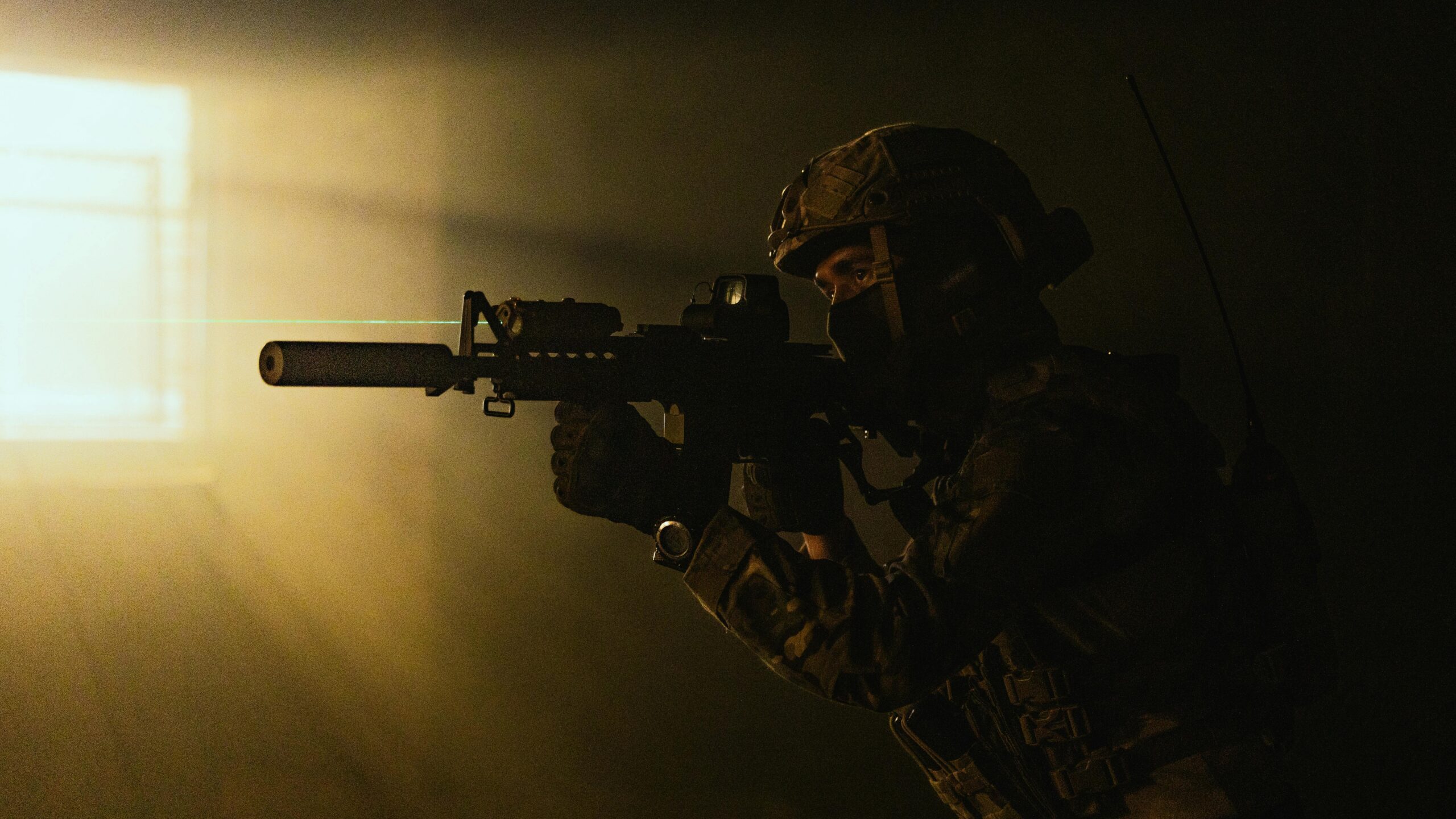
The flash suppressor vs silencer question comes up constantly in the firearms community. These two devices share overlapping names and attach to the same part of a firearm. Yet they serve completely different purposes. Even experienced shooters mix up the terminology.
Here is a quick clarification before anything else: “silencer” and “suppressor” refer to the same device. The ATF uses the term silencer in its legal definition. Many in the firearms community prefer suppressor, since these devices reduce but do not eliminate sound. A flash suppressor is something else entirely.
This article breaks down how each device works and how they compare side by side. It also covers which one fits your specific situation.
Two Devices, Two Entirely Different Functions
Flash Suppressor Function
A flash suppressor, also called a flash hider, mounts to the muzzle of a firearm. It disperses the burning propellant gases that exit the barrel when a round is fired. Spreading those gases outward prevents them from forming a single visible flame in front of the shooter.
The primary benefit is protecting the shooter’s vision in low-light conditions. Muzzle flash can temporarily blind you, slow target reacquisition, and reveal your position. A flash suppressor addresses all three without adding complexity or paperwork.
Hunters working at dawn or dusk benefit the most from this device. Anyone running a defensive or tactical setup will also find it valuable. It is a practical, low-barrier upgrade that works on any threaded barrel.
It does not reduce sound. It does not reduce recoil. Flash control only.
Silencer Function
A silencer attaches to a threaded barrel and reduces the decibel output of each shot. Inside the device, a stack of baffles slows and cools the high-pressure gases. These gases follow the bullet out of the barrel and are responsible for the muzzle blast.
Sound reduction typically falls in the 20 to 35 dB range. That is meaningful, but it does not make a firearm silent. Most suppressed centerfire rifles still register above 130 dB, which remains hazardous to unprotected hearing.
Silencers also deliver two secondary benefits. Felt recoil decreases, and muzzle flash is reduced as a byproduct of gas containment. Neither is the primary purpose, but both are real advantages in the field.
How Each Device Works
Flash Suppressor Mechanism
Flash suppressors use prongs, tines, or slots to redirect burning gases at the muzzle. Birdcage-style and open-pronged designs are among the most common. Gases pass through those openings, dispersing and cooling before igniting visibly in open air.
These devices are simple, lightweight, and affordable. They thread directly onto a standard muzzle and add minimal length and weight. No special permits are required in most states.
Silencer Mechanism
A silencer routes high-pressure gas through a series of internal chambers. Each baffle cools and slows that gas progressively. Pressure drops before the gas exits the device.
This staged expansion is what reduces the muzzle blast. A supersonic bullet still produces a crack in flight, and a semi-automatic action still generates mechanical noise. But the muzzle blast itself is brought down considerably.
Common suppressor materials and their trade-offs:
- Titanium, lightest option with excellent heat resistance
- Stainless steel, heavier but highly durable under sustained fire
- Aluminum, lightweight and cost-effective, best suited for rimfire use
Flash Suppressor vs Silencer Compared
Putting flash suppressor vs silencer side by side makes the distinctions straightforward.
Primary Function
A flash suppressor exists to eliminate or reduce visible muzzle flash. It keeps night vision intact and reduces a shooter’s visual signature in low-light environments.
A silencer exists to reduce the acoustic signature of a gunshot. It protects hearing, lowers noise impact on the surrounding area, and improves situational awareness during shooting.
Size, Weight, and Design
Flash suppressors are compact and lightweight. They measure a few inches in length and weigh just a few ounces. Very little is added to the overall balance of the firearm.
Silencers are considerably larger. A typical rifle suppressor runs roughly 5 to 9 inches in length. Weight ranges from 8 to 20 ounces depending on caliber, design, and materials. Titanium builds run lighter; stainless steel runs heavier. That forward weight can also help reduce muzzle rise during firing.
Sound Reduction
A flash suppressor provides zero sound reduction. If hearing protection is the goal, a flash hider will not help.
A silencer reduces gunfire noise by an average of 20 to 35 dB. Even so, most suppressed centerfire rifles still produce sound above 130 dB. Hearing protection remains recommended, especially during extended range sessions.
Muzzle Flash
A flash suppressor is engineered specifically for flash control. That is its sole function.
A silencer reduces muzzle flash as a side effect of gas containment, not by design. Both devices result in reduced visible flash when functioning correctly.
Regulations and Legal Ownership
At Liberty Suppressors, based in Trenton, Georgia, navigating NFA compliance is part of everyday operations. Here is a breakdown of what the law says about each device.
Flash Suppressor Regulations
Flash suppressors are not regulated at the federal level. In most states, you can purchase and install one without any NFA-related paperwork or waiting periods.
A small number of states, including California, restrict flash suppressors under assault weapon feature laws. Always confirm your state and local laws before adding any muzzle device to your firearm.
NFA Requirements for Silencers
Silencers have been regulated under the National Firearms Act since 1934. Purchasing one through a licensed dealer requires:
- Completing ATF Form 4
- Submitting fingerprints and a passport-style photograph
- Passing a background check
- ATF registration of the device
As of January 1, 2026, the $200 federal tax stamp fee for suppressor transfers has been eliminated. This change was part of the federal “One Big Beautiful Bill,” signed into law on July 4, 2025. It marks the most significant change to suppressor tax regulations since the NFA was enacted.
The Form 4, fingerprints, and background check remain in place. Silencers are legal to own in 42 states. Verify your state’s eligibility before purchasing.
Flash Suppressor vs Silencer Selection
The flash suppressor vs silencer decision comes down to what problem you are solving. These two devices are not interchangeable. They are complementary, and many shooters eventually run both.
Flash Suppressor Use Cases
A flash suppressor is the right choice when:
- Shooting in low-light environments where muzzle flash impairs vision
- Reducing visual signature matters in a tactical setting
- Suppressor ownership is restricted in your state
- You want a no-paperwork, minimal-cost muzzle upgrade
Silencer Use Cases
A silencer is the right choice when hearing protection and shooting comfort are the priority. Range sessions, hunting, home defense, and extended training all benefit from reduced blast and recoil. For hunters, it also helps avoid spooking game with a full muzzle report.
With the $200 tax stamp eliminated as of January 2026, the cost of entry has dropped considerably. If price was the reason to wait, that barrier is now gone.
Using Both Together
Some suppressor designs mount directly over an existing flash hider or muzzle brake. Running both devices simultaneously delivers combined flash control and sound suppression.
Liberty Suppressors offers an adapter system that allows their cans to fit virtually any firearm. This makes it easy to run suppressed or unsuppressed without removing your flash hider.
Conclusion
The bottom line on flash suppressor vs silencer is clear. One manages what you see, the other manages what you hear. They serve different purposes and, in many setups, work best together. Understanding both devices makes you a more informed buyer and a more effective shooter.
At every experience level, the flash suppressor vs silencer difference is the right place to start.
Frequently Asked Questions (FAQs)
1. Is a flash suppressor the same as a silencer?
No. A flash suppressor reduces visible muzzle flash. A silencer reduces gunshot noise. Both mount to a threaded muzzle but serve entirely different purposes.
2. Do I need a tax stamp for a flash suppressor?
No. Flash suppressors are not NFA items at the federal level. No tax stamp or Form 4 is required in most states. Confirm your local laws before purchasing.
3. Does a silencer reduce muzzle flash?
Yes, as a byproduct. The baffle system contains and cools propellant gases, which reduces visible flash. Sound reduction, however, is the primary function.
4. What changed about silencer regulations in 2026?
The $200 NFA tax stamp was eliminated effective January 1, 2026. ATF Form 4, fingerprints, and a background check are still required.
5. Can I use both on the same firearm?
Yes. Some suppressor designs mount directly over a flash hider or muzzle brake. Liberty Suppressors’ adapter system makes the flash suppressor vs silencer combination easy to run on virtually any firearm.