

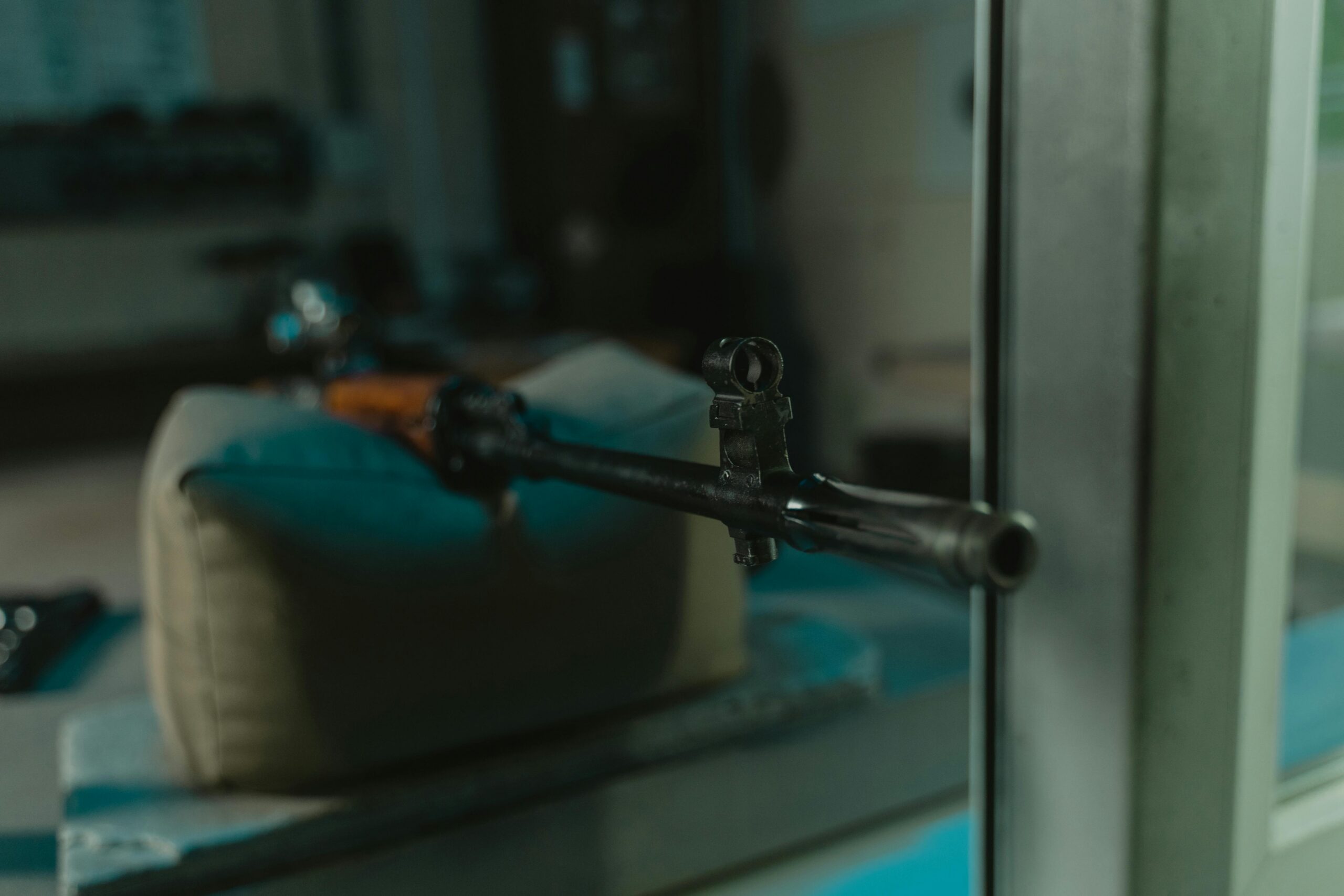
The ar-15 silencer vs suppressor debate never seems to go away in the firearms community. Ask ten different shooters which term is correct and you might get ten different answers. The truth is simpler than most people expect. Once you understand the history, the mechanics, and the legal landscape, the whole debate makes a lot more sense.
AR-15 Silencer vs Suppressor — Terminology and Origin
The Patent That Named the Device
The word “silencer” did not come from Hollywood. It came from inventor Hiram Percy Maxim, who was granted U.S. Patent No. 916,885 on March 30, 1909, for a sound-reducing muzzle device. He called it the Maxim Silencer, and that name stuck in legal language that persists to this day.
When lawmakers drafted the National Firearms Act of 1934, they pulled the term directly from Maxim’s patent. That is why the ATF still uses “silencer” in its official definitions, even though the device does not actually silence anything. The legal name was locked in early and never changed.
Why “Suppressor” Became the Preferred Term
Over time, shooters and industry professionals started pushing back on “silencer.” These devices do not silence a firearm. They reduce, or suppress, the sound produced when a round is fired. Calling it a silencer sets a false expectation, especially for new shooters.
The term “suppressor” is more accurate. It describes the actual function of the device, which is sound suppression, not elimination. Most firearm enthusiasts, manufacturers, and retailers prefer it for exactly that reason.
How Both Terms Are Used Today
Here is the bottom line. Silencer and suppressor refer to the exact same device:
- Silencer — the legal term used by the ATF and federal legislation
- Suppressor — the functional term preferred by the shooting community
Neither is incorrect. Using one over the other does not change what you are buying, how it works, or how it is regulated. At Liberty Suppressors, both terms are used because both are recognized.
How a Suppressor Works on an AR-15
The Baffle System and Gas Redirection
When a round is fired from an AR-15, a burst of high-pressure gas follows the bullet out of the barrel. That rapidly escaping gas is a major contributor to the loud report of a gunshot. A suppressor intercepts it before it can escape freely.
Inside a suppressor is a series of baffles, small chambers that slow, cool, and redirect that expanding gas. As the gas passes through each baffle, it loses pressure and temperature before exiting. The result is a reduced muzzle report and less visible muzzle flash, which matters especially in low-light conditions.
Realistic Sound Reduction on 5.56 and .223
A suppressor on a 5.56 or .223 AR-15 typically reduces the sound of a shot by approximately 20 to 32 decibels. That is a meaningful drop, but it does not bring the firearm to whisper-quiet levels. An unsuppressed AR-15 firing 5.56 produces around 163 to 167 decibels.
Even with a suppressor, peer-reviewed testing of AR-15 rifles and commercially available suppressors found that sound levels near the shooter’s right ear typically remain above 140 decibels under most conditions.
Supersonic 5.56 breaks the sound barrier as it travels downrange, creating a sonic crack no suppressor can eliminate. For most 5.56 loads, additional hearing protection is still recommended when shooting suppressed.
Real-World Benefits of Running a Suppressed AR-15
Hearing Protection
Hearing damage from firearms is cumulative. Each unsuppressed shot chips away at long-term hearing health, and 5.56 is among the loudest rifle calibers. A suppressor meaningfully reduces the acoustic impact on the shooter and anyone nearby.
For hunters, home defenders, and frequent range shooters, adding a suppressor to an AR-15 is one of the most practical investments available. Preserving your hearing pays off every time you pull the trigger.
Recoil and Muzzle Flash Reduction
The same gas management that reduces sound also reduces felt recoil. Expanding gas is slowed and contained before exiting, so the rearward impulse transferred to the shooter is reduced. Follow-up shots become more controlled and the overall experience more comfortable.
Muzzle flash is also significantly reduced. A bright flash can temporarily affect night-adjusted vision, and a suppressor minimizes that risk. It is one reason military and law enforcement have relied on suppressed platforms for decades.
Accuracy and Follow-Up Shot Performance
Running suppressed offers real performance gains:
- Less muzzle movement per shot means tighter groups
- Reduced flinch from lower noise and recoil improves shot placement
- Faster split times because the rifle is easier to manage between shots
A suppressed AR-15 is easier to shoot well, for beginners and experienced shooters alike.
NFA Regulations and Legal Status
NFA Classification and ATF Definitions
The ar-15 silencer vs suppressor terminology debate does not change how the device is regulated. Under federal law, suppressors are classified as NFA items under the National Firearms Act of 1934. Every suppressor purchase requires:
- ATF Form 4 application
- Background check
- Formal registration with the federal government
These requirements apply regardless of which term is used. The regulatory framework is the same across the board.
Federal Tax Stamp Elimination
For decades, purchasing a suppressor required a $200 federal tax stamp as part of the NFA transfer process. That changed when the “One Big Beautiful Bill” was signed into law on July 4, 2025. Effective January 1, 2026, the $200 NFA transfer tax on suppressors, short-barreled rifles, short-barreled shotguns, and AOWs was eliminated.
This is the most significant change to suppressor regulation in nearly a century. The financial barrier is gone. However, the ATF Form 4, background check, and registration requirements remain fully in place. The process still exists. It just no longer costs $200 to complete.
With the tax elimination triggering a surge in demand, processing times have fluctuated. Electronic filing through ATF eForms is now the standard and the fastest path to approval.
State-Level Suppressor Laws
Federal law defines the minimum requirements, but state law determines whether suppressor ownership is permitted at all. Most states allow it, but some restrict or prohibit private ownership entirely. Others permit ownership but restrict suppressor use while hunting.
Before purchasing, confirm that your state allows it. The Liberty Suppressors team is available by phone and happy to help with compliance questions in your area.
Selecting the Right Suppressor for Your AR-15
Caliber Compatibility and Ratings
The first decision is caliber compatibility. A dedicated 5.56/.223 suppressor is optimized for that cartridge and generally delivers better sound performance. A multi-caliber suppressor offers flexibility across platforms but typically gives up some sound reduction in exchange.
If maximum suppression on 5.56 is the priority, a dedicated can is the better choice. If you run multiple calibers across different rifles, a multi-caliber suppressor can cover a wider range of applications under a single NFA registration.
Direct Thread vs Quick-Detach Mounting
Direct-thread suppressors thread directly onto the barrel’s muzzle threads. They are simple, reliable, and more affordable. The trade-off is slower mounting and the potential for over-tightening with repeated use.
Quick-detach (QD) systems use a dedicated muzzle device as the attachment point. The suppressor locks on quickly and consistently. For shooters who move a suppressor between multiple rifles, QD mounting is a practical upgrade worth the added cost.
Material, Weight, and Size Trade-Offs
Suppressors are commonly built from three materials, each with distinct trade-offs:
- Aluminum — lightest and most affordable, but not rated for sustained heat or extended fire
- Stainless steel — highly durable and full-auto rated, but adds noticeable muzzle weight
- Titanium — strong, heat-tolerant, and significantly lighter than steel, best overall balance for most AR-15 builds
Liberty Suppressors builds options across all three material categories to match different shooting needs and budgets.
Liberty Suppressors for Your AR-15
Liberty Suppressors is a US manufacturer based in Trenton, Georgia. Every product is made onsite in the United States, built to withstand real use and deliver consistent sound suppression across a wide range of platforms, including the AR-15.
Liberty’s adapter system allows a single suppressor to mount across virtually any firearm. Whether you are running a standard 5.56 AR-15 or a multi-caliber setup, there is a Liberty can and adapter combination that fits your build.
Browse the full lineup at libertycans.net or call the team at (706) 661-6911.
Conclusion
The ar-15 silencer vs suppressor debate comes down to one fact: both terms describe the same device. “Silencer” is the legal term in federal law since 1934. “Suppressor” is the technically accurate term for what the device actually does. For AR-15 owners, understanding how a suppressor works, what it delivers in performance, and how it is regulated matters more than which word you use.
With the $200 federal tax stamp eliminated as of January 1, 2026, the barrier to suppressor ownership has dropped considerably. Liberty Suppressors is here to help you make that move. Explore your options at libertycans.net and find the right ar-15 silencer vs suppressor solution for your build.
Frequently Asked Questions (FAQs)
1. Is there any functional difference between an AR-15 silencer and a suppressor?
No. Both terms refer to the same device. “Silencer” is the ATF’s legal term. “Suppressor” is the technically preferred term in the shooting community. They are interchangeable.
2. Will a suppressor make my AR-15 completely silent?
No. A suppressor reduces the report by approximately 20 to 32 decibels but does not eliminate sound. Supersonic 5.56 produces a sonic crack no suppressor can remove.
3. Do I still need to go through the ATF process after the tax stamp was eliminated?
Yes. The $200 fee is gone as of January 1, 2026, but the ATF Form 4, background check, and registration remain fully required.
4. Can I use one suppressor on multiple AR-15 builds?
Yes. Once the NFA transfer is approved, a suppressor can move between multiple firearms as long as it is rated for the caliber. Adapter systems make swapping between builds straightforward.
5. What is the best suppressor material for an AR-15?
Titanium offers the best balance of strength, heat resistance, and weight for most AR-15 use. Stainless steel suits heavy or full-auto use. Aluminum works for lighter semi-automatic applications where weight is the priority.