

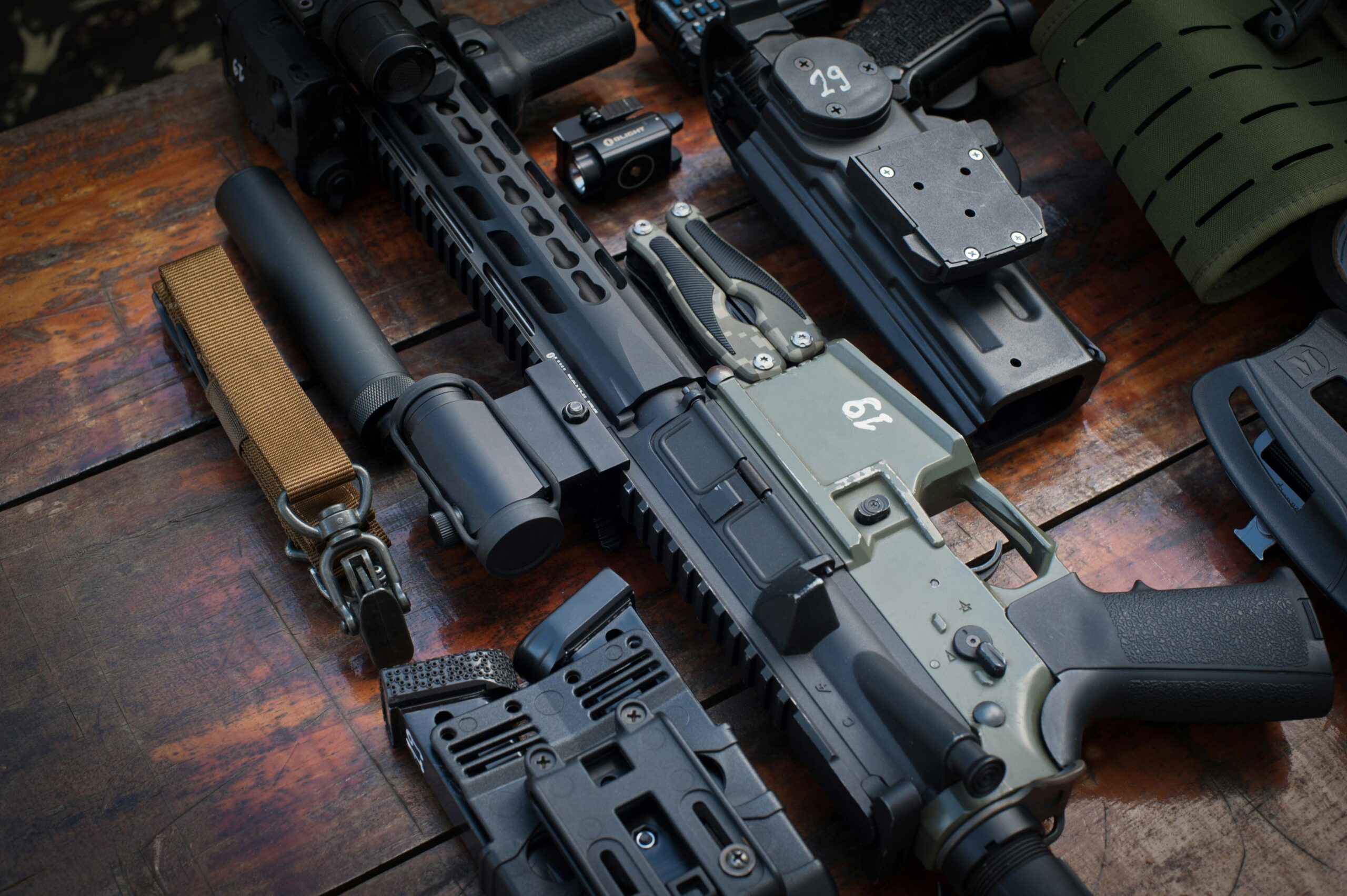
A 22 rifle with suppressor is one of the most popular setups in the shooting world right now. Suppressors are more accessible than ever, the legal landscape just shifted in a major way, and the .22 LR caliber is one of the best possible matches for suppressed shooting.
Whether you’re a new shooter, a small game hunter, or someone who wants a quieter range session, this setup delivers. This article covers the real benefits, what to know before buying, the legal requirements, and what separates a quality rimfire can from a mediocre one.
Why the .22 LR Is the Most Suppressor-Friendly Caliber
Low Operating Pressure and Minimal Gas Volume
The .22 LR operates at significantly lower chamber pressure than centerfire calibers like 9mm or .223 Remington. Less pressure means less gas through the barrel per shot. That directly reduces the workload on the suppressor’s baffle stack.
The result is a can that runs cooler, lasts longer, and delivers consistent sound reduction across thousands of rounds without putting excessive stress on the internals.
The Role of Subsonic Ammunition
Subsonic .22 LR travels below the speed of sound, eliminating the supersonic crack entirely. That crack is essentially a small sonic boom. It’s one of the biggest contributors to the overall noise of a gunshot.
Pair subsonic ammo with a quality suppressor and sound levels drop to the 110–130 dB range — near pellet-gun quiet. For reference, an unsuppressed .22 LR produces around 140 dB from a bolt-action. From a semi-auto with high-velocity loads, that climbs to 155–161 dB. A good rimfire suppressor delivers a 25 to 40+ dB reduction depending on setup.
Always confirm your can is rated for the load you’re running.
Core Benefits of Running a 22 Rifle with Suppressor
Running a 22 rifle with suppressor changes the whole rimfire experience. Here’s what you’ll actually notice:
- Hearing protection without ear pro. Suppressed .22 LR with subsonic loads can fall at or below hearing-safe thresholds. That’s a significant advantage for long range sessions and backyard use.
- Reduced recoil and muzzle rise. The added muzzle weight stabilizes the platform. Follow-up shots are faster and more consistent.
- Better training conditions. Flinch comes from anticipating a loud report. A suppressed .22 removes that trigger response. Coaches and students can communicate clearly between shots, and beginners progress faster.
- Pest control and small game hunting. Suppressed .22 rifles are a go-to for varmint work. The noise reduction is practical in noise-sensitive environments, and suppressed hunting is legal in 41 states. Connecticut allows ownership, for example, but prohibits hunting with a suppressor.
Key Considerations Before Buying a Rimfire Suppressor
Suppressor Host Selection — Bolt-Action vs. Semi-Automatic
Bolt-action rifles are the quieter host choice. No cycling action noise, no blowback — just the mechanical action and the impact downrange.
Semi-automatic .22s use a blowback operating system. The bolt starts moving rearward while residual pressure is still in the suppressor. That vents gas through the action and adds mechanical noise on every shot. Semi-autos are still noticeably quieter than shooting unsuppressed, but bolt guns win when maximum sound reduction is the goal.
When shopping for a host, look for a factory-threaded barrel. A well-fitted thread is critical for suppressor alignment and safety.
Suppressor Materials — Stainless Steel, Titanium, and Aluminum
Each material makes different trade-offs on weight, durability, and cost:
- Stainless steel — Handles full-auto fire, higher-pressure loads, and aggressive cleaning. Heavier, which can front-weight the rifle.
- Titanium — Comparable durability to stainless at a fraction of the weight. Corrosion-resistant. The premium pick for regular shooters.
- Aluminum — Affordable and capable for standard .22 LR use. Not rated for the same sustained abuse as steel or titanium, but a solid entry point.
Dedicated Rimfire vs. Multi-Caliber Suppressors
Dedicated rimfire cans are tuned specifically for .22 LR. The baffle geometry, volume, and internal design are built for lower pressures and gas volumes. They outperform multi-cal cans on a .22 platform.
Multi-caliber suppressors offer flexibility across pistol and rifle platforms. One can covering multiple hosts makes sense for some shooters. Just know that suppression performance won’t match a dedicated rimfire build. For the absolute quietest .22 setup, go dedicated.
User-Serviceable Design and Lead Fouling
The .22 LR uses lead-based bullets. Those projectiles leave heavy deposits inside the suppressor with every shot. Lead and carbon buildup degrades performance over time. Neglect it long enough and it can permanently damage the baffle stack.
Unlike welded centerfire cans, rimfire suppressors must be user-serviceable. Before buying, verify the suppressor can be fully disassembled for cleaning. If it can’t, keep looking.
NFA Legal Requirements for Suppressor Ownership
Federal Registration Process — ATF Form 4
Suppressors remain regulated under the National Firearms Act (NFA). The purchase process requires:
- Completing ATF Form 4
- Submitting fingerprints and a passport-style photo
- Passing a federal background check
- Transferring through a licensed Class 3 SOT/FFL dealer
The suppressor stays with the dealer until ATF approval comes through. Taking possession before that approval is a federal crime.
Electronic Form 4 submissions through ATF’s eForms system are now being approved in days. That’s a major shift from the months-long waits of just a few years ago.
One significant update: the One Big Beautiful Bill Act, signed July 4, 2025, eliminated the $200 federal tax stamp effective January 1, 2026. All registration requirements remain, but the biggest financial barrier to ownership is now gone.
Suppressor ownership is legal in 42 states. Eight states plus D.C. prohibit civilian ownership. Some states allow ownership but restrict suppressed hunting. Always verify your state’s laws before purchasing.
Suppressor Maintenance for Your 22 Rifle with Suppressor
Proper maintenance is non-negotiable when running a 22 rifle with suppressor. Skip it and your can won’t stay performing at the level you paid for.
Why Rimfire Fouling Is Unique
Lead-based .22 LR bullets deposit far more aggressively inside a suppressor than jacketed centerfire rounds. Carbon builds up on the baffles. Lead accumulates in the crevices of the internal structure.
That buildup reduces suppression performance steadily over time. Left long enough, it permanently fuses to the baffles — and at that point, the damage is done.
Cleaning Methods and Recommended Frequency
Plan on cleaning every 500–1,000 rounds for standard use. High-volume sessions call for more frequent attention. Common methods include:
- Solvent soak — Loosens carbon and lead deposits
- Nylon brush scrubbing — Mechanical removal of baffle buildup
- Ultrasonic bath — Most thorough option for heavy fouling
After every cleaning, inspect the threads and re-torque the suppressor to manufacturer’s spec before the next range session.
What to Look for in a Quality .22 Rimfire Suppressor
Decibel Rating and First-Round Pop
OSHA classifies impulse noise above 140 dB as potentially damaging. Unsuppressed .22 LR already sits at or above that line. NIOSH guidance sets the practical hearing-safe target below 130 dB for repeated exposure. Look for published dB ratings in that range when shopping for a rimfire can.
One quirk to watch for is first-round pop. The first shot is often louder because oxygen trapped in the expansion chambers burns off on ignition. Subsequent shots settle to the normal suppressed level. For hunting, where the first shot counts most, look for a can designed to minimize this effect.
Thread Pitch Compatibility and Adapter Options
Most .22 LR hosts use a 1/2×28 thread pitch. Confirm your barrel’s thread pitch before buying. Adapters extend a single suppressor across multiple hosts with different thread patterns. Liberty Suppressors offers an extensive adapter lineup built to fit their cans to a wide range of platforms — a practical advantage for shooters running more than one rimfire.
Warranty, Serviceability, and Build Quality
A solid warranty covers defects in materials and workmanship for the life of the product. Limited-coverage warranties on NFA-registered gear aren’t worth the risk.
Full-auto ratings are a reliable durability benchmark. If a suppressor handles sustained full-auto .22 LR, normal range use isn’t going to stress it. Buying from a reputable U.S. manufacturer means real product support when you need it.
Conclusion
The case for a 22 rifle with suppressor is clear. Hearing protection, reduced recoil, better training conditions, and field-ready pest control all come standard with the setup. The .22 LR is one of the most efficient calibers to suppress, and with the $200 tax stamp eliminated as of January 2026, the barrier to entry dropped significantly.
Liberty Suppressors is based in Trenton, Georgia, and builds every can in-house. Browse their rimfire lineup, check out adapter options for multi-host compatibility, and reach out to the team with questions.
Now is the right time to run a 22 rifle with suppressor.
Frequently Asked Questions (FAQs)
1. Do I need a license to own a suppressor?
No special license is required. Complete ATF Form 4, pass a background check, and transfer through a licensed Class 3 SOT/FFL dealer. No ongoing license is needed once approved.
2. How quiet is a suppressed .22 LR rifle?
Suppressed .22 LR typically lands between 110 and 130 dB, depending on suppressor, ammo, and barrel length. Unsuppressed, a .22 LR produces 140–161 dB depending on the platform.
3. Can I use the same suppressor on multiple firearms?
Yes, with compatible adapters and matching thread pitch. Liberty Suppressors offers a broad adapter selection for multi-host setups.
4. Is the $200 tax stamp really gone?
Yes, effective January 1, 2026, under the One Big Beautiful Bill Act. ATF Form 4, background check, and fingerprints are still required.
5. How often should I clean a .22 suppressor?
Every 500–1,000 rounds for regular use. .22 LR produces heavy lead and carbon fouling, making consistent cleaning essential for long-term performance.