

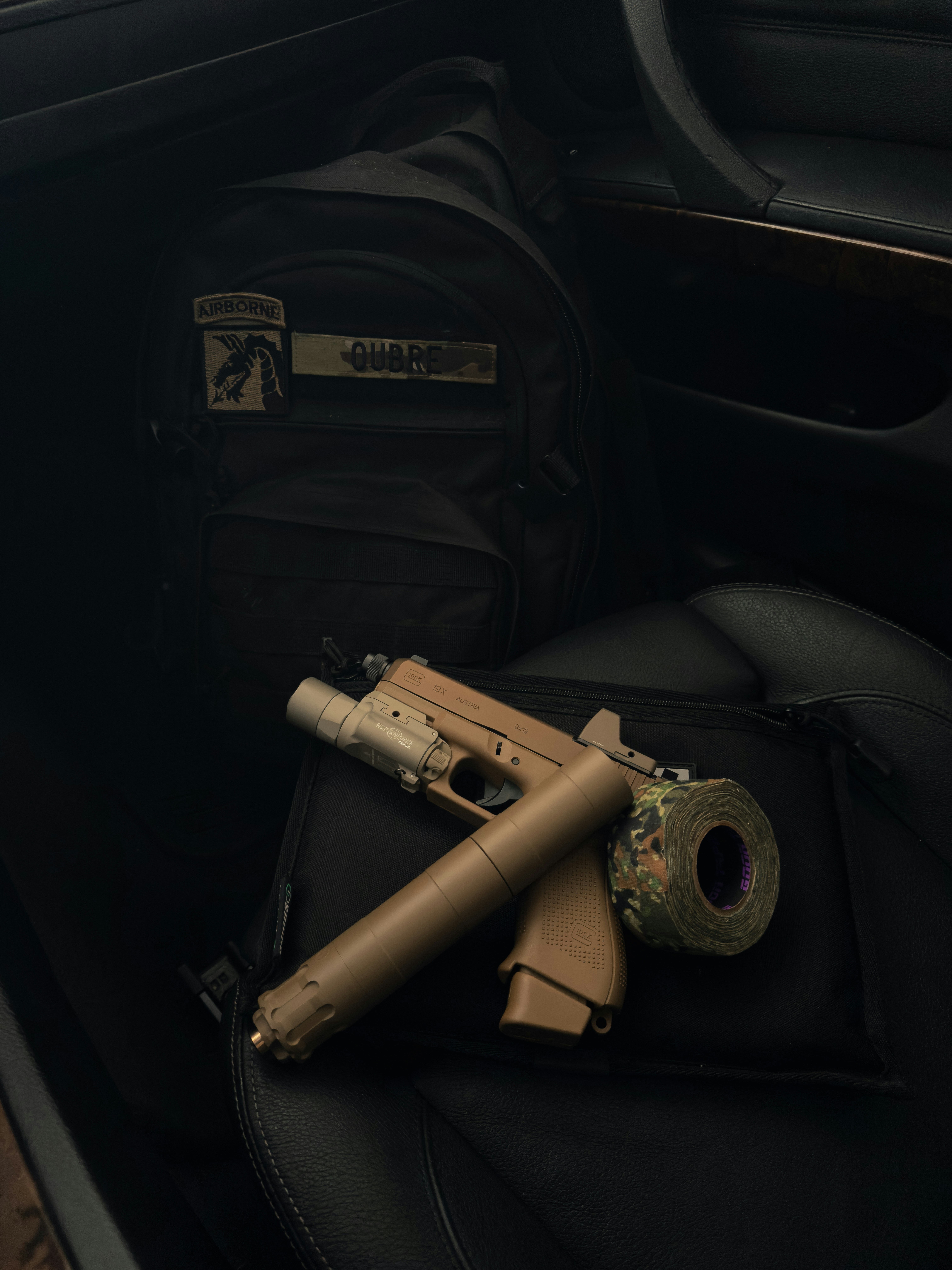
Finding the best 22 pistol suppressor has never been more practical than right now. The federal $200 NFA tax stamp fee dropped to $0 as of January 1, 2026. That makes rimfire suppressor ownership more accessible than at any point in the last 92 years.
The .22 pistol is one of the most suppressor-friendly platforms available, and pairing one with the right can deliver a shooting experience that lives up to the hype.
This guide covers what matters when choosing a .22 pistol suppressor, how NFA ownership works today, how ammo affects performance, and which Liberty Suppressors rimfire models deserve a look.
Benefits of Suppressing a .22 Pistol
Hearing Safety and Noise Reduction
An unsuppressed .22LR pistol produces roughly 140 decibels at the muzzle. That sits right at the threshold where hearing damage can occur from a single shot without protection. Add a quality suppressor and subsonic ammo, and that same pistol drops to around 110 to 117 dB. That range is considered hearing safe.
The .22LR is one of the most effective calibers to suppress. It naturally operates at lower pressure than centerfire rounds. When paired with subsonic ammunition, the result is genuinely quiet, not just quieter.
Recoil, Muzzle Flip, and Follow-Up Performance
Suppressors reduce muzzle rise by slowing and redirecting propellant gases at the muzzle. On a .22 pistol, that translates to less flip between shots and tighter follow-up accuracy. That matters whether you are training, plinking cans, or hunting small game. For new shooters, lower recoil combined with reduced noise removes hesitation around getting on the trigger.
What to Look for in the Best 22 Pistol Suppressor
Sound Reduction Ratings and Decibel Performance
Decibel reduction ratings are a useful benchmark, but real-world pistol performance can differ from rifle test results. Pistols have shorter barrels, meaning less gas expansion before the muzzle, which affects how efficiently the suppressor works.
First-round pop (FRP) is also worth understanding before you buy. When a clean suppressor has oxygen inside, the first shot ignites that oxygen and fires louder than subsequent rounds. On a pistol used for short sessions or pest control, that matters more than on a dedicated rifle. Look for suppressors with baffle or core designs built specifically to minimize FRP.
Weight, Length, and Pistol Balance
A suppressor that works well on a rifle can make a pistol front-heavy and awkward to handle. For handgun use, compact and lightweight designs are the better fit. As a general guideline for .22 pistol use:
- Weight: Under 5 to 6 ounces
- Length: No longer than 5 to 6 inches
Weight distribution affects how naturally the gun points and how comfortable extended use feels. A well-matched suppressor should feel like a natural extension of the pistol.
Construction Materials: Titanium, Aluminum, and Stainless Steel
Each material brings different trade-offs:
- Aluminum: Lightweight and affordable, but less durable over high round counts
- Stainless steel: Tough and corrosion resistant, but adds weight
- Titanium: Best balance of strength and weight savings, typically at a higher price
Liberty Suppressors uses aerospace-grade 6Al4V titanium in their rimfire builds, engineered for strength under heat and pressure while keeping weight as low as possible.
User-Serviceability for Rimfire Rounds
Rimfire ammunition burns dirtier than centerfire. Lead and carbon build up faster, and unchecked buildup drops suppression noticeably over time.
Avoid sealed suppressors for .22LR use entirely. They cannot be cleaned, and buildup will degrade performance and cause structural problems. Always confirm user-serviceability before purchasing for any rimfire application.
Thread Pitch and Mounting Compatibility
Most .22LR pistols use a 1/2×28 thread pitch, the industry standard for this caliber. Some older or imported models use metric threading, and a mismatch creates unsafe conditions if not addressed before mounting.
Before buying, check these three things:
- Verify your barrel’s thread pitch with calipers or a thread pitch gauge
- Budget $75 to $150 for professional threading if your barrel is unthreaded
- Budget $30 to $60 for an adapter if your barrel uses non-standard threads
NFA Ownership: Current Requirements and Recent Changes
The suppressor buying process changed significantly at the start of 2026. The One Big Beautiful Bill Act was signed into law on July 4, 2025. It reduced the federal NFA tax stamp from $200 to $0, effective January 1, 2026. That fee is gone, but the registration process remains in place.
To purchase a suppressor, you still file ATF eForm 4, pass a background check, and wait for approval. Pre-surge eForm 4 approvals were averaging 3 to 5 days for individuals. The January 2026 fee removal triggered a major application surge, and wait times are now more variable. Timelines may fluctuate as the ATF works through increased volume.
Whether to purchase as an individual or through a gun trust is worth considering. A gun trust allows multiple people to legally possess and use the suppressor. Individual ownership is simpler but limits possession to one person.
Suppressors are legal in 42 states. Federal approval does not override state or local laws. Some states restrict suppressor use while hunting even where ownership is permitted. Always verify your state’s rules before purchasing.
Ammunition’s Role in Suppressed .22 Pistol Performance
Subsonic vs. Standard Velocity .22LR
The suppressor handles the mechanical blast at the muzzle, but it cannot stop a supersonic crack. When a bullet travels faster than roughly 1,050 fps, it creates a sonic boom no suppressor can eliminate. For the quietest results on a .22 pistol, subsonic ammunition is essential.
Subsonic loads are widely available and typically rated at or below 1,000 to 1,050 fps. They maximize noise reduction and cycle reliably in most semi-automatic handguns.
Ammo and First-Round Pop Interaction
First-round pop is louder because of oxygen sitting inside a freshly assembled suppressor. That oxygen ignites on the first shot, producing a louder report before the baffle system reaches normal operating conditions. Some suppressors restrict oxygen pockets internally to reduce this effect. Running a heavier subsonic load first can also help. Wet use decreases FRP further by introducing a small amount of water or solvent before shooting. It is less common for .22LR than for higher-pressure calibers.
Best 22 Pistol Suppressor Options from Liberty Suppressors
Liberty Suppressors is a USA-based manufacturer headquartered in Trenton, Georgia. Every suppressor is built onsite and backed by Liberty’s warranty and customer support team.
Regulator: Rimfire Silencer Built with a titanium outer tube and a stainless steel monolithic core. It delivers 40 to 46 dB of sound reduction, virtually eliminates first-round pop, and requires no tools for disassembly. Wavelok technology secures the mount. Rated for .22LR, .22WMR, .17M2, and .17HMR.
Regulator Ti: Lightweight Titanium Rimfire Suppressor Liberty’s lightest and quietest rimfire build. The monolithic 6Al4V titanium core uses asymmetric gas-cutting baffles to reduce first-round pop and prevent gas follow-through.
Per Liberty’s spec sheet: 38 to 42 dB reduction, approximately 115.1 dB overall, 3.8 ounces. Rated for .22LR, .22WMR, .17M2, and .17HMR. Balances naturally on a .22 pistol without adding front-end fatigue.
Vector 22LR Silencer: Modular Configuration Uses a stacked baffle design inside a supporting tube structure. Disassembly requires a standard 3/8″ drive ratchet and stays manageable even after high round counts.
Sound reduction averages 31 to 36 dB depending on the host and ammunition. A practical choice for shooters who put consistent volume through their rimfire pistols.
Multi-Caliber Options: Mystic X and Infiniti X For shooters suppressing multiple calibers, the Mystic X and Infiniti X cover a wide range through Liberty’s adapter system. Worth considering if you want one suppressor working across several different host firearms.
Rimfire Suppressor Maintenance and Longevity
How Often to Clean a .22 Suppressor
Plan to clean your rimfire suppressor every 200 to 500 rounds. Dirtier loads accelerate buildup, and once lead and carbon pack into the baffles, back pressure rises and suppression drops. End caps can become nearly impossible to remove if fouling is ignored long-term. A routine schedule is far easier than recovering a heavily fouled can.
Disassembly, Cleaning Methods, and Storage
Start with the manufacturer’s instructions for your specific model. For Liberty suppressors like the Regulator, the Wavelok system allows tool-free disassembly. Separate the core from the tube and inspect all contact surfaces before cleaning.
Cleaning options:
- Ultrasonic cleaner: Most thorough, safe for titanium and stainless steel
- Solvent soak: Effective if an ultrasonic cleaner is unavailable
Dry all components completely before reassembly. Store in a dry location to prevent corrosion.
Conclusion
Selecting the best 22 pistol suppressor comes down to five factors: sound reduction performance, weight and length suited to handgun use, construction material, user-serviceability for rimfire fouling, and confirmed thread compatibility with your host firearm.
With the $0 NFA tax stamp now in effect, the barrier to suppressor ownership has never been lower. Liberty Suppressors offers a full rimfire lineup built in the USA, including the Regulator, Regulator Ti, and Vector 22LR.
Whatever your setup, the best 22 pistol suppressor is the one that fits your firearm, your budget, and how you shoot.
Frequently Asked Questions (FAQs)
1. Do I still need to pay a tax stamp for a .22 suppressor?
No. As of January 1, 2026, the NFA tax stamp fee is $0. ATF eForm 4 approval is still required before taking possession, but the $200 fee no longer applies.
2. Can I use any .22LR ammo with a suppressor?
Technically yes, but subsonic loads rated at or below 1,050 fps deliver the best results. Supersonic rounds produce a sonic crack the suppressor cannot eliminate.
3. How long does a .22 pistol suppressor last?
A user-serviceable suppressor that is cleaned regularly can last indefinitely. Sealed designs that cannot be cleaned will eventually fail from buildup. Always choose a serviceable model for rimfire use.
4. What thread pitch do most .22 pistols use?
Most .22LR pistols use 1/2×28, which is the industry standard. Some imported or older models use metric threading and need an adapter. Verify your barrel before purchasing.
5. Is a lighter suppressor always the best choice for a .22 pistol?
Not necessarily. Weight matters for balance, but not at the cost of suppression or durability. For most .22 pistol applications, under 6 ounces and under 6 inches is a practical target range.