

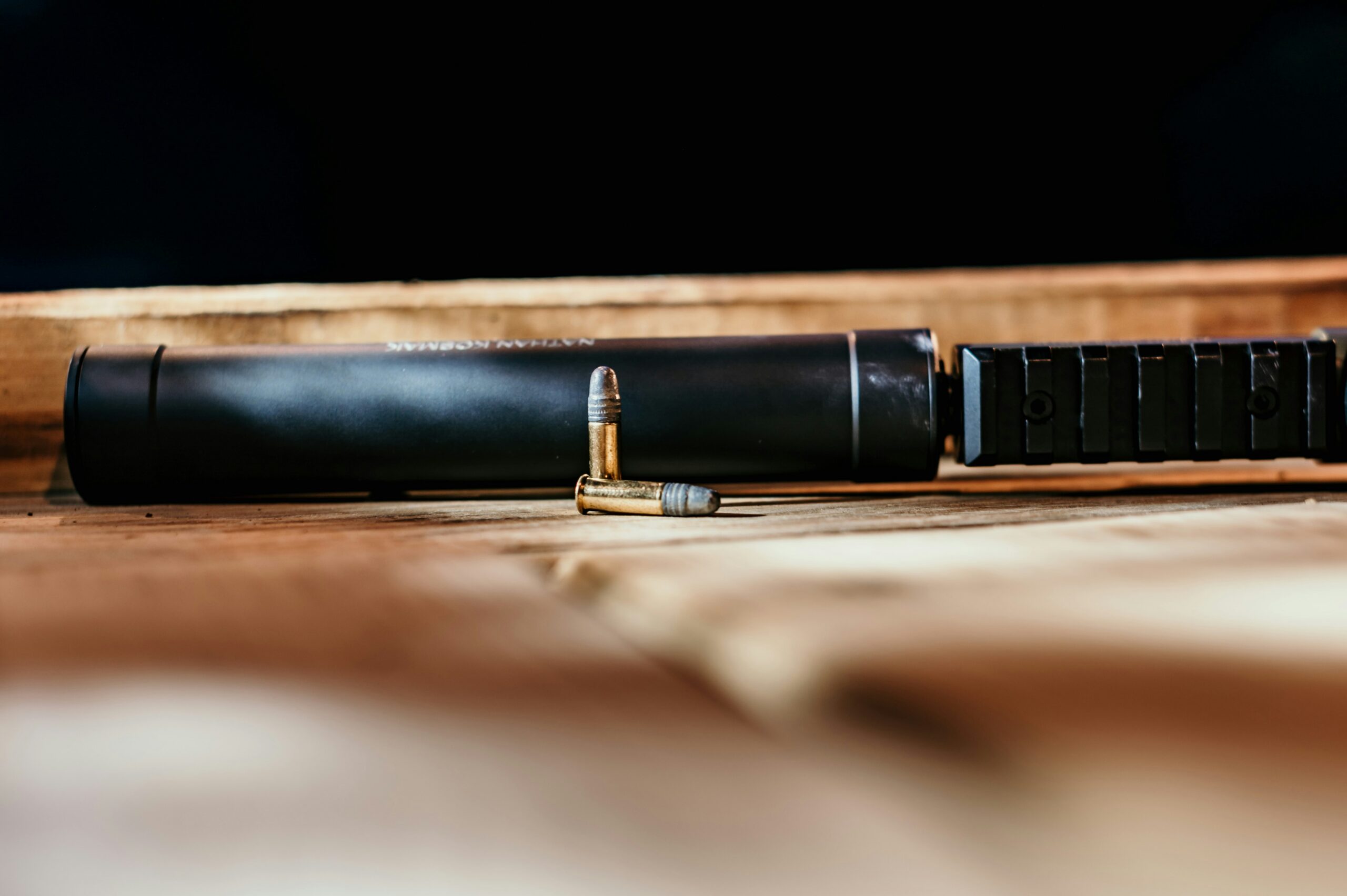
If you’re looking at a 22 rimfire suppressor for the first time, you’ve probably asked yourself: is it worth the process? Do I really need one? Will it be as quiet as I think? The short answer is yes, yes, and it depends on your ammo.
Rimfire is the most accessible entry point into suppressed shooting. Calibers are affordable, suppressors are lightweight, and with the $200 NFA tax stamp eliminated as of January 2026, the barrier to ownership has never been lower.
How a 22 Rimfire Suppressor Works
Internal Design — Baffles, Gas Expansion, and Sound Reduction
When a round fires, a large volume of high-pressure gas follows the bullet out of the muzzle. Without a suppressor, that gas exits instantly and creates the sharp crack you hear. A suppressor traps that gas inside a series of internal chambers, giving it space to cool and slow down before exiting.
The internal components, usually baffles or a monolithic core, force the gas to change direction repeatedly. That redirection bleeds off energy and pressure, and by the time the gas exits, it does so at a much lower velocity and sound level.
Why Rimfire Calibers Are Ideal for Suppression
Rimfire cartridges like .22 LR generate significantly less chamber pressure than centerfire rounds. That lower pressure means the gas volume entering the suppressor is smaller and easier to manage. It also means the suppressor body can be built from lighter materials without sacrificing durability.
A quality 22 suppressor typically delivers 38 to 46 dB of sound reduction. That often brings .22 LR down to around 113 to 115 dB with standard loads, putting it at or near hearing-safe levels when paired with subsonic ammo.
Benefits of Running a Rimfire Suppressor
Hearing Protection and Shooter Comfort
Repeated exposure to unsuppressed gunfire causes cumulative hearing damage. Even a single range session without ear protection can have long-term effects. A suppressor reduces that risk substantially, often bringing rimfire to hearing-safe levels, though wearing protection is still a smart habit.
Suppressors also reduce overall shooting fatigue. Less noise and concussion means longer, more comfortable sessions.
Reduced Muzzle Rise and Improved Follow-Up Shots
The gas that drives muzzle rise exits through the suppressor’s chambers rather than launching straight forward. That controlled exit reduces felt recoil and keeps the muzzle flatter between shots. For precision work, this means tighter groups and faster follow-up shots.
Field Applications — Small Game Hunting, Training, and Plinking
Suppressed rimfire is a natural fit for small game hunting. The reduced report avoids spooking nearby game and minimizes noise complaints in rural areas. For training new shooters, the quieter experience builds confidence without the intimidation of unsuppressed fire.
For everyday plinking, suppressed .22 LR is one of the most enjoyable things you can do at the range.
What to Look for in a 22 Rimfire Suppressor
Materials — Titanium vs. Stainless Steel
The two most common materials for rimfire suppressors are titanium and stainless steel. Each has a clear use case:
- Stainless steel — durable, handles fouling well, generally more affordable
- Titanium — same strength at a fraction of the weight, better suited for pistols, hunting setups, and lightweight rifle builds
For high-volume range work, stainless steel is a proven choice. If you plan to hunt or carry the can in the field, titanium is worth the investment.
User-Serviceable and Take-Apart Design
Rimfire ammo is notoriously dirty. Lead bullets and powder residue leave heavy carbon fouling inside the suppressor over time. If the suppressor cannot be disassembled, that fouling builds, performance degrades, and the can becomes very difficult to service.
A take-apart design lets you clean the internals directly. User-serviceability is not optional for a rimfire can.
First Round Pop and How Baffle Geometry Affects It
The first shot through a suppressor is often louder than subsequent shots. Oxygen inside ignites when it meets hot combustion gases from the first round, producing a sharp initial pop. It settles into normal performance from the second shot onward.
Tighter baffle tolerances and deliberate gas-flow geometry can minimize this effect. Check the manufacturer’s dB specs for both first-round pop and sustained performance before buying.
Thread Pitch and Multi-Caliber Compatibility
Most .22 LR rifles and pistols are threaded at 1/2-28, the standard direct-thread pitch for rimfire suppressors. Confirm your host firearm’s thread pitch before purchasing.
Many rimfire suppressors are also rated for additional calibers, including .22 WMR, .17 HMR, .17 M2, and 5.7x28mm. That versatility lets one can cover an entire rimfire collection.
Liberty Suppressors Rimfire Lineup — Made in Georgia
Liberty Suppressors is based in Trenton, Georgia, and manufactures every suppressor on-site in the USA. Their rimfire lineup reflects more than a decade of development and customer-driven engineering.
The Regulator — Maximum Sound Reduction
The Regulator features a titanium outer tube paired with a stainless steel monolithic core. It delivers 40 to 46 dB of sound reduction with an overall dB reading of approximately 115 dB, including first round pop.
The core was redesigned to virtually eliminate first round pop while maintaining those performance numbers. Clean it approximately every 500 rounds to keep it performing at its best.
The Regulator Ti Full Titanium Build
The Regulator Ti uses a 6Al4V titanium monolithic core with a titanium outer tube. It is the lightest can in Liberty’s rimfire lineup, matching the standard Regulator on sound reduction: 40 to 46 dB, approximately 115 dB overall.
Key features at a glance:
- Calibers — .22 LR, .22 WMR, .17 HMR, .17 M2
- Disassembly — no tools required
- Wavelok joining system — assembles only one way, making reassembly foolproof
The Vector — Built for Low-Maintenance Shooters
The Vector was built for shooters who put a lot of rounds downrange without strict cleaning schedules. Its modular stacked-baffle design comes apart with minimal effort even after 3,000 rounds of .22 LR.
It offers standard and short configurations to match suppression or size preference. The outer tube is aluminum, the baffles are 18-8 stainless steel, and it is rated for .22 WMR as well.
Subsonic Ammo and the 22 Rimfire Suppressor
Subsonic vs. Supersonic — Why It Matters for Suppression
A suppressor handles the muzzle blast. It does not handle the supersonic crack. When a bullet breaks the sound barrier, it produces a sharp crack that no suppressor can eliminate. That crack is entirely separate from the muzzle report.
To get the full benefit of your 22 rimfire suppressor, use ammunition that stays below approximately 1,050 fps. Supersonic loads reduce muzzle blast, but the bullet will still crack downrange.
Recommended Ammunition for Suppressed Rimfire
CCI Standard Velocity is the go-to recommendation from Liberty Suppressors. It is naturally subsonic, consistent, and cycles reliably through most semi-automatic rimfire platforms.
For .22 WMR and .17 HMR, confirm the suppressor’s caliber rating before use. Only suppressors specifically rated for those cartridges should be used with them.
NFA Ownership
Suppressors as NFA Items and What Still Applies
Suppressors remain regulated under the National Firearms Act. Ownership still requires:
- ATF Form 4
- NICS background check
- Two sets of fingerprints
- Passport-style photograph
- Purchase through a licensed FFL/SOT dealer
The suppressor stays with the dealer until ATF approval is received. None of that has changed. What has changed is the cost.
The $200 Tax Stamp Is Now $0
The One Big Beautiful Bill Act eliminated the $200 NFA transfer tax on January 1, 2026. This covers suppressors, SBRs, SBSs, and AOWs. The process still exists, but the financial barrier is gone.
Demand has surged since the change. ATF eForm processing times may be longer than usual. Plan accordingly.
State Suppressor Laws — Know Your State
Suppressors are legal for ownership in approximately 42 states. State laws vary on hunting use, even where ownership is permitted. Check your state’s specific regulations and confirm any local restrictions before purchasing.
Cleaning and Maintaining a Rimfire Suppressor
Why Rimfire Ammo Is Harder on Suppressors
Centerfire ammunition uses jacketed projectiles and cleaner-burning powders. Most rimfire ammo uses lead bullets. The coating on those bullets, combined with powder residue, creates dense fouling inside the baffles.
Left too long, that fouling hardens and reduces the suppressor’s internal volume. Sound performance drops and disassembly becomes much harder.
Proper Cleaning Frequency and Technique
Liberty recommends cleaning the Regulator approximately every 500 rounds. That lines up with the maintenance schedule most semi-automatic rimfire platforms follow anyway.
Every Liberty rimfire suppressor ships with the tools needed for disassembly. The Regulator Ti adds no-tool takedown and Wavelok technology, which only allows one correct reassembly orientation, removing the guesswork.
Conclusion
The 22 rimfire suppressor is one of the smartest first purchases in the NFA world. Affordable ammo, compact design, real hearing protection, and no tax stamp fee make it the most accessible suppressed shooting experience available. Rimfire delivers the best value per dollar, for first-time buyers and seasoned collectors alike.
Liberty Suppressors builds every can in Trenton, Georgia, with US materials and proven engineering. The Regulator, Regulator Ti, and Vector cover the full range of rimfire calibers. Shop the Liberty rimfire lineup at libertycans.net or call (706) 661-6911 to find the right 22 rimfire suppressor for your setup.
Frequently Asked Questions (FAQs)
1. What makes a 22 rimfire suppressor different from a centerfire suppressor?
Rimfire suppressors are built for lower-pressure cartridges, making them lighter, more compact, and easier to maintain. Only use them with the calibers they are rated for.
2. Do I still need to do paperwork after the tax stamp fee was eliminated?
Yes. The ATF Form 4, background check, fingerprints, and photo are still required. Only the $200 fee was eliminated.
3. Can I use a 22 rimfire suppressor on multiple firearms?
Yes, as long as host firearms share the same thread pitch. Many rimfire suppressors also cover .22 WMR, .17 HMR, and .17 M2.
4. How often should I clean my rimfire suppressor?
Approximately every 500 rounds. Rimfire fouling builds quickly, and waiting too long makes disassembly significantly harder.
5. Is subsonic ammo required to run a rimfire suppressor?
Not required, but strongly recommended. Supersonic loads still produce a downrange crack that no suppressor can eliminate.