0
Search Results

agent

Bulletin Board

Liberty Suppressors Agent 556 Silencer has arrived!

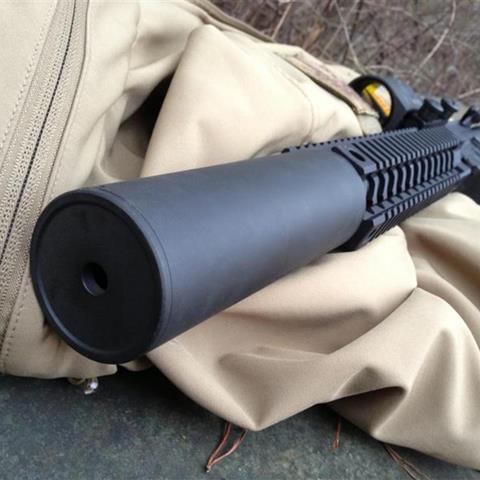
The Agent is our latest dedicated 556 silencer and it has all the features you cold ever want in a detachable silencer design. The silencer is made from titanium and inconel (blast baffle) for long life and a light weight feel. When we designed this silencer, we wanted something that was not already available in this space. The reason was that we wanted to serve the people looking for a lightweight, severe duty 556 silencer that could be configured in any way the user needed it.

How we did this was to add a 1-3/8×24 socket to the back of the silencer so that we could install a plurality of mounting solutions. These include direct thread adapters from us or anyone in the industry that makes a quality adapter, or even something like the Dead Air Keymo mounting scheme as well. We actually offer the Agent 556 Silencer as packages with either the end cap only, nothing at all or the “full monty” of the end cap for direct thead use as well as the Dead Air Keymo mount and brake. This thought process leaves the choice to the end user as to which system of attachment is best for them.

Agent with the Dead Air Keymo Mount installed.

Another thing we did with the Agent that we have not traditionally done in the past is make a baffle design specific for this the 556 round and not compromise it with some other caliber to give it a multi-caliber option. This is because the Agent 556 silencer is designed from the outset for the 5.56 NATO cartridge and is truly optimized for it. As I was doing various tests on the prototypes, I would personally make minor adjustments to the baffle design to improve things like back pressure mitigation and tone and well as over all signature and flash reduction. We have done long term testing on this 556 silencer to see how it would handle things like rain where it would get water in it during use. This can be a problems as well, since adding water to a rifle silencer can make for a high pressure steam failure if the system is not designed to handle it. (As an aside, it worked flawlessly during these tests too, just producing glorious clouds of steam in the process.)

Something that is overlooked in many silencer designs is the back pressure generated in rifle silencers like the Agent. 556 silencers are especially susceptible to back pressure and the AR15 platform is greatly affected by the extra gas in the system as well. Ever since the introduction of our Zulu integral 556 silencer with the pressure vents on the front cap, we have incorporated this philosophy into our other rifle silencers we develop. The agent front cap has a plurality of tiny slots that line up with the joint between the tube and core where there is a high pressure low, low flow rate interface. This allows us to vent pressure from the silencer under very controlled conditions preventing secondary combustion, making the silencer even quieter.

9 radial ports in the front cap help vent high pressures away from the operator.

Finally, to top it all off, we added some more convenient features for the end user to benefit from this wonderful new 556 silencer. We made the front cap replaceable so in the unlikely event of a end cap strike, we dont have to mail the whole silencer back and forth across the country risking loss on every trip. It simply screws out and the new one screws in, easy as that. The other is the use of Type C Cerakote as it is almost indestructible and wont burn off during use. The front cap and thread adapter are done in black nitride so they dont need Cerakote light the titanium body does. So it is basically indestructible, for the most part and should easily last several lifetimes versus the rifle it is mounted to.

I hope you enjoyed this deep dive into the new Agent 556 silencer with me and come back for more info on here as we add more articles over time.

Thank you,

David Saylors

Liberty Suppressors

Bulletin Board

Suppressor Attachment Methods: Direct Thread, QD, and Hybrid Mounting Systems Compared

Getting your suppressor attachment right is one of the most practical decisions you’ll make as a suppressed shooter. It affects how your rifle handles in the field, how fast you can swap platforms, and how much you’ll spend. Most new buyers don’t think about it much until something doesn’t fit.

Whether you’re running a single bolt gun or sharing a can across multiple hosts, the mounting system matters. Here’s a clear breakdown of the three main approaches, what each is best for, and how Liberty Suppressors’ lineup fits in.

Why Your Suppressor Attachment Method Matters

The Impact on Performance, Fit, and Field Use

Your suppressor attachment system isn’t just a mechanical detail. It directly influences point-of-impact repeatability, bore alignment, and long-term durability in the field.

The wrong mount for your use case can mean a shifting zero, trouble swapping hosts, or unnecessary bulk. The three core mount types, direct thread, quick detach (QD), and hybrid, each make different trade-offs. Knowing those trade-offs helps you pick the right one for how you actually shoot.

Direct Thread Mounting

How Direct Thread Works

Direct thread is exactly what it sounds like. The suppressor screws directly onto the threaded muzzle of your barrel. No intermediate muzzle device required.

All you need is a matching thread pitch between the suppressor adapter and your barrel. Common pitches in the US include 1/2-28 for 5.56 rifles and 5/8-24 for larger calibers. Think .308 and .300 Blackout. Thread it on, torque it down, and you’re ready.

Advantages of Direct Thread

The biggest selling points are weight, length, and cost. Direct thread setups are shorter and lighter than QD alternatives. That matters if you’re carrying a rifle all day or want the most compact setup possible.

Key advantages at a glance:

  • Fewer parts — less tolerance stacking and tighter alignment
  • Shorter and lighter — no muzzle device adding bulk
  • Lower cost — adapters are among the least expensive options available
  • Simple setup — match the thread pitch and thread it on

Liberty offers direct thread adapters across their MX and IS series. The Agent can be purchased in a direct thread configuration from the start. That keeps the setup light and affordable.

Limitations of Direct Thread

The main drawback is swap time. Threading and unthreading by hand takes time. If threads aren’t clean or the can carbon-seizes from sustained fire, removal gets harder.

Running one suppressor on multiple hosts adds complexity. Each different thread pitch requires its own adapter. For anyone managing two or more hosts with different calibers, this becomes a real pain point.

Quick Detach (QD) Suppressor Mounting

How QD Systems Work

A QD mounting system uses two components: a muzzle device that stays permanently on your barrel, and a matching adapter on the suppressor. The suppressor attaches to the muzzle device rather than directly to the barrel threads.

QD systems use fast-pitch threads that engage in one or two turns. A ratchet, spring collar, or taper then locks the suppressor in place. The result is a secure mount that attaches in seconds.

Types of QD Locking Mechanisms

QD systems aren’t all built the same. The four main types are:

  • Ratchet-based — interlocking teeth prevent backing off under recoil
  • Taper-mount — conical surfaces self-center and lock under tension
  • Spring-loaded passive retention — engages automatically when pushed and twisted onto the mount
  • Three-lug (HK-spec) — bayonet-style mount with a locking mechanism, common on subguns and pistol-caliber carbines

Advantages of QD Mounting

The headline advantage is versatility. Install a compatible muzzle device on each host and swapping the can takes seconds.

Other key benefits:

  • Consistent zero — modern QD systems offer reliable point-of-impact return on re-attachment
  • Thread protection — the muzzle device stays on the barrel, protecting threads from wear
  • Retained muzzle device — the flash hider or brake remains functional when the suppressor is off

Limitations of QD Mounting

QD systems add hardware, which means more weight and overall length. For users focused on a lightweight, compact setup, this matters.

Tolerance stacking is also a real concern. Every added component between the barrel and suppressor introduces potential misalignment. Well-made systems minimize this, but it’s worth factoring in. Many QD systems are also proprietary, so a muzzle device from one manufacturer may not accept a suppressor from another.

Hybrid Suppressor Mounting Systems

What Makes a System Hybrid

Hybrid systems borrow from both direct thread and QD designs. Instead of fine barrel threads or a purely ratchet-based lock, they use coarser fast-pitch threads with a locking collar, or a taper-lock interface that self-centers the suppressor on the mount.

Taper-lock designs are a strong example. The conical bearing surface creates a large contact area. It centers the suppressor and resists torque from firing. No fine threads to strip, no ratchet teeth to wear out.

When Hybrid Suppressor Attachment Makes Sense

Hybrid suppressor attachment fits users who want the rigidity of direct thread with removal speed that approaches QD. Taper-lock systems offer a secure, low-slop interface that’s fast to engage and disengage.

Liberty Suppressors’ LS series is a practical example. The taper-lock design uses a self-centering taper with a large bearing surface. It delivers a rigid, repeatable mount without needing a wrench to remove. It pairs with the LS1 muzzle brake and LS2 flash hider, both of which work as fully functional standalone muzzle devices.

Hybrid System Trade-offs

Most hybrid systems are proprietary, which means committing to a specific ecosystem. They require a compatible muzzle device, so there’s upfront hardware cost.

The payoff is a system built for both speed and security, with fewer moving parts than many ratchet-based QD designs.

The HUB Mount Standard and Cross-Platform Compatibility

HUB stands for Hybrid Universal Base. It refers to the 1.375×24 thread pitch machined into the rear of a suppressor. It has become the dominant industry standard for suppressor mounting threads.

A HUB-compatible suppressor can accept direct thread caps, QD adapters, and piston assemblies from multiple manufacturers. As long as the hardware is built to HUB spec, it works. This opens up far more flexibility than a proprietary thread size.

For Liberty users, the IS series direct thread adapter is HUB-standard and compatible with the Agent suppressor. 

The Verioso A and Verioso B adapters expand this further. Verioso-A allows HUB-standard mounts to work on MX series suppressors. Verioso-B does the inverse, letting MX suppressors accept HUB mounts. This cross-compatibility gives users more hardware options without locking them into one path.

Factors That Should Drive Your Mounting Decision

Number of Host Firearms

  • One host — direct thread is usually the right call. Simple, lightweight, no extra hardware needed.
  • Multiple hosts — QD or a HUB-compatible system pays off fast. Managing separate adapters per thread pitch adds up quickly.

Platform Type and Intended Use

  • Hunting and bolt-action — direct thread or taper-lock. Rigidity and weight savings matter more than swap speed.
  • Tactical and duty use — QD or hybrid for rapid transitions between platforms.
  • Semi-auto pistols — a booster (Nielsen device or piston assembly) is required for tilting-barrel pistols to cycle reliably. Liberty’s Booster Assembly handles this for MX series suppressors.

Weight and Profile Priorities

Direct thread setups are consistently shorter and lighter. If minimum weight is the priority, direct thread wins. If moving one can across multiple platforms regularly, QD’s added hardware is a fair trade-off.

Budget

Direct thread is the lowest-cost entry point. The Agent is available in a direct thread configuration, keeping upfront cost lower than a full QD kit. QD and hybrid setups require muzzle devices and adapters, adding to the initial investment while expanding the utility of each can.

Conclusion

The right suppressor attachment method comes down to how you actually use your setup. Direct thread wins on simplicity, weight, and cost. QD wins on speed and multi-platform flexibility. Hybrid systems like Liberty’s LS taper-lock offer a solid middle ground when rigidity and reasonable swap time both matter.

No single mount type fits every shooter or situation. Match the system to your real-world needs, not the most feature-heavy option available.

Liberty Suppressors’ MX, IS, and LS adapter series are built to give users flexibility without forcing a single mounting path. Whether you’re running direct thread on one host or building out a multi-platform QD system, there’s an adapter combination that gets you there.

Browse the full adapter breakdown, or shop the suppressor lineup at libertycans.net/shop to find the right can and suppressor attachment system for your build.

Frequently Asked Questions (FAQs)

1. What is the most secure type of suppressor attachment?

Direct thread is inherently rigid with no intermediate parts. Well-made QD and taper-lock systems are equally secure in practice. Quality of manufacture matters more than mount type.

2. Can I use a QD suppressor on any firearm?

Not without the right muzzle device. The host firearm needs a compatible QD muzzle device installed first. Once in place, the same suppressor can move between multiple hosts.

3. Do I need a booster for a suppressor on a semi-auto pistol?

Yes, for tilting-barrel pistols. A Nielsen device (piston/booster assembly) allows the barrel to cycle properly with a suppressor attached. Fixed-barrel pistols and PCCs do not require one.

4. What does HUB mean on a suppressor?

HUB stands for Hybrid Universal Base. It’s a 1.375×24 thread pitch on the rear of the suppressor and is the current industry standard. A HUB suppressor accepts direct thread caps, QD adapters, and piston assemblies from a wide range of manufacturers.

5. Is direct thread or QD better for hunting?

Direct thread or a taper-lock hybrid is typically the better fit. Lighter weight and fewer parts work well for field use. QD adds value when moving the can between multiple hunting platforms.

Bulletin Board

Suppressor Adapter Options Explained: Expanding Compatibility Across Your Firearm Collection

A suppressor adapter is the piece that makes or breaks your entire suppressed shooting setup. If you own more than one firearm, chances are they do not all share the same barrel thread pitch. A pistol, an AR-15, a bolt-action hunting rifle, and a PCC can each have different muzzle threads. Without the right adapter, your suppressor stays locked to just one of them.

Choosing the right suppressor adapter solves that problem. At Liberty Suppressors, based in Trenton, Georgia, adapter variety is a core focus. Liberty manufactures more mounting options than most in the industry, all designed to fit their suppressors to virtually any host firearm.

What a Suppressor Adapter Does and Why It Matters

A suppressor adapter connects your suppressor to your host firearm. It interfaces between the rear threads of the suppressor and the muzzle threads of your barrel. Without the correct suppressor adapter, the two will not connect, and forcing a mismatch can damage both the firearm and the can.

The adapter you choose determines how securely the suppressor attaches, how much length and weight it adds, and whether you can move the can between multiple guns. Getting this right is the foundation of a functional suppressed system.

Thread Pitch and Its Role in Compatibility

Thread pitch refers to the spacing of the threads on your barrel’s muzzle. It varies by caliber and firearm type:

  • Rimfire and .224 centerfire barrels are most commonly threaded at 1/2-28
  • Larger centerfire rifles typically use 5/8-24
  • Pistols introduce more variation, including metric pitches on foreign or older domestic models

When thread pitches between the suppressor and barrel do not match, the suppressor cannot mount safely. A misaligned fit can cause the can to strike the bore during firing. Matching thread pitch correctly is the first critical step in adapter selection.

Common Barrel Thread Pitches by Firearm Type

Rifles are the most predictable. Most AR-15s in .223/5.56 use 1/2-28, and most .308-caliber barrels use 5/8-24. Bolt-action hunting rifles are less consistent, with some manufacturers using non-standard pitches depending on caliber and country of origin.

Pistols vary widely. Many compact semi-auto handguns, especially imported models, come with metric threads that require conversion adapters. PCCs add another layer, with some running 1/2-28 and others using platform-specific threading. Across a diverse collection, a dedicated suppressor adapter per host becomes a practical necessity.

Direct Thread Suppressor Adapters

Fixed Barrel Adapters for Rifles

Direct thread adapters thread onto the muzzle of the host firearm. The suppressor attaches to the adapter rather than directly to the barrel. The result is a simple, reliable connection with very few parts.

The main advantages are:

  • Compact profile with minimal added length
  • Reduced weight compared to QD systems
  • Fewer components, which means fewer potential points of failure

Liberty’s FBA (Fixed Barrel Adapter) is their standard direct thread option for rifle use. It adds less than an inch to the suppressor’s overall length and creates an additional blast chamber at the muzzle. That blast chamber protects the suppressor’s internals when running .308-class rounds and heavier calibers.

For shooters running Liberty’s Agent suppressor, the IS series direct thread adapter uses the 1.375-24 industry-standard thread interface. It adds less than 1/4 inch to suppressor length and weighs just 2 oz.

Low-Profile Options for Pistol Calibers and Subsonic Loads

Not every suppressed setup needs a rifle-rated adapter. When running pistol-caliber builds or subsonic loads, a smaller and lighter option makes more sense.

Liberty’s LoPro FBA is built for exactly that. Made from aluminum, it weighs only 1.5 oz with a smaller footprint than the standard FBA. It is designed for pistol caliber and subsonic applications where deep blast chamber protection is less critical.

Lighter adapters for lower-pressure loads are not built for sustained high-powered centerfire use. Matching the adapter to the actual application gets you the best performance and service life.

Quick-Detach and Taper-Lock Mounting Systems

Multi-Host Flexibility with QD Mounts

Quick-detach systems let you move one suppressor between multiple host firearms. A muzzle device, either a flash hider or muzzle brake, is permanently installed on each host gun. The suppressor locks onto that device quickly and consistently, without needing to match thread pitches across every firearm.

QD systems do require more maintenance than direct thread setups. Carbon buildup on the muzzle device and locking mechanism can affect how cleanly the suppressor seats, so regular cleaning is part of the process.

Liberty addresses cross-compatibility through their Verioso adapter family:

  • Verioso-A threads into any suppressor with 1.375-24 threads, opening up the MX series of mounts
  • Verioso-B threads into an MX-pattern Liberty suppressor to accept 1.375-24 mounts from third-party QD systems

This gives Liberty can owners access to widely available QD muzzle devices without needing a different suppressor.

Taper-Lock Systems for Secure, Self-Centering Attachment

Taper-lock systems use a conical, self-centering interface between the muzzle device and suppressor. The large bearing surface handles torque well and holds a point-of-impact consistency advantage over ratchet-style QD designs.

Liberty’s LS series is their taper-lock family:

  • LS1 Muzzle Brake delivers significant recoil reduction through 24 radially arranged ports and does not need to be timed to the rifle during installation
  • LS2 Flash Hider matches the LS1 footprint and focuses on hiding muzzle flash and reducing concussion
  • LS2 Extended Flash Hider in 1/2-28, designed to pin and weld to 14.5-inch barrels to reach the legal 16-inch minimum

All three are designed for the Sovereign suppressor and are compatible with Liberty’s MX series suppressors through the Sovereign-to-MX adapter.

Suppressor Adapter Considerations for Pistols

Handguns introduce a layer of complexity that rifles do not have. The right suppressor adapter for a pistol depends primarily on how the barrel operates, not just what thread pitch it uses.

Booster Assemblies for Tilting-Barrel Handguns

Most modern semi-automatic pistols use a tilting or sliding barrel design. When a suppressor is added, its weight interferes with the barrel’s normal cycling stroke. Without a compensating mechanism, the pistol will fail to cycle reliably.

That mechanism is a booster assembly, also called a Nielsen device. Its piston decouples the suppressor from the host weapon during the firing sequence, freeing the barrel to complete its cycling stroke normally.

Liberty’s Booster Assembly is built for this application. The piston is also available separately, allowing one housing to serve multiple pistol hosts with different thread pitches.

For handguns with fixed, non-tilting barrels, Liberty offers the Booster Lockout Bushing. It replaces the booster spring and locks the piston in the seated position, converting the assembly into a rigid fixed mount.

3-Lug Mounts for PCCs and Subguns

Three-lug mounts connect to the host firearm using three radial lugs on a weapon-side mount. No barrel threading is involved. The suppressor engages those lugs and locks with a simple rotation, making this a fast and clean solution for HK-spec submachine guns, pistol-caliber carbines, and fixed-barrel PCCs.

Liberty offers the 3-Lug Mount for the suppressor side and the 3-Lug Weapon Mount Adapter for the host side, both built to HK specifications for a tight and predictable fit.

Matching the Right Adapter to Your Firearm Collection

Adapter Selection by Application

Choosing the right adapter comes down to platform and use case:

  • Bolt-action hunting rifle: Direct thread (FBA or IS series) for accuracy, minimal weight, and simplicity
  • Semi-auto rifle / AR: QD or taper-lock with a muzzle device on each host for multi-gun flexibility
  • Tilting-barrel handgun: Booster Assembly to allow reliable cycling while suppressed
  • Fixed-barrel handgun: Booster Lockout Bushing as a rigid fixed mount
  • PCC / subgun: 3-Lug Mount for fast, tool-free attachment and detachment

Cross-Compatibility and Adapter Families

Liberty organizes their adapters into three families: MX, IS, and LS. Each uses a defined thread interface. Where shooters need to cross between families, Liberty provides bridging solutions.

The Sovereign-to-MX adapter opens LS series taper-lock mounts to MX pattern suppressors. The Verioso adapters open the MX interface to the 1.375-24 standard used by many third-party QD systems. These options make it possible to build a versatile multi-host setup without purchasing a second suppressor.

Liberty’s adapter breakdown page at libertycans.net maps each adapter to its compatible suppressors, making it a practical reference for multi-platform builds.

Conclusion

The right suppressor adapter is what transforms a single can into a tool that works across your entire firearm collection. Without it, compatibility stays limited to one host. With the right adapter or adapter system, one suppressor can serve rifles, pistols, and PCCs without compromise.

Liberty Suppressors, manufactured in the USA in Trenton, Georgia, offers one of the broadest adapter lineups in the industry. Browse the full adapter lineup at libertycans.net or call the team directly at (706) 661-6911 to get matched with the right suppressor adapter for your setup.

Frequently Asked Questions (FAQs)

1. What is a suppressor adapter and do I always need one?

A suppressor adapter connects your suppressor to your firearm’s muzzle threads. If the suppressor does not thread directly onto your barrel at the correct pitch, an adapter is required for safe and reliable attachment.

2. How do I find out which thread pitch my barrel has?

Check your firearm’s owner’s manual or the manufacturer’s website. Most AR-15s in .223/5.56 are threaded 1/2-28 and most .308-caliber barrels are 5/8-24. If the information is not listed, contact the manufacturer directly.

3. Can I use one suppressor on multiple firearms?

Yes, with the right mounting setup. A QD or taper-lock system with a compatible muzzle device on each host lets you transfer one suppressor between guns quickly. Direct thread can also work across multiple hosts if barrel thread pitches match.

4. Do I need a booster assembly for every pistol suppressor?

Only if the pistol has a tilting or sliding barrel, which applies to most modern semi-auto handguns. For pistols with fixed, non-tilting barrels, Liberty’s Booster Lockout Bushing converts the assembly into a rigid fixed mount instead.

5. What is the difference between Liberty’s MX, IS, and LS adapter series?

Each series uses a different thread interface. The MX series uses Liberty’s proprietary 1.180-24 thread with the widest range of mount types. The IS series uses the 1.375-24 industry-standard thread. The LS series uses a self-centering taper-lock interface.

Bridging adapters like the Verioso and Sovereign-to-MX allow cross-compatibility between series, so one suppressor adapter system can cover your whole collection.

Bulletin Board

Best Suppressor for 22-250: Performance Insights for Hunters

If you’re hunting for the best suppressor for 22-250, you already know this cartridge is not your average deer round. It’s fast, flat-shooting, and unforgiving of gear that doesn’t keep up with it. Pairing it with the wrong suppressor can cost you hearing protection, accuracy, and hunting opportunities.

The .22-250 Remington has earned its spot as one of the go-to varmint and predator rounds in North America. But suppressing it isn’t as simple as threading on any can and calling it a day. The right suppressor needs to match the velocity, pressure, and field conditions this caliber puts it through.

Why the .22-250 Demands a Quality Suppressor

Not every suppressor is built to handle what the .22-250 throws at it. Understanding the ballistics behind this cartridge explains why your choice matters more here than with slower, milder rounds.

High-Velocity Ballistics and Elevated Gas Pressure

The .22-250 Remington pushes 55-grain bullets to approximately 3,680 fps at the muzzle. Lighter 40-50 grain loads easily exceed 4,000 fps. That speed generates significant gas volume and pressure, well beyond what a typical .223 or 5.56 load produces.

A suppressor not rated for sustained high-velocity fire can degrade faster, run hotter, and fail to manage gas blowback. The muzzle blast on the .22-250 is the loud part, and a quality suppressor handles that well. The supersonic crack downrange is the nature of the round itself. No suppressor changes that.

Primary Use Cases — Varmint and Predator Hunting

The .22-250 is built for field work: prairie dog towns, coyote calling setups, and open farmland hunts where noise matters as much as accuracy. Running a suppressor adds real advantages in these settings:

  • Avoids spooking nearby targets after the first shot
  • Protects your hearing during multi-round sessions
  • Reduces noise complaints from neighboring landowners

For varmint hunters, a suppressed .22-250 in a prone position at 300 to 400 yards is about as refined as the sport gets.

Core Suppressor Selection Criteria for .22-250 Rifles

Before you start browsing cans, a few specs are worth understanding. These factors determine field performance and whether the can survives the round count you plan to run through it.

Bore Diameter — Dedicated .224 vs .30 Caliber Options

The .22-250 fires a .224-inch diameter bullet. That means it fits both dedicated .224 suppressors and larger .30-caliber cans. A .224 dedicated suppressor is optimized for the bore size, offering better decibel reduction for that diameter.

A .30-caliber can gives you versatility across multiple calibers and tends to be more robust against high-pressure loads. Many .22-250 hunters prefer a .30-cal can for exactly that reason: flexibility and durability without sacrificing suppression.

Weight, Length, and Field Portability

Adding a heavy suppressor to a .22-250 changes how the rifle handles. A long can adds front-end weight, causing fatigue during extended prone sessions and making transport into a blind or truck awkward.

For most hunting use, shorter and lighter is better, as long as suppression isn’t sacrificed. Titanium suppressors offer the best balance, delivering lower weight without giving up structural integrity.

Attachment Method and Thread Compatibility

Most .22-250 rifles thread at 1/2×28, a standard pitch compatible with a wide range of suppressors and muzzle devices. Always confirm your barrel’s thread pitch before purchasing.

Direct-thread suppressors are simple and reliable for bolt guns. Quick-detach systems are better if you’re running the same suppressor across multiple platforms. They allow faster transitions and reduce cross-threading risk.

Materials — Steel, Inconel, and Titanium Compared

Each material has its tradeoffs:

  • Stainless steel — durable and affordable, but heavier
  • Inconel — heat-resistant, used in full-auto rated cans for sustained fire
  • Titanium — best weight-to-strength ratio, the top choice for hunting builds

For a .22-250 hunter who wants performance without loading down the muzzle, titanium is hard to beat.

Liberty Suppressor Options for the .22-250

Liberty Suppressors, based in Trenton, Georgia, builds every suppressor on-site in the USA. Their lineup covers several use cases, from dedicated centerfire performance to multi-caliber versatility for hunters running multiple rifles.

Agent 5.56 — Precision Centerfire Suppressor with HUB Socket

The Agent is Liberty’s 5.56-rated centerfire suppressor built around a HUB socket attachment system. It supports direct-thread and quick-attach configurations, making it adaptable to .22-250 bolt guns and semi-automatic platforms.

It’s built for high-velocity centerfire calibers. Materials and tolerances are suited to the elevated pressure the .22-250 generates.

Constitution 2 — Durable 5.56 Field Performance

The Constitution 2 is one of Liberty’s most field-proven suppressors. Built for repeated use on .224-diameter centerfire rifles, it delivers consistent performance in a no-frills package.

For hunters who want reliable .22-250 performance without fussing over maintenance, the Constitution 2 is a practical, durable option at a solid price point.

Mystic X — Multi-Caliber Versatility for the Varmint Hunter

The Mystic X is one of Liberty’s most versatile suppressors. Through Liberty’s adapter system, it supports calibers from .22 up to large-bore rifle and pistol applications.

Use it on a .22-250 during varmint season, then swap to a larger caliber for deer season. That’s exactly what it’s built for. Liberty’s wide adapter selection makes the Mystic X one of the most flexible cans available.

Infiniti X — Lightweight Multi-Caliber Build

The Infiniti X shares the multi-caliber capability of the Mystic X in a lighter build. For hunters who want suppressor versatility without the added weight, it’s the natural fit.

It handles the .22-250’s pressure well and is a strong pick for hunters covering ground on foot who need a can that doesn’t upset rifle balance.

NFA Basics and Suppressed Hunting Legality

Buying a suppressor requires going through the National Firearms Act process, which can feel daunting at first. The process is more straightforward than it looks. Recent changes have also made it faster and more affordable than ever.

Which States Allow Suppressed Hunting

Suppressor ownership is legal in 42 states. Of those, 41 permit hunting with a suppressor. Connecticut is the one exception. Ownership is allowed there, but hunting use is prohibited.

Always verify current regulations in your state before heading out. Georgia, where Liberty Suppressors is headquartered, allows both ownership and hunting use.

NFA Form 4 Process — What to Expect

As of January 1, 2026, the $200 transfer tax on suppressors was eliminated under the One Big Beautiful Bill Act (P.L. 119-21). The Form 4 process and background check still apply. The tax barrier, however, is now gone.

The basic steps to purchase a suppressor:

  1. Submit ATF eForm 4
  2. Provide fingerprints and photos
  3. Pass background check
  4. Wait for ATF approval, then pick up from your licensed dealer

With eForm 4, approvals have been running as fast as a few days to a few weeks. Wait times may vary as application volume grows. Liberty’s team is available by phone to walk first-time buyers through the process directly.

What Separates the Best Suppressor for 22-250 Field Use

Narrowing down the best suppressor for 22-250 hunting comes down to three things: how well it reduces muzzle blast, how long it holds up under field use, and whether it fits the way you actually hunt.

Balancing Sound Reduction, Durability, and Practicality

A suppressor that runs excessively hot after a dozen rounds or loosens under heavy use is a field liability. Durability means consistent performance across a full season, not just the first day out.

A suppressor on a .22-250 brings the muzzle blast down to safer levels and reduces downrange signature. Full hearing safety without protection is achievable on properly suppressed setups, particularly with longer barrels.

Why Made-in-the-USA Construction Matters for Long-Term Use

When something goes wrong, you want to reach the people who actually built the can. Liberty assembles everything in Trenton, Georgia. Quality control is in-house, and the team knows the product from the ground up.

Domestic manufacturing means parts availability, upgrade paths, and warranty support that offshore production doesn’t reliably offer. For a suppressor you plan to run for years across multiple rifles, that matters.

Conclusion

The .22-250 rewards good gear choices, and the suppressor you pair with it is no exception. Material selection, bore diameter, and attachment method all play into real-world performance in the field.

Liberty Suppressors builds every can in the USA with a focus on being light, quiet, and durable. Whether you need a dedicated .224 option or a multi-caliber system, their lineup covers it.

Browse the full lineup at libertycans.net or call (706) 661-6911 to find the right fit for your .22-250 and hunting style. When it comes to the best suppressor for 22-250, expert input before you file the paperwork is always worth it.

Frequently Asked Questions (FAQs)

1. Can I use a .30 caliber suppressor on my .22-250?

Yes. The larger bore is safe for .224 bullets and typically delivers solid suppression. It also gives you versatility across other calibers you own.

2. Will a suppressor change where my .22-250 shoots?

Yes, it can shift your point of impact. Always re-zero with the suppressor mounted before heading into the field.

3. Does the .22-250 stay hearing safe with a suppressor?

It depends on barrel length. Longer barrels get closer to hearing-safe levels when suppressed. Shorter barrels still benefit but may not fully get there. Subsonic loads are not practical with this cartridge.

4. How long does the NFA approval process take?

eForm 4 approvals have been running days to a few weeks as of early 2026. Paper submissions take longer. Check atf.gov for current processing times, as volume may vary.

5. What thread pitch do most .22-250 barrels use?

Most factory .22-250 barrels thread at 1/2×28, compatible with a wide range of suppressors. If your barrel isn’t pre-threaded, a gunsmith can handle it.

Bulletin Board

Inconel Blast Baffles

Liberty Suppressors uses 718 Inconel blast baffles in several rifle can (except the Constitution 2 and Amendment of course). This extends suppressor life to many thousands of rounds! Silencers are designed to live in a VERY harsh environment. In fact, it is one of the harshest environments I can think of to be honest about it. Extreme pressure events where the internal pressure spikes to crazy high levels. Then there is the particle impact damage from unburnt propellant particles and finally there is the heat…

Why do we use Inconel blast baffles?

The use of Inconel 718 in our hard use rifle cans is done for a plurality of reasons. In the below photo we see several different blast baffles designed to do different jobs. The main job is to absorb the abuse of the main blast of energy from the fired cartridge. This metal is VERY durable and has an incredible melting point lending itself to use in this application. There are other metals that do this job better, but they are expensive and even more difficult to work than Inconel 718.

We use Inconel 718 in both the Leonidas Gen 2 300 BLK integral upper as well as the Zulu 556 integral upper assembly. We also use it in our Agent 556 silencer too. In the past we have used it in many models like the Chaotic and the Torch also had Inconel 718 blast baffles. All of these suppressors were designed to be punished in their respective environs from high volume rifle fire. Also we get the question on occasion about why dont we just make the whole silencer out of it…? Well, to be honest, the suppressor would weigh a ton and would be insanely expensive and it would just be a waste of Inconel to be honest. There really is no benefit to using it past the first and maybe the second baffle. As the wear past this area is minimal and high grade stainless steel or titanium can handle this just fine.

Cart Overview