0
Search Results

suppressors

Bulletin Board

Muzzle Suppressors Explained: How They Reduce Report and Improve Shooting Experience

A muzzle suppressor is one of the most misunderstood pieces of equipment in the firearms world. Most of that confusion starts with the movies. In Hollywood, a suppressor turns a rifle into a near-silent weapon. In the real world, that is simply not how it works.

A muzzle suppressor reduces the sound of a gunshot. It does not eliminate it. Think of it like a car muffler. It controls and slows the gases escaping from the barrel so the noise is less intense and less damaging to your hearing. For hunters, competitive shooters, and home defenders, that difference matters.

Clarifying the Terminology

The words “suppressor” and “silencer” are used interchangeably. Both are legally recognized terms under the National Firearms Act. Neither implies the device creates silence.

Inventor Hiram Percy Maxim coined “silencer” when he patented the first commercial model in the early 1900s. He marketed it as a tool for sportsmen looking to protect their hearing and reduce noise complaints from neighbors. At Liberty Suppressors, we call them what they are: tools built to make shooting safer and more comfortable.

How It Attaches to a Firearm Barrel

A suppressor mounts directly to the muzzle end of your barrel. Most modern suppressors use one of two attachment methods:

  • Direct thread — screws directly onto barrel threads; simple, compact, and lightweight
  • Quick-detach (QD) — locks onto a dedicated muzzle device already installed on the barrel; removes and reattaches in seconds without tools

Using the right adapter ensures a solid, aligned fit that protects both your suppressor and your accuracy. Liberty Suppressors offers one of the widest adapter selections in the industry, making it easier to run the same can across multiple host firearms.

Shooting Benefits of Running a Suppressor

Adding a suppressor is not just about reducing noise. The practical benefits carry over into accuracy, situational awareness, and comfort behind the gun. Here is what you actually gain.

Hearing Protection and Long-Term Damage Prevention

Hearing Protection and long-term damage prevention is important as unsuppressed gunfire typically registers between 140 and 175 decibels depending on the caliber. That is well above the 140 dB threshold where permanent hearing damage can occur from a single shot. 

Centerfire rifles commonly reach 165 to 172 dB in standardized testing. Firearms fitted with muzzle brakes can push even higher.

A quality suppressor reduces that peak level by 20 to 35 decibels. Traditional ear protection helps, but it comes with trade-offs: muffled communication, reduced situational awareness, and the need to have it on hand every time you shoot. A suppressor addresses the problem at the source and protects everyone nearby, including hunting partners and dogs in the field.

Recoil Reduction and Muzzle Rise Control

When a suppressor captures and slowly vents expanding propellant gases, it softens the rearward force behind felt recoil. Less recoil means your muzzle stays on target longer after the shot breaks. 

For hunters, that means a faster, steadier reset when a follow-up shot is needed. That can make a real difference in ethical, effective harvests.

Accuracy Gains, Target Acquisition, and Communication on the Range

Flinch develops from anticipating the loud blast and sharp recoil of every trigger pull. A suppressor reduces both. That naturally leads to better shot placement and tighter groups over time.

At the range, suppressed shooting also means you can hear range commands, talk with your partner, and stay aware of your surroundings. No shouting, no constantly removing ear protection between strings of fire.

Muzzle Flash Suppression in Low-Light Conditions

Many suppressor designs reduce or eliminate muzzle flash as a secondary benefit. This happens as a result of capturing combustion gases at the muzzle. In a home defense scenario or a predator hunt after dark, a bright muzzle flash can temporarily blind your vision and give away your position.

A suppressor significantly reduces that concern. It keeps your sight picture cleaner and your location less obvious in low or no-light conditions.

Muzzle Suppressor Types and Compatibility

Choosing the right muzzle suppressor comes down to knowing what types are available and how they interact with your specific setup. Not all suppressors are built the same, and making the right call before you buy saves frustration down the road.

Direct-Thread vs. Quick-Detach Mounting Systems

Direct-thread suppressors thread directly onto a compatible barrel and stay in place. They tend to be lighter and more compact. They are a strong fit for a dedicated host firearm where you are not switching between guns frequently.

Quick-detach systems require a muzzle device permanently installed on the barrel. The suppressor then locks onto it and can be removed in seconds. If you run multiple firearms or switch platforms regularly, a QD system with a solid adapter lineup gives you the most flexibility.

Caliber Matching, Multi-Caliber Designs, and Adapter Versatility

Matching a suppressor to your cartridge is both a performance and safety consideration. The hard rule: never run a suppressor on a caliber larger than what it is rated for. That causes dangerous over-pressure and can result in catastrophic failure.

Running a larger-bore suppressor on a smaller-caliber firearm is generally safe with the correct adapter. It can still deliver solid sound reduction. A properly matched can will optimize performance for that specific cartridge. Always verify the suppressor’s rated caliber before mounting it to any host firearm.

Multi-caliber suppressors give you the most range. With the right adapters, a single suppressor can run on pistols, rifles, and rimfire platforms. Liberty Suppressors offers one of the broadest adapter systems on the market, built to give shooters real flexibility across their entire collection.

How Barrel Length and Ammunition Type Affect Performance

Barrel length plays a role in effective suppression. A longer barrel gives propellant gases more time to cool and expand before reaching the muzzle. Shorter barrels push hotter, faster gases into the suppressor, which can reduce overall performance slightly.

Ammunition choice is the other key variable:

  • Subsonic loads travel below the speed of sound and eliminate the secondary sonic crack from supersonic projectiles. This gives you the quietest possible combination.
  • Supersonic rounds will still produce a ballistic crack downrange, regardless of suppressor quality.

Legal Framework for Suppressor Ownership in the United States

The rules around suppressor ownership have shifted significantly. Current buyers are in a better position than at any point in the past nine decades.

NFA Registration and the ATF Form 4 Process

In the United States, suppressors are regulated under the National Firearms Act. To purchase one legally, buyers must:

  • Complete an ATF Form 4
  • Pass a background check through the National Instant Criminal Background Check System
  • Submit fingerprints and a passport photo
  • Purchase through a licensed FFL dealer with Special Occupational Tax (SOT) status

Electronic filing through the ATF eForms system has dramatically shortened processing times. Applications that once took close to a year are now commonly processed in weeks.

The Elimination of the Federal Tax Stamp — What Changed and What Remains

Federal legislation eliminated the long-standing $200 federal excise tax on suppressors and other NFA items. That tax, in place since 1934, has been reduced to zero. It removed one of the biggest financial barriers to suppressor ownership.

What remains in place:

  • NFA registration is still required
  • Background checks are still mandatory
  • Purchases must still go through a licensed dealer with SOT status

The cost to enter the process is now substantially lower. A muzzle suppressor is within reach for a much wider range of American shooters.

State-Level Restrictions, What Buyers Still Need to Verify

Federal law is only part of the picture. Some states prohibit suppressor ownership entirely. Others allow ownership but restrict use for hunting. 

Confirm your state permits suppressors and understand any specific use limitations before purchasing. Always check current state laws or ask a knowledgeable dealer before submitting paperwork.

How to Choose the Right Suppressor for Your Firearm

The right suppressor fits your firearm, your shooting habits, and your priorities. A few key factors make the decision straightforward.

Key Specs to Compare — Weight, Materials, Rated Caliber, and Sound Reduction

When evaluating options, focus on:

  • Weight — affects how your firearm handles, especially on a rifle carried all day in the field
  • Material — aluminum for lightweight builds, stainless steel for strength, titanium for the best balance of both
  • Rated caliber — must match or not exceed your cartridge
  • Sound reduction — most quality suppressors deliver 20 to 35 dB of reduction

Confirm the suppressor works with an adapter system flexible enough to grow alongside your collection.

Why American-Made Construction Matters for Long-Term Durability

A suppressor is a long-term investment. Construction quality determines how well it holds up over thousands of rounds in real conditions. Liberty Suppressors manufactures every can on-site in Trenton, Georgia, using precision machining and materials selected for performance and durability.

Buying American-made means tighter quality control, a shorter supply chain, and direct manufacturer support when you need it. For equipment subjected to extreme heat, pressure, and regular field use, that accountability matters.

Conclusion

A muzzle suppressor improves the shooting experience in ways that go well beyond simply quieting a gunshot. Hearing protection, recoil management, accuracy, and situational awareness are all real, measurable benefits. With the recent elimination of the federal tax stamp, there has never been a more accessible time to make the move.

Liberty Suppressors builds every can in Trenton, Georgia with one goal: to give American shooters a light, quiet, and durable solution built to last. Browse the full lineup and find the right muzzle suppressor for your firearm.

Frequently Asked Questions (FAQs)

1. Does a muzzle suppressor make a firearm completely silent?

No. A suppressor reduces peak sound levels by 20 to 35 dB on average. The firearm remains clearly audible.

2. Do I still need a tax stamp to buy a suppressor?

The $200 federal tax stamp has been eliminated. You still need to complete an ATF Form 4, pass a background check, and purchase through a licensed FFL dealer with SOT status.

3. Can one suppressor work across multiple firearms?

Yes, with the right adapters. Multi-caliber suppressors can run on pistols, rifles, and rimfire platforms safely.

4. Does a suppressor affect bullet velocity or accuracy?

No. A suppressor does not reduce bullet velocity. Accuracy typically improves due to reduced recoil and muzzle rise.

5. Are suppressors legal in every state?

No. Most states permit suppressor ownership, but several prohibit it entirely. Always verify your current state laws before purchasing.

Liberty Suppressors Black Hoodie

• 50% pre-shrunk cotton, 50% polyester
Heather Sport Dark Navy is 40% cotton, 60% polyester
• Fabric weight: 8.0 oz/yd² (271.25 g/m²)
• Air-jet spun yarn with a soft feel and reduced pilling
• Double-lined hood with matching drawcord
• Quarter-turned body to avoid crease down the middle
• 1 × 1 athletic rib-knit cuffs and waistband with spandex
• Front pouch pocket
• Double-needle stitched collar, shoulders, armholes, cuffs, and hem

Liberty Suppressors Hoodie

Everyone needs a cozy go-to hoodie to curl up in, so go for one that’s soft, smooth, and stylish. It’s the perfect choice for cooler evenings!

• 50% pre-shrunk cotton, 50% polyester
• Air-jet spun yarn with a soft feel and reduced pilling
• Front pouch pocket
• Double-needle stitched collar, shoulders, armholes, cuffs, and hem

Bulletin Board

Liberty Suppressors Agent 556 Silencer has arrived!

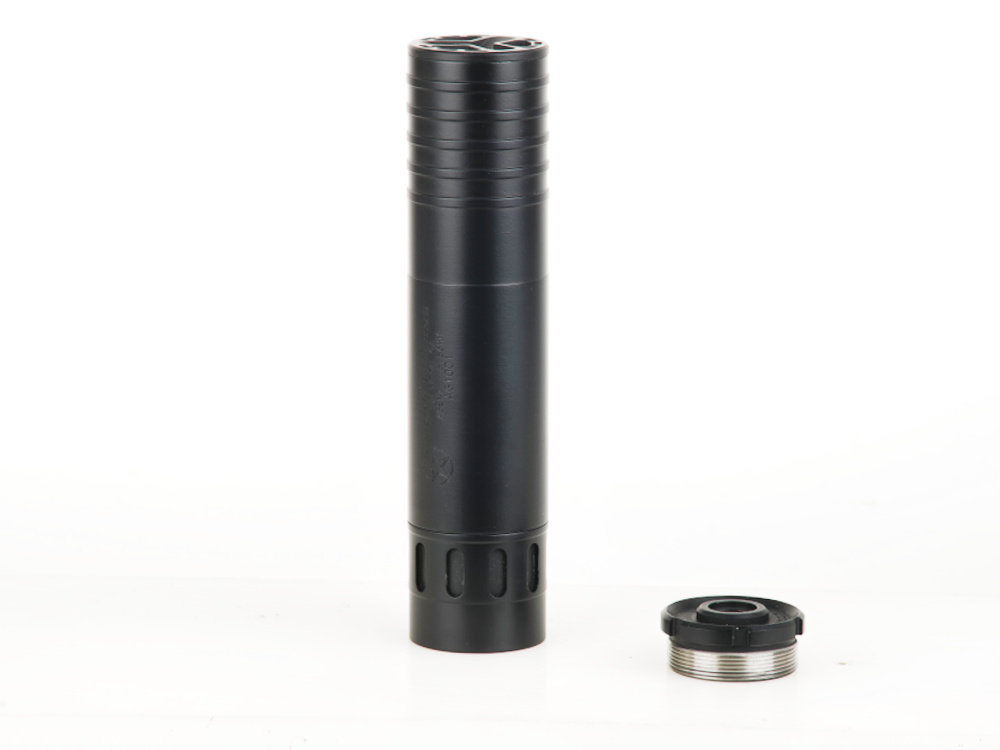
The Agent is our latest dedicated 556 silencer and it has all the features you cold ever want in a detachable silencer design. The silencer is made from titanium and inconel (blast baffle) for long life and a light weight feel. When we designed this silencer, we wanted something that was not already available in this space. The reason was that we wanted to serve the people looking for a lightweight, severe duty 556 silencer that could be configured in any way the user needed it.

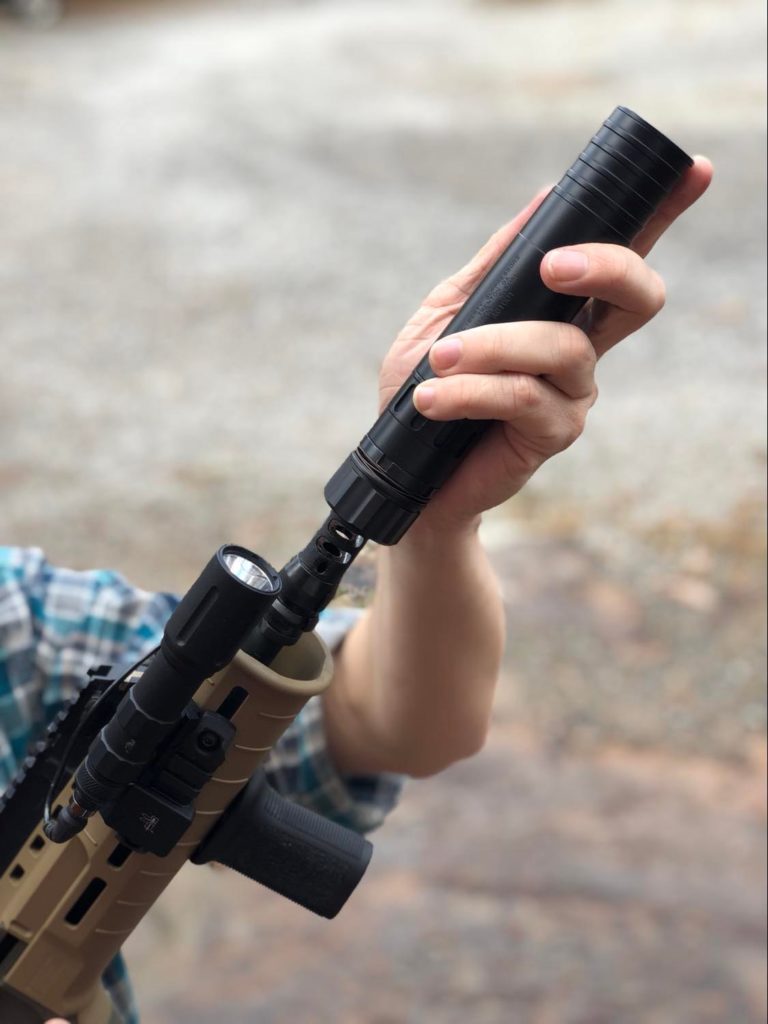
How we did this was to add a 1-3/8×24 socket to the back of the silencer so that we could install a plurality of mounting solutions. These include direct thread adapters from us or anyone in the industry that makes a quality adapter, or even something like the Dead Air Keymo mounting scheme as well. We actually offer the Agent 556 Silencer as packages with either the end cap only, nothing at all or the “full monty” of the end cap for direct thead use as well as the Dead Air Keymo mount and brake. This thought process leaves the choice to the end user as to which system of attachment is best for them.

Agent with the Dead Air Keymo Mount installed.

Another thing we did with the Agent that we have not traditionally done in the past is make a baffle design specific for this the 556 round and not compromise it with some other caliber to give it a multi-caliber option. This is because the Agent 556 silencer is designed from the outset for the 5.56 NATO cartridge and is truly optimized for it. As I was doing various tests on the prototypes, I would personally make minor adjustments to the baffle design to improve things like back pressure mitigation and tone and well as over all signature and flash reduction. We have done long term testing on this 556 silencer to see how it would handle things like rain where it would get water in it during use. This can be a problems as well, since adding water to a rifle silencer can make for a high pressure steam failure if the system is not designed to handle it. (As an aside, it worked flawlessly during these tests too, just producing glorious clouds of steam in the process.)

Something that is overlooked in many silencer designs is the back pressure generated in rifle silencers like the Agent. 556 silencers are especially susceptible to back pressure and the AR15 platform is greatly affected by the extra gas in the system as well. Ever since the introduction of our Zulu integral 556 silencer with the pressure vents on the front cap, we have incorporated this philosophy into our other rifle silencers we develop. The agent front cap has a plurality of tiny slots that line up with the joint between the tube and core where there is a high pressure low, low flow rate interface. This allows us to vent pressure from the silencer under very controlled conditions preventing secondary combustion, making the silencer even quieter.

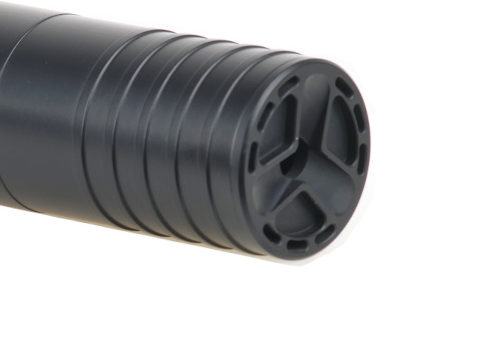
9 radial ports in the front cap help vent high pressures away from the operator.

Finally, to top it all off, we added some more convenient features for the end user to benefit from this wonderful new 556 silencer. We made the front cap replaceable so in the unlikely event of a end cap strike, we dont have to mail the whole silencer back and forth across the country risking loss on every trip. It simply screws out and the new one screws in, easy as that. The other is the use of Type C Cerakote as it is almost indestructible and wont burn off during use. The front cap and thread adapter are done in black nitride so they dont need Cerakote light the titanium body does. So it is basically indestructible, for the most part and should easily last several lifetimes versus the rifle it is mounted to.

I hope you enjoyed this deep dive into the new Agent 556 silencer with me and come back for more info on here as we add more articles over time.

Thank you,

David Saylors

Liberty Suppressors

Liberty Suppressors Toboggan

This organic ribbed beanie is stylish, practical, and eco-friendly, making it an absolute must-have for your hat selection. Thanks to its breathable lightweight fabric, you can wear it both indoors and outdoors.

• 100% organic cotton
• Breathable lightweight fabric
• Double layer knit
• Cuffed beanie
• 8.26″ (21 cm) in length
• Head circumference: 15″ (38 cm) when relaxed and up to 19.6″ (50 cm) when stretched

Bulletin Board

Liberty Suppressors Centurion


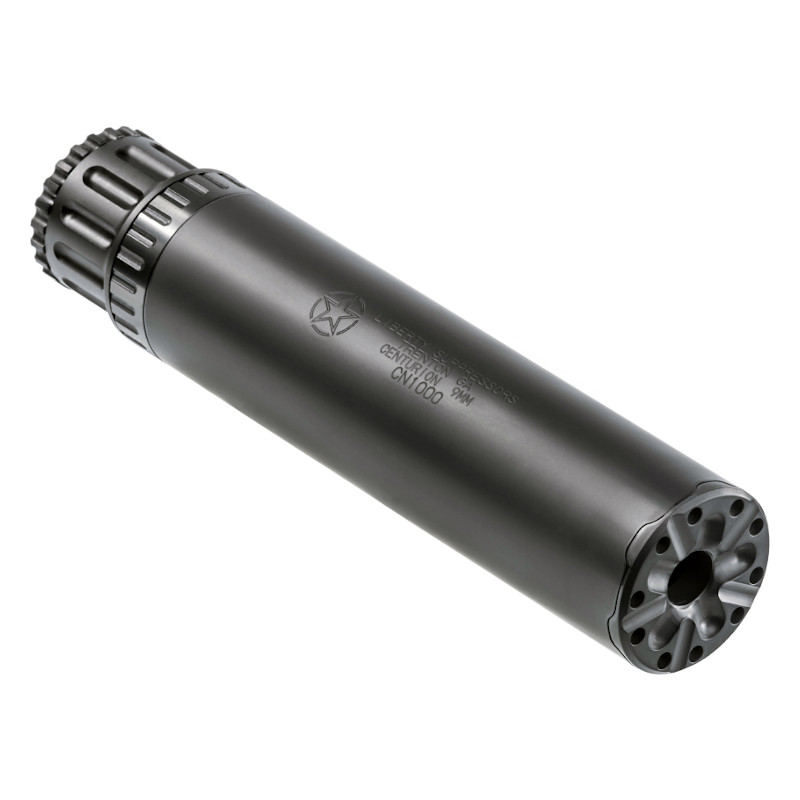
The  Centurion is everything you want in a compact 9×19 pistol suppressor. It is designed to provide excellent suppression on 9mm handguns dry or wet. We designed it to be take apart since 9mm tends to run a little dirty, and this by default makes it suitable for 22LR as well. If there was ever a suppressor that is perfect for the nightstand, the Centurion would be it. The length added to the host firearm is only about 6″ allowing it to balance nicely with virtually any 9mm threaded handgun on the market today. We made this suppressor 34% shorter than the Mystic X by reducing the footprint a full 3 inches, making an extremely compact platform that handles well. This suppressor also performs very well on rimfire calibers as well as 300 Blackout carbines. Short, light and handy, this suppressor works well in many different roles.

centurion 9mm silencer

We made the Centurion silencer out of stainless steel and a titanium tube to make it lightweight yet durable at the same time. We also incorporated the wave-lok feature into the tube and core allowing for it to be tightened by gripping the silencer body instead of the just the mount at the back. We also protect the outside of the suppressor module with type C Cerakote to make for a durable finish as well as giving it good looks at the same time. IT is everything you could want in a compact 9mm handgun silencer.

We love using the Centurion pistol silencer on our HK VP9 Tactical as well as our Sig Sauer P226 pistol as well, both of these are excellent handguns that pair well with a small 9mm suppressor like the Centurion and will make for a wonderful system when you goto the range or just want something for what goes bump in the night. Lowering the sound signature is paramount to us and we want to make the experience the best that it possibly can be… If you want to learn more about the Centurion just give us a call or shoot us an email, we will glad to help!

Swag Liberty Suppressors Yeti Rambler 30oz

These Liberty Suppressors Ramblers from Yeti Coolers are the real deal. Now you can keep your drink “as cold (or hot) as science allows” while showing your shooting style and freedom, all while supporting the highest quality goods made right here in the USA! These 30 oz Tumblers have been etched with the Liberty Suppressors logo, so there is no worry of any paint cracking or decals peeling. Just sit back, relax, and enjoy that drink!

Bulletin Board

Suppressor Bore Size Explained: Matching Caliber to Optimize Safety and Suppression

Getting suppressor bore size wrong is one of the most common mistakes a first-time buyer can make. You’re staring at a spec sheet, comparing bore diameter to bullet diameter, and wondering if a simple rule covers it all. There isn’t one, but the logic is straightforward once you know what you’re looking at.

What Suppressor Bore Size Means

Suppressor bore size is the internal diameter of the baffle stack. That’s the series of chambers inside the suppressor that slow and redirect propellant gas as a bullet passes through. It is not the same as your barrel bore.

Your barrel bore is the diameter of the rifled channel inside the gun. The suppressor bore is the aperture in each baffle the bullet must clear cleanly after leaving the muzzle. They’re related, but not the same measurement.

Bore diameter determines three things:

  • Which calibers can safely run through the can
  • How efficiently gas is captured around the bullet
  • Whether the bullet passes through without contact

Get it right and the suppressor performs as designed. Get it wrong and you’re looking at a damaged can or a real safety hazard.

Why Suppressor Bore Size Is Never Exactly Bullet Diameter

Suppressor bore size is always intentionally larger than the bullet it is designed for. That extra space is called overbore. It is engineered clearance, not a flaw.

If the bore matched the bullet exactly, the suppressor would be nearly impossible to use safely. Barrel threads are never perfectly concentric. Bullets also experience a small amount of wobble, called nutation, especially on semi-automatic platforms and shorter barrels. Either variable can cause bullet-to-baffle contact, and that contact can destroy a suppressor.

The commonly recommended overbore range is .050″ to .080″ over bullet diameter, with .060″ being the most widely referenced figure among builders and manufacturers. For a .30 cal suppressor handling .308″ bullets, this puts the bore around 0.350″ to 0.360″. That clearance protects every shot without meaningfully sacrificing suppression efficiency.

A tighter bore captures more gas, which can improve sound reduction slightly. But that decibel difference is usually below what the ear can detect. The risk of going too tight, however, is significant.

Baffle Strikes and Bore Clearance

A baffle strike happens when a bullet contacts the inside of a suppressor instead of passing cleanly through. It can range from a minor cosmetic clip to a complete failure where the projectile punches through the tube wall.

Common causes include:

  • Suppressor-to-barrel misalignment
  • Loose or improperly installed mounts
  • Bullet instability from a mismatched twist rate
  • Insufficient bore clearance

Concentric threads and a properly torqued mount are the first line of defense.

Stop shooting immediately if you notice:

  • A sudden shift in point of impact
  • An unusually loud or different-sounding shot
  • Visible deformation on the end cap
  • Metal debris at the muzzle

Firing through a damaged suppressor is not safe.

Suppressor Bore Size Categories and Caliber Coverage

Most suppressors fall into one of five bore diameter categories.

Rimfire .17 and .22 Cal

Rimfire suppressors are built for .22 LR, .17 HMR, and .22 WMR. They handle the lower pressure of rimfire cartridges, and that pressure rating matters as much as bore diameter. Even with a similar bore to a 5.56 can, a rimfire suppressor cannot go on a centerfire rifle. The pressure would destroy it.

5.56mm .22 Cal Centerfire

Dedicated 5.56 suppressors are optimized for .223 Remington and 5.56 NATO with bores sized for .224″ bullets. The close bore-to-bullet match makes them shorter, lighter, and more efficient at sound reduction than an overbored option on the same platform.

7.62mm .30 Cal

The .30 cal category is the most versatile in the rifle suppressor market. A quality .30 cal can handles true .30 cal cartridges and smaller calibers, including:

  • .308 Winchester (.308″ bullet)
  • .300 Blackout (.308″ bullet)
  • .30-06 Springfield (.308″ bullet)
  • 6.5 Creedmoor (.264″ bullet, smaller than .30 cal and safely accommodated by the larger bore)
  • Most intermediate rifle calibers with a bullet diameter at or below .308″

Running a .30 cal suppressor on a 5.56 host is common and practical. The bore is slightly larger than optimal for 5.56, but the multi-platform flexibility outweighs the minor performance difference for most shooters.

Pistol Bore 9mm and .45 Cal

Pistol suppressors are built for handgun cartridges and pistol-caliber carbines. A 9mm option covers the most common pistol caliber. A .45 cal suppressor broadens bore coverage to accommodate .40 S&W and .45 ACP, though thread pitch differences between these calibers may require an adapter.

One rule that cannot be bent: pistol suppressors are not rated for rifle cartridges. Both 9mm pistols and 5.56 rifles commonly use a 1/2×28 thread pitch, meaning a 9mm suppressor can physically thread onto a 5.56 barrel. But the pressure generated by a rifle cartridge far exceeds what a pistol suppressor is built to handle. Thread compatibility does not equal cartridge compatibility.

Large Bore .338 and Above

Large-bore suppressors are built for .338 Lapua, 8.6 Blackout, .338 ARC, and magnum cartridges. They can also safely run smaller rifle calibers up to their maximum rated diameter. Big-bore options in the .45 to .46 caliber range cover lever-gun platforms running .45-70, .44 Magnum, and .400 Legend.

Dedicated vs. Multi-Caliber Suppressors

A dedicated suppressor has a bore closely matched to one caliber. It delivers better sound reduction, more efficient gas capture, and typically comes in a lighter, more compact package. If you have one primary host and one primary caliber, a dedicated can is almost always the right call.

A multi-caliber suppressor uses a larger overbore to cover a range of calibers through a single tax stamp. That tradeoff is real. Overboring does reduce efficiency, and the gap between a dedicated and a multi-caliber suppressor varies based on the bore mismatch, host, and cartridge combination.

Caliber-specific end caps can help close that gap. According to testing data from suppressor manufacturers, upgrading from a mismatched bore to a properly sized end cap can yield roughly 2 to 5 dB of improvement. That is often below the threshold of clearly noticeable difference to the ear, but measurable.

Why Pressure Ratings Matter as Much as Bore Size

Bore diameter tells you whether the bullet physically fits through a suppressor. Pressure rating tells you whether the suppressor can survive the cartridge being fired. Both must align.

A rimfire can and a 5.56 can may share nearly identical bore diameters. They are not interchangeable. The same rule applies to running a 9mm suppressor on a rifle. Thread pitch might match and the bullet might fit, but rifle pressure will cause a catastrophic failure.

Manufacturer specs define the maximum caliber, minimum barrel length, and pressure ceiling. Newer cartridges like 6mm ARC, .30 Super Carry, and 8.6 Blackout may fall within a suppressor’s bore diameter. 

Always confirm directly with the manufacturer before running a cartridge not listed in the original specs.

Choosing the Right Suppressor Bore Size

Start with the primary host firearm and the caliber used most often. Everything else follows from there.

For single-platform shooters: choose a dedicated suppressor with a bore closely matched to that caliber. The efficiency gains are real, and there’s no reason to overbore.

For multi-firearm households: evaluate coverage. A .30 cal can with adapters may handle every rifle in the safe. That often beats multiple suppressors and multiple tax stamps.

Use case also shapes the decision:

  • Hunting: lighter, more compact suppressor preferred
  • Range training: heavier overbored can is a reasonable tradeoff
  • Precision shooting: tight bore match minimizes point-of-impact shift
  • Short-barreled rifles: a slightly larger bore improves longevity under higher back pressure

Liberty Suppressors builds its lineup around real-world flexibility. From rimfire to centerfire rifle, Liberty’s suppressors are designed and made in Trenton, Georgia. With one of the broadest adapter systems available, they’re built to cover your entire collection.

Conclusion

Suppressor bore size is the foundation of every safe and effective suppressed shooting experience. The overbore principle exists for a reason. Proper clearance prevents baffle strikes, tolerates minor misalignment, and keeps a suppressor running safely for thousands of rounds.

Bore diameter and pressure rating must both match the host firearm and cartridge. Verify manufacturer specs before mounting any suppressor to a new host. 

Frequently Asked Questions (FAQs)

1. What is suppressor bore size and why does it matter?

Suppressor bore size is the internal diameter of the baffle stack. It determines which calibers can safely pass through the can and directly affects both safety and suppression performance.

2. Can I run a .30 cal suppressor on a 5.56 rifle?

Yes. A .30 cal bore is larger than a 5.56 bullet, so the round passes through safely. You lose a few decibels compared to a dedicated 5.56 can, but gain flexibility across multiple calibers.

3. What is overbore in a suppressor?

Overbore is intentional clearance between the suppressor’s bore diameter and the bullet diameter. The commonly referenced figure is roughly .060″ over bullet diameter to prevent baffle strikes from misalignment or bullet wobble.

4. Will a pistol suppressor work on a rifle?

No. Pistol suppressors are not rated for rifle cartridge pressure. Even if one threads onto a rifle barrel, firing a rifle round through it is dangerous and will destroy the suppressor.

5. How does Liberty Suppressors’ adapter system work with bore size?

The adapters handle the mechanical connection between the suppressor and different barrel threads. The suppressor’s bore size still needs to be rated for whatever caliber you’re running through it.

Bulletin Board

Suppressor Legal Requirements: Federal Rules, State Variations, and Compliance Essentials

Suppressor legal requirements have never been easier to meet. A major federal change took effect in 2026 that removed the single biggest financial barrier from the purchase process. But there’s still real paperwork, real timelines, and real legal consequences for getting it wrong.

This article covers what every buyer needs to know. From how federal law classifies suppressors to state-specific restrictions, the ATF registration process, and the compliance mistakes that catch new owners off guard.

How Federal Law Classifies Suppressors

NFA Title II Status and What It Means for Buyers

Suppressors are classified as Title II firearms under the National Firearms Act of 1934. That places them in the same regulated category as short-barreled rifles, short-barreled shotguns, and machine guns.

Unlike a standard firearm purchase, Title II items require ATF registration, a background check, and written approval before you take possession. That process hasn’t gone away. It’s just gotten less expensive, which we’ll cover shortly.

The Gun Control Act’s Role in Determining Eligibility

The Gun Control Act of 1968 works alongside the NFA to define who can legally own a suppressor. If you’re prohibited from owning a standard firearm under the GCA, that prohibition carries over to suppressors.

Disqualifying factors include felony convictions, domestic violence misdemeanors, unlawful drug use, and adjudicated mental health history. The NFA handles registration and transfer. The GCA determines who’s eligible to own one.

Federal Suppressor Legal Requirements Every Owner Must Know

Getting the suppressor legal requirements right at the federal level is not optional. These rules apply in every state where civilian ownership is permitted. Skipping any step creates serious legal exposure.

Age Minimums, Residency, and Baseline Eligibility

To purchase from a licensed dealer, you must be at least 21 years old. Acquiring one through an individual Form 4 transfer or as a trust beneficiary lowers that minimum to 18, though state laws may set higher thresholds.

Federal baseline eligibility requires that you:

  • Are a U.S. citizen or permanent resident
  • Are legally eligible to purchase a firearm
  • Are not a prohibited person under federal law

If your background disqualifies you from buying a handgun at a dealer, it disqualifies you from buying a suppressor.

ATF Form 4, eForm 4, and NFA Registration

Every suppressor purchased through a dealer requires an ATF Form 4 submission. The electronic version, the eForm 4, is processed through the ATF’s eForms system and is the standard method for faster handling.

Your application package must include:

  • Fingerprints on FD-258 cards or submitted electronically
  • A 2×2 passport-style photograph
  • CLEO notification to your Chief Law Enforcement Officer
  • Suppressor details including make, model, caliber, and serial number

The suppressor must be registered in the National Firearms Registration and Transfer Record. The transfer must also occur through a Class III FFL dealer with Special Occupational Tax (SOT) status. Your suppressor stays with the dealer until ATF approval comes through. No exceptions.

The End of the $200 Tax Stamp and What Still Remains

The One Big Beautiful Bill Act, signed on July 4, 2025, eliminated the $200 federal transfer tax on suppressors. It took effect January 1, 2026. That tax had been in place since 1934.

What changed: The $200 transfer fee is gone.

What didn’t change:

  • ATF Form 4 and eForm 4 submission
  • Background check through the ATF
  • NFA registration requirement
  • Approval wait before taking possession

The tax elimination applies to suppressors, short-barreled rifles, short-barreled shotguns, and AOWs. Machine guns and destructive devices were not included.

State-by-State Suppressor Laws and Restrictions

Federal law sets the baseline. State law can raise the bar significantly, or eliminate the option entirely.

The 8 States That Prohibit Civilian Ownership

Eight states ban civilian suppressor ownership outright:

  • California
  • Delaware
  • Hawaii
  • Illinois
  • Massachusetts
  • New Jersey
  • New York
  • Rhode Island. 

Washington D.C. maintains the same prohibition.

If you live in one of these jurisdictions, there is no legal path to ownership under current law. Attempting to transfer a suppressor into a prohibited state is not a gray area. It is a federal felony.

Hunting Use Restrictions and State-Specific Rules

Of the 42 states where suppressors are legal, 41 permit their use for hunting. Connecticut is the exception. You can legally own a suppressor there, but using one during hunting season violates state game law.

Some states layer additional requirements on top of the federal process:

  • Separate state-level registration
  • Additional background checks
  • Waiting periods that stack onto the federal timeline

Always check your state’s game and fish regulations before heading into the field. Species-specific and season-specific rules can vary significantly.

Crossing State Lines With a Registered Suppressor

No additional federal paperwork is required to travel with your suppressor. That applies as long as ownership is legal in both your origin and destination states.

That said, laws along your route and at your destination can vary. A permissive state may still have specific rules around use or carry. Research every state in your path before you travel, not after.

Registering as an Individual vs. Through an NFA Trust

How NFA Gun Trusts Are Structured

An NFA Gun Trust is a legal entity that holds your suppressor as an asset. Any “responsible person” named on the trust, including co-trustees or beneficiaries, can legally possess and use the suppressor. Even when the primary owner is not present.

All responsible persons must submit their own fingerprints and photographs with the Form 4. Each responsible person also receives their own CLEO notification copy as part of the application package.

Trust vs. Individual Registration

Individual registration is clean and effective for sole ownership. If you want a family member or shooting partner to have legal access, a trust is the better structure.

A quick comparison:

  • Individual registration: Best for sole owners. Simpler paperwork.
  • NFA Trust: Best when multiple users need legal access. All named trustees can possess the suppressor independently.

Neither option changes your ATF approval timeline. Both go through the same Form 4 process. For anything beyond straightforward sole ownership, consult a firearms attorney before filing.

The ATF Form 4 Approval Process

Documentation, Submission, and What to Expect

Start by selecting your suppressor and completing the eForm 4 through the ATF’s eForms system. Your SOT dealer holds the suppressor throughout the entire review period.

Approval times have ranged from days during low-volume periods to several months during surges. The tax elimination drove a significant jump in new applications in 2026. Expect timelines to be less predictable than they were in late 2025.

Background Check, Approval, and Taking Possession

The ATF runs an enhanced background check through the National Instant Criminal Background Check System on every applicant. The suppressor does not leave the dealer until written ATF approval arrives.

Once approved, return to the dealer and complete ATF Form 4473 to take final possession. Keep your approval documentation with the suppressor at all times. It serves as your proof of registration for any future transfer or compliance review.

Common Compliance Mistakes to Avoid

Lending, Constructive Possession, and Unauthorized Transfer

Handing your suppressor to someone at the range is a federal offense. That applies if their name is not on your Form 4 or listed as a responsible person on your trust. Temporary and informal situations carry the same risk as formal transfers.

Constructive possession is a separate exposure point. If someone has unsupervised access to your suppressor, federal law may still consider them in possession. Secure your suppressor and limit access strictly to those who are legally registered to use it.

Moving to a New State With a Registered Suppressor

Relocating to a suppressor-prohibited state requires a legal transfer to a registered owner in a permissive state before you move. There is no grandfather clause.

Arriving in a prohibited state with a suppressor legally purchased elsewhere is still a violation. Check your destination state’s laws early in the relocation process, well before your move date.

Conclusion

Staying on top of suppressor legal requirements comes down to three things: understanding the federal NFA framework, knowing your state’s specific rules, and maintaining compliance after purchase. The $200 tax stamp is gone, but the registration process, ATF approval, and state-by-state landscape are firmly in place.

Liberty Suppressors is based in Trenton, Georgia. Every can is manufactured on U.S. soil and sold through a network of stocking dealers who know the suppressor legal requirements process inside and out. Have questions about getting started? The Liberty team is reachable by phone and ready to help.

Frequently Asked Questions (FAQs)

1. Are suppressors legal to own in the United States?

Yes, in 42 states. Eight states and Washington D.C. prohibit civilian ownership. ATF registration, a background check, and written approval are required in all legal states.

2. Do I still need to complete ATF paperwork after the $200 tax stamp was eliminated?

Yes. The $200 fee was removed effective January 1, 2026, but the ATF Form 4, background check, and NFA registration remain fully required.

3. How long does ATF Form 4 approval take?

It varies. eForm 4 approvals have been processed in days during low-volume periods. With increased demand in 2026, timelines may run significantly longer.

4. Can I let someone else use my registered suppressor?

Only if they are listed on your Form 4 or named as a responsible person on your NFA trust. Allowing anyone else to use it is a federal offense.

5. What do I do with my suppressor if I move to a state where they are banned?

Transfer it legally to a registered owner in a permissive state before relocating. There is no grandfather clause for prohibited states.

Bulletin Board

Suppressor Recoil Reduction: How Added Mass and Gas Control Improve Follow-Up Shots

Suppressor recoil reduction is one of the most underrated reasons to add a silencer to your rifle or pistol. Most people focus on noise reduction, and that is fair. But once you shoot suppressed, the reduced kick and flatter muzzle become just as noticeable as the quieter report.

Whether you are a hunter needing a clean second shot, a competitor chasing tighter split times, or a new shooter trying to build confidence, managing recoil matters. This article covers the mechanics behind how it works, what reduction you can realistically expect, and why it directly improves follow-up shot accuracy.

The Physics of Firearm Recoil

Newton’s Third Law in the Firing Sequence

When you pull the trigger, propellant gases ignite and expand behind the bullet. They push it forward through the bore. That same force pushes back in the opposite direction, directly into the firearm. This is Newton’s Third Law: every action has an equal and opposite reaction.

No matter the caliber, this rearward force is unavoidable. What changes is how intense it feels and how quickly it travels through the shooter’s hands, wrists, or shoulder.

Suppressor recoil reduction does not eliminate the physics. It changes how that energy is delivered.

Variables That Intensify Felt Recoil

Several factors determine how hard a firearm kicks. The biggest ones:

  • Caliber and powder charge — more powder creates a stronger rearward impulse
  • Bullet weight and velocity — faster, heavier projectiles generate more propellant gas energy
  • Firearm weight — a heavier platform absorbs more energy before it reaches the shooter
  • Dwell time (gas-operated firearms only) — in semi-automatic gas-operated platforms like AR-style rifles, dwell time affects the timing and character of the recoil cycle

All of these variables set the baseline a suppressor works against.

How Suppressor Recoil Reduction Works

Baffle-Stage Gas Deceleration

Inside a suppressor, a series of baffles creates chambers that trap and slow expanding gases. Instead of gases escaping all at once, they cycle through each chamber, losing pressure at every stage.

This staged deceleration converts a sharp recoil impulse into a slower, more spread-out push. Felt recoil becomes noticeably softer as a result.

The same process that reduces the sound signature also reduces the mechanical force driving the firearm rearward. Suppressor recoil reduction is a direct mechanical outcome, not just a side effect.

Added Forward Mass and Muzzle Behavior

A suppressor mounted at the muzzle adds meaningful weight to the front of the firearm. This shifts the balance point forward and changes how the rifle or pistol moves when fired.

More forward mass resists the rotational forces that cause the muzzle to whip or rise between shots. On lighter platforms like compact pistols or short-barreled rifles, this effect is especially pronounced.

It is a passive, physics-based benefit. The shooter does not have to do anything extra to take advantage of it.

Muzzle Rise During Rapid Fire

The primary cause of muzzle rise is geometry: the bore axis sits above the firearm’s center of mass and above the shooter’s contact points, whether that is a handgrip or a rifle stock. When the gun fires, the recoil force along the bore creates a rotational torque that pitches the muzzle upward. Escaping propellant gas contributes to this as a secondary factor.

A suppressor helps counter muzzle rise in two ways. The added forward weight increases the rotational resistance at the muzzle end. The containment of exiting gas also reduces the secondary gas-driven component of muzzle pitch.

The result is a flatter shooting path between rounds, which directly shortens the time needed to reacquire your target after each shot.

Realistic Recoil Reduction Ranges

What Shooters Can Expect Across Calibers

Most shooters report felt recoil reduction in the range of 20 to 40 percent when running a suppressor. The exact figure depends on caliber, powder load, suppressor design, and firearm weight.

Here is how it generally breaks down by platform:

  • Rimfire — least dramatic reduction; less recoil to start with
  • Centerfire rifle (.308, 6.5 Creedmoor, .30-06) — most noticeable improvement
  • Pistol calibers — solid middle ground

Pairing a suppressor with subsonic ammunition can compound the effect by reducing the overall recoil impulse at the source. Reduced muzzle blast and concussion also lower perceived recoil, which matters just as much in real-world shooting.

Suppressor vs Muzzle Brake for Recoil Control

A muzzle brake typically delivers greater raw recoil reduction. It vents gases aggressively to the sides and rear, which is effective at countering rearward force. But the trade-off is significant.

Muzzle brakes increase noise and lateral blast dramatically. They are hard on hearing and less practical in hunting or any scenario with others nearby.

A suppressor offers meaningful recoil reduction alongside sound attenuation and improved muzzle control. For most shooters, that balance is more useful than raw recoil numbers alone.

Field Impact on Follow-Up Shots and Control

Faster Target Reacquisition

When the muzzle rises less and returns to position faster, your optic or iron sight stays closer to where you need it. That means shorter recovery time between shots.

In precision shooting, this can be the difference between spotting your own impact and losing the sight picture entirely. In competitive shooting, faster reacquisition tightens split times and improves stage performance.

Flinch and Shooter Fatigue Reduction

Flinch develops when the brain anticipates a loud noise or strong impact and reacts early. Both sound and recoil drive this response.

A suppressor addresses both at once. Reduced blast and reduced kick give the nervous system less to react against. Over a long session, this preserves accuracy in a way that grip technique alone cannot fix.

For new shooters, the benefit is especially meaningful. Less recoil and less concussion make it easier to build correct form from the start.

Practical Advantages by Shooter Type

Hunters:

  • Reduced kick allows a faster, more controlled follow-up shot
  • Lower sound signature is less likely to scatter nearby game

Competitive shooters:

  • Flatter muzzle and faster recovery tighten split times
  • Reduced flinch builds more consistent performance across a match

Defensive and tactical shooters:

  • Reduced recoil keeps shots on target under stress
  • Better control lowers the risk of stray rounds in close-quarters situations

Selecting a Suppressor for Suppressor Recoil Reduction

Baffle Design, Weight, and Material Trade-offs

Heavier suppressors add more forward mass and improve recoil management. But they also affect handling and carry balance. The right weight depends on the platform and intended use.

Baffle design considerations:

DesignCharacteristicsMaintenance
Stacked baffleModular, wide performance rangeMore parts to clean
MonocoreSingle-piece core, consistent gas flowEasier to clean

Back-pressure levels in both designs vary by specific geometry, port sizing, and internal volume. Neither design type universally produces higher or lower back-pressure. The right choice depends on the host platform, caliber, and intended use.

Material matters too. Titanium is lighter and well suited for field carry. Aluminum is a cost-effective option for range use. Neither is universally superior.

Mounting alignment is critical regardless of design. A suppressor not properly aligned with the bore affects point of impact and produces inconsistent results. Proper installation and a quality mount are not optional.

Liberty Suppressors for Recoil-Conscious Shooters

Liberty Suppressors is based in Trenton, Georgia, and manufactures all of their suppressors in the United States. Their lineup covers rimfire, pistol, and centerfire rifle calibers.

Their adapter system lets a single suppressor mount across multiple host firearms. That is practical for shooters running different platforms without wanting to buy multiple cans.

Every suppressor is built at their Trenton, Georgia facility. The focus on light, durable, and quiet design delivers real performance without unnecessary bulk. If recoil control is a priority, the Liberty lineup is worth a close look across rimfire, pistol, and centerfire rifle options.

Conclusion

Suppressor recoil reduction comes down to two mechanical drivers: staged gas deceleration through the baffle stack and added forward mass at the muzzle. Both work together to soften felt recoil, counter muzzle rise, and shorten recovery time between shots.

The results are real and repeatable. Faster follow-up shots, less flinch, reduced fatigue, and better control across hunting, competition, and defensive use. These are predictable outcomes of basic physics.

If you are ready to experience suppressor recoil reduction firsthand, browse the Liberty Suppressors catalog  or reach out to the Liberty team to find the right can for your setup.

Frequently Asked Questions (FAQs)

1. Do suppressors actually reduce recoil, or is it mostly perceived?

Both. Suppressors produce measurable mechanical reduction through gas deceleration and added forward mass. They also lower perceived recoil by reducing muzzle blast and concussion.

2. How much recoil reduction can I realistically expect?

Most shooters report 20 to 40 percent less felt recoil. Centerfire rifle calibers tend to show the most improvement. Subsonic ammunition can increase the effect further.

3. Will a suppressor shift my point of impact?

A small shift is possible. It is consistent once you re-zero with the suppressor properly attached and torqued, and it rarely affects accuracy negatively.

4. Is a suppressor better than a muzzle brake for recoil control?

A muzzle brake cuts more raw recoil but increases noise significantly. A suppressor balances recoil reduction with sound attenuation, making it the better all-around option for most shooters.

5. Does suppressor weight affect recoil reduction?

Yes. More forward mass counters muzzle rise and dampens the recoil impulse. Titanium and aluminum options still deliver meaningful benefit while keeping overall weight manageable.

Bulletin Board

Choosing a Hunting Suppressor: Balancing Weight, Durability, and Field Performance

A hunting suppressor can be one of the smartest additions to your rifle setup, but only when it is the right one. More hunters are running suppressed every season, and the advantages are real. 

A poor choice works against you in the field. Too heavy and your rifle becomes a burden after miles of steep terrain. Too cheaply built and it fails when conditions turn. Getting this right means treating your suppressor as part of a complete system, not an afterthought.

Field Advantages of Hunting Suppressed

Before getting into specs and materials, it helps to understand what a suppressor actually delivers in the field.

Hearing Protection

A single unsuppressed shot from a centerfire rifle can easily exceed 160 dB, well above the threshold for permanent hearing damage. Most hunters never wear ear protection in the field because it kills situational awareness. A suppressor cuts that report down significantly, letting you stay alert without ear gear between shots.

Recoil Reduction and Shot Recovery

Suppressors moderate gas release at the muzzle, which softens felt recoil and reduces muzzle rise. You stay in the scope after the shot, call your impacts faster, and recover for a follow-up round more quickly. For heavy-recoiling cartridges or group hunts where multiple shots are needed, that is a real field advantage.

Game Behavior and Reduced Disturbance

Suppressed shots disorient game rather than sending the whole field running. Animals often freeze or circle in confusion, giving hunters a second opportunity when a follow-up is needed. In a group hunt, one suppressed shot is far less likely to ruin the next opportunity nearby.

Weight Considerations by Material

Material drives most of a suppressor’s weight, and weight is where hunters feel the biggest impact during long carries or technical terrain.

Titanium

Titanium suppressors typically weigh between 8 and 16 ounces. They are the go-to choice for backcountry hunters who count every ounce. The premium price tag is real, but the weight savings is clearly felt over a full day on foot.

Stainless Steel

Stainless steel suppressors generally run 16 to 32 ounces. They are heavier but more affordable than titanium and extremely durable under hard use. For hunters shooting from stands, blinds, or vehicles where carry weight is minimal, the extra mass is rarely a concern. Steel handles high-pressure cartridges and sustained fire very well.

Aluminum

Aluminum is the lightest common suppressor material but comes with real limitations for centerfire hunting. It is suited for rimfire and lower-pressure calibers. In demanding field conditions with full-power cartridges, aluminum may not hold up over time.

Weight Matched to Hunt Style

The right weight depends entirely on how you hunt:

  • Spot-and-stalk hunters in open country should prioritize light and compact builds
  • Stand and blind hunters can focus more on sound reduction and durability
  • High-country hunters covering miles daily benefit most from titanium construction

Know your terrain and hunting style before locking in a material choice.

Durability Standards for a Hunting Suppressor

A hunting suppressor takes real punishment. Rain, mud, brush, temperature swings, and hard knocks are part of the deal. Durability is not optional.

Weather and Corrosion Resistance

Corrosion is a slow killer for suppressor internals. Titanium and stainless steel both offer strong corrosion resistance, but finish and baffle design matter too. A suppressor that traps moisture and cannot drain properly will degrade faster than one engineered for outdoor conditions.

Impact and Heat Tolerance

Suppressors heat up fast after firing. Repeated thermal cycling stresses welds and baffle connections over time. Carbon buildup accelerates with heat, so a design that manages fouling matters for sustained field performance.

Protective Coatings

Cerakote and similar coatings add meaningful protection against abrasion, moisture, and UV exposure. They also reduce visual signature by cutting down on light reflection. A good coating is not cosmetic. It extends service life in real outdoor conditions.

Mounting System Options

How your suppressor attaches to the muzzle affects ease of use, accuracy, and overall system weight.

Direct-Thread

Direct-thread suppressors screw directly onto your barrel’s muzzle threads. They are simpler, lighter, and tend to produce more consistent accuracy because there are fewer connection points. For hunters who keep one suppressor on one rifle, direct-thread is a clean and dependable setup.

Quick-Detach

Quick-detach systems allow fast attachment and removal without tools. This is useful when sharing a suppressor across multiple rifles or switching configurations. QD mounts add some weight and complexity, and the interface needs proper maintenance to preserve reliability over time.

Length, Balance, and Handling

Adding any suppressor shifts the balance point of your rifle forward. A longer, heavier suppressor can make the rifle feel muzzle-heavy in tight spaces and slow target acquisition. Shorter suppressors give up some sound reduction but preserve handling. Hunters in dense brush or elevated stands often prefer compact designs for this reason.

Sound Reduction and Caliber Compatibility

Not every suppressor fits every caliber or hunting scenario. Understanding this helps narrow the selection.

Caliber-Specific vs. Multi-Caliber

A caliber-specific suppressor is generally lighter and better optimized for noise reduction on that cartridge. Multi-caliber suppressors offer versatility across a battery of rifles, which suits hunters running more than one platform. 

The tradeoff is that a multi-caliber can is typically heavier and may not be as efficient on any single cartridge.

Realistic Sound Reduction

Suppressed is not silent. A quality centerfire hunting suppressor typically reduces sound by 30 to 40 dB, bringing most rifle cartridges down to approximately 130 to 150 dB depending on cartridge, barrel length, and ammunition. A suppressed .308 still registers in the upper 140s in most real-world tests. Treat manufacturer ratings as a starting reference, not a guarantee.

First-Round Pop

The first shot through a cold, dry suppressor is louder than follow-up shots. Residual oxygen inside the tube combusts on ignition, which can add 5 to 10 dB to that first round. For hunters who may only get one shot at an animal, this matters. Some suppressors are specifically engineered to minimize first-round pop, and it is worth asking about during selection.

Accuracy and POI Shift

Adding a suppressor almost always produces some change in point of impact. This is expected and manageable.

What Causes POI Shift

POI shift occurs because the suppressor adds mass and alters how the barrel vibrates during firing. The amount of shift depends on several factors:

  • Suppressor weight
  • Mounting system design
  • Barrel profile and contour

Most hunters see a consistent shift of 1 to 3 inches at 100 yards. Heavier suppressors on thinner barrels tend to produce more shift than compact suppressors on heavy-profile barrels.

Repeatability Over Absolute Shift

The amount of shift matters less than whether it is consistent. A suppressor that returns to the same POI every time it is properly mounted is one you can zero for and trust. Problems arise when a QD mount is not fully seated or when threads are worn. Consistent mounting habits resolve most POI issues before they start.

Matching a Hunting Suppressor to Rifle and Terrain

A hunting suppressor decision is not just about the can. It is about how the entire system performs in the conditions you actually hunt.

Backcountry and Spot-and-Stalk

For hunters covering miles on foot in mountain terrain, weight and compactness are top priorities. Titanium suppressors in the 8 to 12 ounce range are a strong fit. The sound reduction tradeoff compared to heavier cans rarely makes a practical difference at hunting distances, but your shoulders will notice the weight after a long day.

Stand and Blind Hunting

When movement is minimal and carry weight is not a concern, focus can shift to sound reduction and long-term durability. Stainless steel suppressors are a natural match for setups where you may sit for hours and take only one shot. A QD system is also practical here for swapping between configurations between seasons.

A Balanced Rifle-Suppressor Setup

The best setups are built with intention. Barrel length, thread pattern, and suppressor dimensions should be matched to keep overall system length manageable. Pairing a lightweight stock with a compact suppressor keeps the platform practical without sacrificing performance at distance.

Federal and State Suppressor Regulations

Current NFA Requirements

Suppressors remain regulated under the National Firearms Act. Purchasing one requires:

  • Completing an ATF Form 4
  • Passing a federal background check
  • Transferring through an FFL dealer with Special Occupational Tax (SOT) status

Not every FFL is authorized to handle NFA items. Confirming your dealer’s SOT status is an important first step.

The most significant regulatory shift in decades was the elimination of the $200 federal tax stamp. That fee is now $0, but the registration process remains in place. Removing that cost barrier has made suppressor ownership far more accessible for hunters across the country.

Suppressor Hunting Legality by State

42 states currently allow civilian suppressor ownership, and 41 permit their use for hunting. Georgia, home to Liberty Suppressors in Trenton, is fully suppressor-friendly. No additional state permits are required beyond standard federal NFA compliance. 

Always verify your own state’s current regulations before heading afield.

Conclusion

Weight, durability, and field performance are the three decisions every hunter faces when selecting a suppressor, and none of them exist in isolation. The right choice depends on the terrain you cover, the rifle you run, and how you actually hunt. 

At Liberty Suppressors, every can is manufactured right here in Trenton, Georgia, with all three priorities built in from day one. If you are ready to run suppressed, explore the lineup and find the hunting suppressor that fits the way you hunt.

Frequently Asked Questions (FAQs)

1. How much does a hunting suppressor typically weigh?

Weight depends on material. Titanium runs 8 to 16 ounces and suits mobility-focused hunters. Stainless steel runs 16 to 32 ounces and suits stand or blind setups. Aluminum is lightest but limited to rimfire and low-pressure calibers.

2. Will a suppressor change where my rifle shoots?

Yes, but the shift is usually consistent and manageable. Most setups see 1 to 3 inches of shift at 100 yards. Zero your rifle with the suppressor attached and the shift is easy to account for.

3. Do I still need to go through the ATF process to buy a suppressor?

Yes. You still complete an ATF Form 4, pass a background check, and transfer through an FFL dealer with SOT status. The $200 tax stamp has been eliminated, but the full NFA registration process remains in place.

4. Can I use a suppressor for hunting in Georgia?

Yes. Georgia requires no additional state permits beyond standard federal NFA compliance. Suppressed hunting is permitted across all legal game species in the state.

5. Is a titanium suppressor worth the extra cost for hunting?

For hunters covering significant ground on foot, yes. The weight savings over stainless steel adds up over a full day in the field. For stand or blind hunters where carry weight is not a concern, stainless steel offers solid durability at a lower price point.

Bulletin Board

Modern Suppressor Technology: Materials, Flow Dynamics, and Engineering Innovations

Suppressor technology has come a long way from the rudimentary silencer designs of the early 1900s. What used to be a simple tube with baffles is now a precision-engineered product. It is shaped by aerospace materials, gas physics, and digital simulation. 

If you have ever wondered why some cans perform better than others, the answer lives in the engineering. This article breaks it all down in plain terms.

The Science Behind Sound Reduction

Gas Pressure, Expansion, and Acoustic Physics

When a round is fired, a massive burst of high-pressure gas follows the bullet out of the barrel. That rapid pressure release is what creates the loud report you hear. A suppressor gives those gases somewhere to expand, cool, and slow down before they exit. That process reduces the pressure wave that reaches your ears.

The key variables are chamber volume, gas cooling rate, and how fast propellant gases can bleed off pressure. Getting those three right is what separates a suppressor that genuinely protects hearing from one that just takes the edge off.

How Baffle Geometry Shapes Suppression

Baffles are the internal dividers that create separate chambers inside a suppressor. Each time gas passes through a baffle, it expands into a new chamber, loses pressure, and cools slightly. Stack enough chambers with the right geometry and the sound signature drops significantly by the time gas exits.

The shape of each baffle reflects deliberate engineering decisions. Common designs include:

  • Flat baffles for straightforward pressure reduction
  • K-baffles and M-baffles for optimized gas turbulence
  • Conical baffles for directional flow control

The geometry is never arbitrary. It is built around caliber, gas volume, and intended use.

Materials at the Foundation of Modern Suppressor Technology

Quality materials allow modern suppressor technology to survive extreme heat and pressure while staying as light as possible. Material choices directly affect weight, durability, sound performance, and service life.

Titanium and Aircraft-Grade Aluminum

Titanium has become a standard material for suppressor tubes and end caps. It offers an excellent strength-to-weight ratio, handles high temperatures well, and resists corrosion. A titanium suppressor can weigh significantly less than a comparable steel unit without sacrificing structural integrity.

Aircraft-grade aluminum, particularly 7075-T6, is used in lower-stress components where weight savings matter most. It is not suited for blast baffle positions where temperatures peak. In the right locations, though, it shaves ounces without compromising the build.

High-Temperature Aerospace Alloys

For components that take the hardest punishment, manufacturers turn to aerospace-grade materials. Inconel is a nickel-chromium superalloy that maintains its strength at extreme temperatures. Stellite, a cobalt-chromium alloy, is equally heat-resistant and wear-tolerant.

These alloys appear where they matter most, at the blast baffle, the first expansion chamber, and any zone hit directly by the initial gas burst. Their use is what lets modern suppressors handle sustained fire without degrading.

Hybrid Multi-Material Construction

The most effective suppressor designs do not rely on a single material throughout. A hybrid approach pairs a titanium outer tube with stainless steel or high-temp alloy blast baffles. This delivers durability where the punishment is greatest and weight savings where they can be spared.

It is not about using the most expensive material everywhere. It is about placing the right material in each position. That takes engineering discipline.

Gas Flow Dynamics and Back Pressure Management

Traditional Baffle Systems and Their Limitations

Traditional suppressor designs trap expanding gases in baffled chambers. The gases cool and bleed off pressure before exiting. This approach has worked reliably for over a century. But it increases back pressure in the firearm’s operating system.

Higher back pressure produces several downstream effects:

  • Faster bolt cycling and accelerated wear
  • Hotter action and elevated fouling rates
  • More unburned gas pushed back toward the shooter

On most platforms it is manageable. On direct impingement rifles and certain bullpup designs, it can trigger reliability issues.

Flow-Through Design Principles

Flow-through designs engineer specific pathways for gas to exit the front of the can. Gas still passes through expansion chambers to reduce the sound signature. But the forward exit prevents pressure from stacking up behind the action.

The results are lower back pressure, less fouling, and a more comfortable shooting experience. The tradeoff is slightly less sound reduction compared to a fully sealed design of equal length and weight.

Managing Overgassing in Rifle Platforms

Short-barreled modern sporting rifles are already running near their gas system limits. Adding a traditional suppressor can push things into overgassing. The symptoms include excessive cycling speed, elevated bolt carrier velocity, and higher fouling rates.

Engineers address this through several approaches:

  • Adjustable gas blocks to fine-tune system pressure
  • Suppressor-specific port timing built into host firearm design
  • Flow-through suppressor designs that reduce back pressure at the source

Getting this balance right is critical for reliable performance on modern semi-automatic platforms.

Engineering Innovations Advancing Suppressor Technology

Computational Fluid Dynamics in Baffle Design

One of the biggest shifts in suppressor technology has been the adoption of computational fluid dynamics (CFD) modeling. Engineers now simulate gas flow through a proposed baffle design before any metal is cut.

Instead of building physical prototypes, manufacturers test dozens of geometries digitally. They identify pressure buildup points, map heat distribution, and optimize flow paths in a fraction of the time. The result is more efficient designs that extract more performance from a given volume and weight.

Additive Manufacturing and Internal Geometries

3D printing with direct metal laser sintering has opened up baffle geometries impossible to machine traditionally. Internal lattices, variable-density zones, curved chambers, and integrated cooling fins can all be produced in a single build.

Some manufacturers use this process to create blast baffles with built-in heat dissipation structures. Others produce graduated-density components where high-stress zones stay dense while lower-stress areas are lightened. These are designs no lathe or mill could produce.

Modular Suppressor Systems

Early modular designs had a mixed reputation. Gas leakage at connection points and point-of-impact shifts were common complaints. Current-generation systems have resolved both issues through tighter tolerances and improved locking mechanisms.

A modular suppressor lets a shooter run a short, light setup for close-quarters use. Adding a section extends it for maximum suppression at the range, on the same host firearm. That kind of versatility has moved from novelty to a mainstream consideration.

Heat Dissipation and Long-Term Durability

Heat Management Approaches

Repeated fire cycles stack thermal energy in the suppressor body and baffles. Without effective heat management, the consequences include optic mirage, structural damage, and burn risk when handling the can.

Passive approaches rely on material selection and surface area. High-temp alloys handle the load in critical areas while the outer surface radiates heat away.

Active approaches, more common in flow-through designs, use the moving gas itself to carry heat out of the can continuously. Both have merit depending on firing rate and intended use.

Structural Integrity Over Time

A suppressor used occasionally faces a different stress profile than one on a high-volume duty rifle. Engineering for long-term integrity means accounting for thermal cycling. Repeatedly heating and cooling metal causes fatigue over time.

Quality builds address this through proper wall thickness at stress points, deliberate material selection, and robust mount and end cap engineering. A suppressor that holds up past 10,000 rounds without degradation is a product of deliberate design, not luck.

What These Advances Mean for the Shooter

All of this engineering delivers real, tangible benefits at the range:

  • Lighter weight reduces muzzle-heavy balance issues
  • Lower back pressure means cleaner cycling and less gas blowback
  • Better heat management protects your optic and makes handling safer
  • More efficient sound attenuation improves hearing protection across calibers

At Liberty Suppressors, every design decision reflects a commitment to building the world’s finest firearm sound suppressors. All products are manufactured on-site in the US, built to be light, quiet, and durable. That combination only comes from applying real engineering discipline at every stage of the process.

Conclusion

The evolution of suppressor technology is the story of materials science, flow physics, and digital engineering converging on a single goal. That goal is a quieter, more reliable, more durable product. These disciplines have shaped where suppressors stand today, and the pace of innovation is not slowing. 

Understanding what goes into a quality suppressor makes you a smarter buyer and a better-equipped shooter. Explore Liberty Suppressors’ lineup to see these principles built into every product, made entirely in the USA.

Frequently Asked Questions (FAQs)

1. What is the main purpose of suppressor technology?

It reduces a firearm’s sound signature by slowing and cooling the high-pressure gases that escape when a round is fired. The goal is hearing protection, not complete silence.

2. What materials are most commonly used in modern suppressors?

Titanium, aircraft-grade aluminum, and stainless steel are the most common. High-stress areas often use aerospace alloys like Inconel for extreme heat resistance.

3. What is back pressure and why does it matter?

Back pressure is gas forced back through the firearm’s operating system by the suppressor. Excess back pressure leads to faster cycling, increased fouling, and gas blowback.

4. How does 3D printing improve suppressor performance?

It allows engineers to produce internal geometries that are impossible to machine. That includes integrated cooling structures and complex gas paths that improve sound reduction and heat management.

5. Are modular suppressors reliable for serious use?

Yes. Current designs have resolved early issues with gas leakage and point-of-impact shifts. Improved tolerances and locking mechanisms make them reliable for range and field use.

Bulletin Board

Choosing the Right Suppressor Muzzle Device for Secure Lockup and Repeatable Accuracy

Picking the right suppressor muzzle device directly shapes how your entire suppressed setup performs. Most shooters put serious thought into choosing the suppressor itself, but the mounting interface connecting it to your barrel is just as important. 

Get it right and you have solid lockup, consistent accuracy, and a system that holds up through thousands of rounds. Get it wrong and you are dealing with loose cans, carbon lockup, or point-of-impact shifts that undermine the whole setup.

This article breaks down the types of suppressor muzzle devices available, how locking systems differ, what affects accuracy and repeatability, and how to pick the right configuration for your firearm.

The Role of the Muzzle Device in a Suppressed System

How the Mounting Interface Affects Performance

The muzzle device is the bridge between your barrel and your suppressor. It is not just hardware. It is a critical part of how your suppressed system functions as a whole. A loose or misaligned mount introduces baffle strikes, shifting point of impact, and accuracy problems the suppressor alone cannot fix.

A well-fitted mount ensures the suppressor sits concentric with the bore. Even minor misalignment puts the bullet path too close to the internal baffles. Over time, that causes damage, inconsistent sound reduction, and reliability issues.

The right mounting solution also affects how easily the suppressor comes off for cleaning and reinstalls without losing zero. That repeatability separates a quality setup from one that constantly needs adjustment.

Direct Thread and Quick Detach Differences

These are the two main approaches to mounting a suppressor.

Direct thread means the suppressor screws directly onto your barrel’s muzzle threads. No extra components, no muzzle device required. It is simple, lightweight, and cost-effective. It also generally offers excellent concentricity since there are fewer parts between the suppressor and the bore.

Quick detach (QD) systems use a dedicated muzzle device that stays on the barrel. The suppressor locks onto it. This lets you swap the can between multiple rifles quickly. It also gives you a functional muzzle device when shooting unsuppressed.

Neither system is universally better. The right choice depends on how many firearms you plan to run, how often you swap the suppressor, and how much added weight and length you are willing to accept.

Common Suppressor Muzzle Device Types

There are several suppressor muzzle devices used across QD mounting systems. Each serves a different primary function and comes with its own compatibility considerations.

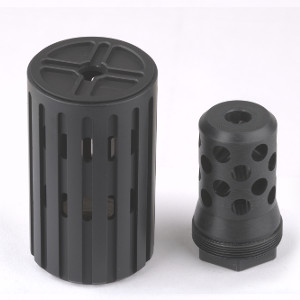
Flash Hider Mounts for Suppressor Use

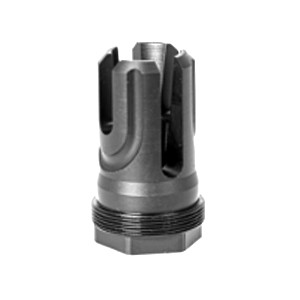
Flash hiders disperse propellant gases to reduce visible muzzle flash. They are among the most popular muzzle devices for suppressor mounting, especially for low-light shooting environments.

From a mounting standpoint, flash hiders work well with most QD systems. They generally do not require precise timing during installation. They are also less likely to cause carbon lockup compared to muzzle brakes, making suppressor removal easier after extended sessions.

For shooters who run night vision or operate in low-light conditions, a flash hider-based mount is often the most practical choice.

Muzzle Brake Mounts and Their Tradeoffs

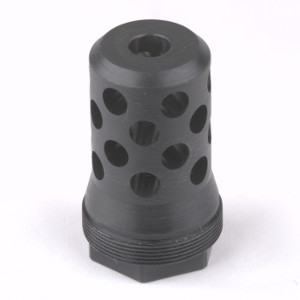
Muzzle brakes redirect gases to the side of the muzzle, pulling the rifle forward and reducing felt recoil. On heavy calibers, that is a real performance benefit. When used as a suppressor mount, the brake also adds value on days when the can stays off.

The tradeoffs are worth knowing before committing:

  • Lateral concussive blast affects anyone standing near the shooter
  • Ports must be correctly timed before the suppressor attaches
  • Gas redirection increases the chance of carbon buildup at the mounting interface

Muzzle brakes are effective, but they require more attention during installation and maintenance than other muzzle device options.

Linear Compensators as Mounting Platforms

Linear compensators direct gas and blast forward, away from the shooter and anyone nearby. This makes them a practical choice for confined spaces or environments where minimizing side blast matters.

As suppressor mounts, linear compensators are straightforward to work with. They are less commonly used than flash hiders or brakes, but they are a legitimate option depending on your shooting environment and setup goals.

Lockup Mechanisms and Mounting System Designs

Beyond the device type, the locking mechanism is what actually keeps the suppressor secure under fire. This is where QD systems differ most significantly from one another.

Passive Locking Systems

Passive locking systems use tapered surfaces combined with thread engagement to create a tight, friction-based lockup. When you seat the suppressor onto the muzzle device, the taper draws tight and holds the can without requiring any additional step from the shooter.

These systems are lightweight with no dedicated moving parts. Attachment and removal are quick. The main limitation is that confirming full lockup visually can be difficult in low-light or high-stress conditions.

Active Locking Systems

Active locking systems require a deliberate action to secure the suppressor, such as engaging a collar, rotating a locking ring, or pressing a lever. The result is clear, confirmable lockup. You can see it, feel it, or both.

This matters most in tactical use, night vision operations, or any situation where confidence in the mount is non-negotiable. Active systems add minor complexity but deliver measurable reliability in the field.

Universal HUB-Compatible Adapters

The HUB system uses a standardized 1.375×24 thread pitch. It allows shooters to use muzzle devices and adapters from different manufacturers on the same suppressor. Before this became common, most brands used proprietary threading that kept you locked into one ecosystem.

HUB compatibility opened up the market considerably. You can choose a suppressor based on performance, then pair it with whatever muzzle device fits your rifle best, regardless of brand. 

Liberty Suppressors offers an extensive adapter lineup built around this flexibility. Their adapters fit a wide range of firearms and mounting configurations, making it easy to build a capable suppressed system without proprietary limitations.

Accuracy, Repeatability, and Point-of-Impact Shift

Tolerance Stacking and Consistency

Every connection point in your mounting system is a potential source of variation. The more interfaces between the barrel and the suppressor, the more opportunity for manufacturing tolerances to compound. This is called tolerance stacking.

Direct thread systems have fewer interfaces. That is why precision shooters often favor them for long-range work. QD systems introduce at least two additional connection points: the muzzle device-to-barrel interface and the suppressor-to-muzzle device interface.

Modern machining has tightened tolerances considerably. High-quality QD systems keep tolerance stacking within acceptable limits for most applications. Still, for maximum precision shooting, it is a factor worth weighing.

Carbon Lockup Prevention and Maintenance

Carbon lockup happens when carbon deposits build up at the suppressor-to-muzzle device interface. It is most common with muzzle brakes due to how they redirect gas toward the mounting threads.

A few consistent practices prevent most issues:

  • For permanent muzzle device-to-barrel installation, use a high-temperature thread locker such as Rocksett. Anti-seize is not the correct compound for this connection.
  • For the suppressor-to-mount interface on direct thread setups, some users apply a thin copper or nickel-based anti-seize compound. Always follow your specific suppressor manufacturer’s guidance first, as some manufacturers explicitly advise against any compound on their threads.
  • Clean muzzle device threads and the suppressor mount after each extended session.
  • Use mounting systems designed with tapered surfaces or locking collars that limit gas intrusion.

If the suppressor is stuck, use proper armorer tools. Forcing it with improvised tools risks damaging threads.

Selecting the Right Suppressor Muzzle Device for Your Firearm

Thread Pitch Compatibility Across Calibers

Barrel thread pitch varies by caliber and platform. The most common US thread pitches are:

  • 1/2×28 for .22 LR and 5.56 NATO rifles
  • 5/8×24 for .30-caliber rifles including .308 Win, .300 BLK, and 6.5 Creedmoor

Note that big-bore calibers above .30 cal, such as .338 Lapua Magnum, often use different thread pitches entirely, such as 3/4×24 or M18x1.5. Always verify your exact thread pitch with your barrel or firearm manufacturer before purchasing.

If you run multiple rifles with different thread pitches, a QD system with matched muzzle devices for each barrel is the most practical approach. Direct thread suppressors are pitch-specific unless adapters are used.

Timing Requirements for Muzzle Brakes

If you choose a muzzle brake as your mounting platform, timing is essential. The ports must be correctly oriented before the suppressor attaches. Improper timing affects both recoil reduction performance and suppressor alignment.

Timing is typically achieved with crush washers, peel washers, or shim kits. If you are not experienced with the process, a qualified gunsmith can handle installation and timing to spec.

Single-Host vs. Multi-Host Configurations

Single host. If your suppressor stays on one rifle, direct thread is a clean, accurate, and lightweight solution. It adds minimal overall length and works reliably for dedicated setups.

Multiple hosts. If you want one suppressor to run across several rifles, a QD system is worth the investment. Properly installed muzzle devices on each host rifle allow fast swaps with consistent performance across the board.

Consider how your gear actually gets used and choose the configuration that supports that reality.

Conclusion

Choosing the right suppressor muzzle device comes down to your priorities: lockup security, repeatable accuracy, multi-rifle flexibility, or fast field attachment. There is no single right answer, but there is a right answer for your specific setup and shooting goals.

Liberty Suppressors, based in Trenton, Georgia, manufactures one of the most comprehensive adapter lineups in the industry. Their mounts are built to fit virtually any firearm without compromising performance. 

If you are unsure which suppressor muzzle device configuration is right for your rifles, call the Liberty team at (706) 661-6911 or visit libertycans.net.

Frequently Asked Questions (FAQs)

1. What is a suppressor muzzle device?

A suppressor muzzle device is a component installed at the muzzle that provides the attachment point for a quick detach suppressor. Common types include flash hiders, muzzle brakes, and linear compensators.

2. Do I need a muzzle device to use a suppressor?

Not always. Direct thread suppressors attach directly to your barrel’s existing threads. A separate muzzle device is only required for quick detach systems.

3. What causes carbon lockup?

Carbon deposits build up at the suppressor-to-muzzle device interface during firing. It is most common with muzzle brakes. For permanent muzzle device installations, use a high-temperature thread locker like Rocksett. 

For the suppressor-to-mount interface, follow your manufacturer’s guidance before applying any compound, as some prohibit it.

4. Will a muzzle device affect accuracy?

Impact is minimal when properly installed. Concentricity, correct installation, and limiting tolerance stacking matter more. A quality, well-fitted muzzle device should not reduce precision.

5. What is HUB threading?

HUB threading is a standardized 1.375×24 thread pitch used on many modern suppressors. It allows muzzle devices and adapters from multiple manufacturers to work on the same suppressor, increasing setup flexibility.

Bulletin Board

How Suppressor Testing Works: Measuring Sound, Backpressure, and Real-World Performance

Suppressor testing is something a lot of buyers gloss over, but understanding it is one of the most important steps before putting money down on a can. You’ve seen spec sheets throwing around decibel numbers, and maybe you’ve wondered what those figures actually mean for your ears, your rifle, and your time at the range. 

Not all suppressor data is collected the same way, and not all of it tells the full story.

If you’re hunting in the Georgia mountains, running an AR on the range, or protecting your hearing over a lifetime of shooting, knowing how suppressors are tested gives you a real edge when evaluating your options.

What Suppressor Testing Measures

Two Sources of Gunshot Sound

A gunshot produces two distinct sources of sound, and this is where a lot of people get confused when reading suppressor test data.

The first is the muzzle blast, the pressure wave created by expanding propellant gases exiting the barrel. This is what a suppressor is designed to reduce. The second is the supersonic projectile crack, also called the N-wave. It’s a ballistic shockwave produced by any bullet traveling faster than the speed of sound, and it has nothing to do with the suppressor.

When you fire supersonic ammunition through a suppressor, the N-wave is still there. No suppressor can eliminate it. Both sources need to be understood when evaluating test results, because a suppressor might cut muzzle blast dramatically while the bullet crack still reaches unsafe levels at the shooter’s ear.

Decibels, Hearing Safety, and What the Numbers Actually Mean

The decibel scale is logarithmic, not linear. A 10 dB reduction doesn’t cut sound by 10 percent. It roughly cuts the perceived loudness in half. A 20 dB reduction makes a sound feel about four times quieter.

OSHA sets the maximum impulse noise threshold at 140 dB for workplace environments. In the shooting world, this is the common benchmark for “hearing safe.” That label needs context. Hearing safe for a single field shot is different from hearing safe across a full range session.

A suppressed .22 LR with subsonic ammunition can drop into the 119 to 128 dB range. A suppressed .308 rifle can still average 134 to 148 dB depending on the load and barrel. That’s above the safe threshold, and ear protection remains recommended for extended shooting.

Sound Measurement Methods in Suppressor Testing

MIL-STD-1474D and Why It Matters

MIL-STD-1474D is the U.S. military standard for measuring firearms and suppressor sound. It’s the closest thing the industry has to a universal testing protocol, and the benchmark for honest, repeatable data.

The standard specifies:

  • Equipment type — what meters and microphones are required
  • Microphone positions — exact placement relative to the muzzle and shooter
  • Operator positioning — where testers stand during a shot
  • Surface conditions — acceptable ground types and minimum distance from reflective surfaces

When a manufacturer follows this protocol, their numbers can be fairly compared to other MIL-STD results. Equipment that doesn’t meet MIL-STD rise time and sampling rate requirements cannot capture the full impulse waveform accurately. Those readings should be treated as rough estimates, not verified data.

Microphone Placement — Muzzle vs. Shooter’s Ear

Where the microphone is placed changes everything. The muzzle position places the microphone 1 meter to the left of the muzzle, 1.6 meters above the ground, pointed upward at a 90-degree angle to the bore. It captures total blast output. 

The shooter’s ear position places the microphone approximately 0.15 meters to the right of the shooter’s right ear, with the shooter’s head present. This reflects the actual hearing risk to the person behind the trigger.

These two positions often produce meaningfully different numbers. A longer suppressor pushes the muzzle further from the shooter, which generally helps at-ear readings. A shorter suppressor may manage muzzle blast well but deliver more sound energy toward the shooter’s position. When comparing data across sources, always confirm which position was used.

Equipment Requirements for Accurate Results

The benchmark instrument for professional suppressor testing is the Brüel and Kjær (B&K) impulse precision sound level meter, specifically the Type 2209 and comparable models. It’s built to capture the sharp pressure impulse of a gunshot, which rises and falls in milliseconds.

MIL-STD-1474D requires minimum rise time and sampling rate specs that most consumer-grade meters cannot meet. A meter that’s too slow will miss the peak of the impulse event and produce a reading lower than the true value. If a published result doesn’t specify the equipment used, that’s worth noting before trusting the numbers.

Variables That Affect Sound Test Results

Caliber, Host Weapon, and Barrel Length

Barrel length directly affects measured dB. A longer barrel allows more propellant to burn before gases exit the muzzle, reducing blast pressure and lowering readings. Shorter barrels push more unburned powder out the muzzle, increasing both pressure and sound.

Caliber also plays a major role. From quietest to loudest baseline:

  • Subsonic .22 LR — the quietest suppressor candidate
  • Pistol calibers (9mm, .45 ACP) — mid-range baseline
  • Centerfire rifle calibers (5.56, .308) — highest pressure, loudest unsuppressed readings

Bolt-action rifles are the cleanest host weapon for controlled suppressor testing. Gas-operated semi-automatics introduce extra variables because the action vents gas rearward during cycling, adding a noise event separate from the muzzle blast.

Subsonic vs. Supersonic Ammunition

Supersonic loads produce the N-wave crack that a suppressor cannot reduce. With supersonic .308, significant sound pressure remains even when muzzle blast is well controlled. Subsonic loads change the equation entirely. Keeping the bullet below the speed of sound eliminates the N-wave, leaving only the muzzle blast to suppress.

Suppressed subsonic .22 LR averages 119 to 129 dB in documented testing, comparable to power tools and a significant drop from the unsuppressed baseline of 145 to 153 dB. 

For calibers where subsonic loads are available, such as .300 Blackout, 9mm, and .22 LR, pairing them with a quality suppressor delivers the most dramatic real-world sound reduction.

First-Round Pop and Environmental Variables

The first shot through a cold suppressor is almost always louder than subsequent shots. Atmospheric air trapped inside the baffles combusts when the first hot propellant gas enters the tube. 

Once that air burns off, following shots are quieter. Some shooters introduce a small amount of water before firing to displace trapped air, though you should always check the manufacturer’s guidelines first, as not all coatings and materials are compatible.

Temperature, humidity, and nearby reflective surfaces like packed dirt, concrete, and walls can bounce sound energy back into the measurement window and inflate readings. Standardized testing is performed outdoors, well away from reflective surfaces, to control for this.

Backpressure in Suppressor Testing

How Backpressure Is Measured

The most common backpressure testing approach relies on an adjustable gas block. The gas system is set to the minimum level needed for last-round bolt hold open, first unsuppressed, then suppressed. The difference between those two settings is the delta. 

It represents how much additional gas the suppressor is pushing back through the action.

All suppressors should be tested on the same day, with the same ammunition and host rifle. Environmental changes between test days can shift results enough to make comparisons unreliable.

Effects on Semi-Automatic Firearm Function and Reliability

Backpressure matters most on gas-operated semi-automatic firearms. When a suppressor increases rearward gas pressure, it speeds up the bolt carrier group (BCG). A faster BCG creates a chain of problems:

  • Higher cyclic rate
  • Increased wear on internal components
  • Heavier carbon fouling throughout the gas system
  • More frequent cleaning intervals

Gas blowing rearward also sends combustion byproducts out of the ejection port and into the shooter’s face. That’s unpleasant outdoors and genuinely problematic in an enclosed space. 

Heavier buffers, specifically H2 and H3 weights for AR-platform rifles, are commonly recommended for suppressed use. They slow the BCG and compensate for increased backpressure without requiring a full gas system rebuild.

Low-Backpressure Designs and the Sound Tradeoff

Some suppressors address backpressure through flow-through and vented baffle configurations. These designs route more gas forward out of the muzzle rather than venting it rearward through the action. The tradeoff is measurable. These designs typically register 3 to 5 dB higher at the muzzle compared to conventional baffle designs of similar size and weight.

In practice, most semi-automatic rifle shooters find this tradeoff worthwhile. Less gas to the face, improved cycling, and lower internal wear are real-world gains that a spec sheet number won’t capture.

Conclusion

Suppressor testing is a multi-metric discipline. Sound reduction is the headline number, but it’s only one part of the picture. Measurement standards, microphone placement, host weapon, ammunition type, and backpressure all determine what a suppressor actually delivers in the field.

Understanding those variables lets you read spec sheets critically and ask better questions before you buy. At Liberty Suppressors in Trenton, Georgia, the goal has always been straightforward: build suppressors that are light, quiet, and durable, with the engineering to back it up. 

Browse the Liberty Suppressors lineup, or call (706) 661-6911 to talk to a real person about finding the right can for your setup. Suppressor testing helps you cut through the noise, and so do we.

Frequently Asked Questions (FAQs)

1. What does “hearing safe” mean in suppressor testing?

It refers to a suppressed sound level at or below 140 dB, the OSHA impulse noise threshold. A single shot at that level is unlikely to cause immediate hearing damage. Ear protection is still recommended for extended range sessions.

2. Why do manufacturers list different dB numbers for the same product?

Different figures come from different microphone positions, equipment, ammunition, or host weapons. A muzzle position reading will differ from a shooter’s ear reading. Always confirm which standard and mic position was used before comparing numbers.

3. Does barrel length affect suppressor performance?

Yes. Longer barrels burn more propellant before the muzzle, lowering blast pressure and dB readings. Shorter barrels leave more work for the suppressor, resulting in higher residual sound levels.

4. What is first-round pop and how do I reduce it?

It’s the louder first shot caused by atmospheric air inside the cold suppressor combusting when hot gas enters the tube. It clears after the first round. Some shooters add a small amount of water before firing. Always check your manufacturer’s guidelines before introducing anything into the tube.

5. Does backpressure matter on a bolt-action rifle?

No. Backpressure primarily affects gas-operated semi-automatics. A bolt-action has no gas-cycling mechanism, so suppressor-induced backpressure doesn’t affect its function or reliability.v

Bulletin Board

Suppressor Attachment Methods: Direct Thread, QD, and Hybrid Mounting Systems Compared

Getting your suppressor attachment right is one of the most practical decisions you’ll make as a suppressed shooter. It affects how your rifle handles in the field, how fast you can swap platforms, and how much you’ll spend. Most new buyers don’t think about it much until something doesn’t fit.

Whether you’re running a single bolt gun or sharing a can across multiple hosts, the mounting system matters. Here’s a clear breakdown of the three main approaches, what each is best for, and how Liberty Suppressors’ lineup fits in.

Why Your Suppressor Attachment Method Matters

The Impact on Performance, Fit, and Field Use

Your suppressor attachment system isn’t just a mechanical detail. It directly influences point-of-impact repeatability, bore alignment, and long-term durability in the field.

The wrong mount for your use case can mean a shifting zero, trouble swapping hosts, or unnecessary bulk. The three core mount types, direct thread, quick detach (QD), and hybrid, each make different trade-offs. Knowing those trade-offs helps you pick the right one for how you actually shoot.

Direct Thread Mounting

How Direct Thread Works

Direct thread is exactly what it sounds like. The suppressor screws directly onto the threaded muzzle of your barrel. No intermediate muzzle device required.

All you need is a matching thread pitch between the suppressor adapter and your barrel. Common pitches in the US include 1/2-28 for 5.56 rifles and 5/8-24 for larger calibers. Think .308 and .300 Blackout. Thread it on, torque it down, and you’re ready.

Advantages of Direct Thread

The biggest selling points are weight, length, and cost. Direct thread setups are shorter and lighter than QD alternatives. That matters if you’re carrying a rifle all day or want the most compact setup possible.

Key advantages at a glance:

  • Fewer parts — less tolerance stacking and tighter alignment
  • Shorter and lighter — no muzzle device adding bulk
  • Lower cost — adapters are among the least expensive options available
  • Simple setup — match the thread pitch and thread it on

Liberty offers direct thread adapters across their MX and IS series. The Agent can be purchased in a direct thread configuration from the start. That keeps the setup light and affordable.

Limitations of Direct Thread

The main drawback is swap time. Threading and unthreading by hand takes time. If threads aren’t clean or the can carbon-seizes from sustained fire, removal gets harder.

Running one suppressor on multiple hosts adds complexity. Each different thread pitch requires its own adapter. For anyone managing two or more hosts with different calibers, this becomes a real pain point.

Quick Detach (QD) Suppressor Mounting

How QD Systems Work

A QD mounting system uses two components: a muzzle device that stays permanently on your barrel, and a matching adapter on the suppressor. The suppressor attaches to the muzzle device rather than directly to the barrel threads.

QD systems use fast-pitch threads that engage in one or two turns. A ratchet, spring collar, or taper then locks the suppressor in place. The result is a secure mount that attaches in seconds.

Types of QD Locking Mechanisms

QD systems aren’t all built the same. The four main types are:

  • Ratchet-based — interlocking teeth prevent backing off under recoil
  • Taper-mount — conical surfaces self-center and lock under tension
  • Spring-loaded passive retention — engages automatically when pushed and twisted onto the mount
  • Three-lug (HK-spec) — bayonet-style mount with a locking mechanism, common on subguns and pistol-caliber carbines

Advantages of QD Mounting

The headline advantage is versatility. Install a compatible muzzle device on each host and swapping the can takes seconds.

Other key benefits:

  • Consistent zero — modern QD systems offer reliable point-of-impact return on re-attachment
  • Thread protection — the muzzle device stays on the barrel, protecting threads from wear
  • Retained muzzle device — the flash hider or brake remains functional when the suppressor is off

Limitations of QD Mounting

QD systems add hardware, which means more weight and overall length. For users focused on a lightweight, compact setup, this matters.

Tolerance stacking is also a real concern. Every added component between the barrel and suppressor introduces potential misalignment. Well-made systems minimize this, but it’s worth factoring in. Many QD systems are also proprietary, so a muzzle device from one manufacturer may not accept a suppressor from another.

Hybrid Suppressor Mounting Systems

What Makes a System Hybrid

Hybrid systems borrow from both direct thread and QD designs. Instead of fine barrel threads or a purely ratchet-based lock, they use coarser fast-pitch threads with a locking collar, or a taper-lock interface that self-centers the suppressor on the mount.

Taper-lock designs are a strong example. The conical bearing surface creates a large contact area. It centers the suppressor and resists torque from firing. No fine threads to strip, no ratchet teeth to wear out.

When Hybrid Suppressor Attachment Makes Sense

Hybrid suppressor attachment fits users who want the rigidity of direct thread with removal speed that approaches QD. Taper-lock systems offer a secure, low-slop interface that’s fast to engage and disengage.

Liberty Suppressors’ LS series is a practical example. The taper-lock design uses a self-centering taper with a large bearing surface. It delivers a rigid, repeatable mount without needing a wrench to remove. It pairs with the LS1 muzzle brake and LS2 flash hider, both of which work as fully functional standalone muzzle devices.

Hybrid System Trade-offs

Most hybrid systems are proprietary, which means committing to a specific ecosystem. They require a compatible muzzle device, so there’s upfront hardware cost.

The payoff is a system built for both speed and security, with fewer moving parts than many ratchet-based QD designs.

The HUB Mount Standard and Cross-Platform Compatibility

HUB stands for Hybrid Universal Base. It refers to the 1.375×24 thread pitch machined into the rear of a suppressor. It has become the dominant industry standard for suppressor mounting threads.

A HUB-compatible suppressor can accept direct thread caps, QD adapters, and piston assemblies from multiple manufacturers. As long as the hardware is built to HUB spec, it works. This opens up far more flexibility than a proprietary thread size.

For Liberty users, the IS series direct thread adapter is HUB-standard and compatible with the Agent suppressor. 

The Verioso A and Verioso B adapters expand this further. Verioso-A allows HUB-standard mounts to work on MX series suppressors. Verioso-B does the inverse, letting MX suppressors accept HUB mounts. This cross-compatibility gives users more hardware options without locking them into one path.

Factors That Should Drive Your Mounting Decision

Number of Host Firearms

  • One host — direct thread is usually the right call. Simple, lightweight, no extra hardware needed.
  • Multiple hosts — QD or a HUB-compatible system pays off fast. Managing separate adapters per thread pitch adds up quickly.

Platform Type and Intended Use

  • Hunting and bolt-action — direct thread or taper-lock. Rigidity and weight savings matter more than swap speed.
  • Tactical and duty use — QD or hybrid for rapid transitions between platforms.
  • Semi-auto pistols — a booster (Nielsen device or piston assembly) is required for tilting-barrel pistols to cycle reliably. Liberty’s Booster Assembly handles this for MX series suppressors.

Weight and Profile Priorities

Direct thread setups are consistently shorter and lighter. If minimum weight is the priority, direct thread wins. If moving one can across multiple platforms regularly, QD’s added hardware is a fair trade-off.

Budget

Direct thread is the lowest-cost entry point. The Agent is available in a direct thread configuration, keeping upfront cost lower than a full QD kit. QD and hybrid setups require muzzle devices and adapters, adding to the initial investment while expanding the utility of each can.

Conclusion

The right suppressor attachment method comes down to how you actually use your setup. Direct thread wins on simplicity, weight, and cost. QD wins on speed and multi-platform flexibility. Hybrid systems like Liberty’s LS taper-lock offer a solid middle ground when rigidity and reasonable swap time both matter.

No single mount type fits every shooter or situation. Match the system to your real-world needs, not the most feature-heavy option available.

Liberty Suppressors’ MX, IS, and LS adapter series are built to give users flexibility without forcing a single mounting path. Whether you’re running direct thread on one host or building out a multi-platform QD system, there’s an adapter combination that gets you there.

Browse the full adapter breakdown, or shop the suppressor lineup at libertycans.net/shop to find the right can and suppressor attachment system for your build.

Frequently Asked Questions (FAQs)

1. What is the most secure type of suppressor attachment?

Direct thread is inherently rigid with no intermediate parts. Well-made QD and taper-lock systems are equally secure in practice. Quality of manufacture matters more than mount type.

2. Can I use a QD suppressor on any firearm?

Not without the right muzzle device. The host firearm needs a compatible QD muzzle device installed first. Once in place, the same suppressor can move between multiple hosts.

3. Do I need a booster for a suppressor on a semi-auto pistol?

Yes, for tilting-barrel pistols. A Nielsen device (piston/booster assembly) allows the barrel to cycle properly with a suppressor attached. Fixed-barrel pistols and PCCs do not require one.

4. What does HUB mean on a suppressor?

HUB stands for Hybrid Universal Base. It’s a 1.375×24 thread pitch on the rear of the suppressor and is the current industry standard. A HUB suppressor accepts direct thread caps, QD adapters, and piston assemblies from a wide range of manufacturers.

5. Is direct thread or QD better for hunting?

Direct thread or a taper-lock hybrid is typically the better fit. Lighter weight and fewer parts work well for field use. QD adds value when moving the can between multiple hunting platforms.

Bulletin Board

Threaded Barrel Adapter Basics: Converting Non-Threaded Barrels for Suppressor Use

A threaded barrel adapter is the fastest, most affordable way to turn a plain, unthreaded muzzle into a suppressor-ready host. No machinist required. If you’ve picked up a suppressor only to realize your barrel has no threads, you know exactly how that feels. A perfectly legal, NFA-approved can sitting on the shelf, and your firearm won’t cooperate.

Knowing how these adapters work, when to use one, and when to pass saves you money and keeps your suppressor intact. Let’s break it down.

What a Threaded Barrel Adapter Does

A threaded barrel adapter is a precision-machined sleeve or clamp. It fits over the muzzle end of an unthreaded barrel, and the outer end carries an external thread pitch. That gives your suppressor, muzzle brake, or flash hider something to thread onto.

No permanent modification. No gunsmith bill. No weeks waiting for your barrel to return. For rimfire shooters especially, a quality adapter gets a can running on a platform never designed to host one.

How It Differs from a Factory-Threaded Barrel

A factory or gunsmith-threaded barrel has threads cut directly into the steel, concentric with the bore. The fit is tight, the alignment is precise, and no extra hardware adds bulk or weight at the muzzle.

A threaded barrel adapter sits on top of the barrel’s outer diameter. It adds some length and bulk, and its alignment depends entirely on fit quality and how carefully it’s installed. Done right, it works well. Done sloppily, it’s a safety hazard.

Types of Threaded Barrel Adapters

There are three main types. Knowing which one fits your situation matters before you spend a dollar.

Slip-On Set Screw Adapters

This is the most widely available style and the go-to for rimfire rifles. It slides over the barrel’s outer diameter and locks in place with two or more set screws. Simple, inexpensive, and compatible with popular platforms like the Ruger 10/22 and Smith and Wesson M&P 15-22.

The catch: your barrel needs a clean, cylindrical section at the muzzle. Any taper, front sight, or irregular geometry in that area will prevent a correct seat and hurt alignment.

Clamp-On Adapters

Clamp-on adapters are custom-fit to your barrel measurements, ordered using caliper readings taken at two or more points near the muzzle. Because they’re machined to your barrel’s actual dimensions, they generate far more clamping force than a generic slip-on.

Most are made from 416 stainless steel and come in various finishes. They’re the better pick for semi-permanent mounting or frequent suppressor use. The tradeoff is higher cost and the need for precise measurements before ordering.

Thread Pitch Conversion Adapters

This type handles a different problem entirely. It’s for barrels that are already threaded but at a pitch that doesn’t match your suppressor. A common use case is stepping 1/2×28 up to 5/8×24 so a larger-bore suppressor mounts cleanly.

These adapters don’t solve non-threaded barrels. They resolve a thread mismatch between two existing components, useful when running one suppressor across hosts with different pitches.

Common Thread Pitches by Caliber

Matching thread pitch is non-negotiable. The wrong pitch either won’t thread on at all, or worse, partially engages and cross-threads. Here’s a quick reference by caliber group. 

Rimfire and Small Centerfire Calibers

1/2×28 is the standard across this category. It covers .22 LR and .17 HMR rimfire rifles, plus 5.56/.223 AR-platform barrels. The Ruger 10/22, M&P 15-22, and standard AR-15 all land here.

Larger Centerfire Calibers

Move up to .308 Win, .30-06, 300 Blackout, or 6.5 Creedmoor and the standard shifts to 5/8×24. This heavier pitch is built for higher muzzle pressures. Big bore outliers like .458 SOCOM or .50 Beowulf can vary by manufacturer. Always confirm with the barrel maker before ordering.

Pistol Calibers

Pistol thread pitches are less uniform. Common standards by caliber:

  • 9mm: 1/2×28
  • .45 ACP: .578×28
  • .40 S&W: 9/16×24

Most pistol barrels are poor candidates for slip-on adapters. Barrel geometry and chamber pressures make a slip-fit unreliable. Pistol shooters typically need an aftermarket threaded replacement barrel instead.

Installing a Threaded Barrel Adapter for Suppressor Use

A correct install takes about ten minutes and a few basic tools. Skipping the alignment check can destroy a suppressor or cause a baffle strike. Take your time here.

Measuring Barrel Outer Diameter

Before ordering, measure your barrel’s outer diameter at the muzzle and one to two inches back. Use quality calipers or a micrometer, and take several readings around the circumference to average them out.

Barrel diameters aren’t always perfectly round. Even a few thousandths of an inch affect fit. If your barrel falls outside the adapter’s published specification, you need a different size or a custom clamp-on option.

Concentricity and Bore Alignment

This is the most critical step and the one most often skipped. Even slight off-center alignment between the adapter’s thread axis and the bore means the suppressor won’t sit straight. That misalignment is the primary cause of baffle strikes.

Before live fire, verify alignment with a bore rod:

  1. Mount the suppressor on the adapter.
  2. Insert a caliber-appropriate bore alignment rod from the chamber end.
  3. Extend it forward through the suppressor.
  4. Check for contact with the internal baffles.

Any contact means a concentricity problem that must be corrected before firing.

Set Screw Torque and Thread Protector Use

Follow the manufacturer’s torque spec on the set screws. Undertightening lets the adapter rotate under recoil. Overtightening can damage the barrel surface or strip threads. A drop of non-permanent thread locker adds security without locking the adapter in place permanently.

When the suppressor comes off, thread a protector onto the adapter immediately. Exposed threads collect carbon, debris, and corrosion fast. A damaged thread pitch means the suppressor won’t seat correctly on the next range trip.

Safety Limitations of Threaded Barrel Adapters

These limitations are real. Understanding them isn’t a reason to avoid adapters. It’s just necessary information.

Caliber and Pressure Restrictions

Slip-on adapters are built for low-pressure applications. Rimfire cartridges like .22 LR and .17 HMR generate minimal muzzle pressure, which is why a set screw design can safely hold a suppressor on those platforms.

Centerfire cartridges produce dramatically higher pressures. A slip-on adapter holding a suppressor on a centerfire host carries stress it was never engineered for. For anything beyond rimfire, a properly threaded barrel is the right call.

Suppressor Walkoff and Baffle Strike Risk

Suppressor walkoff happens when a can gradually loosens under repeated recoil. On a direct-thread barrel with a correctly torqued fit, walkoff is uncommon. On an adapter-mounted setup, that risk increases, especially if the adapter itself is shifting under recoil.

Even a small off-center shift can cause a baffle strike. That’s a bullet contacting the suppressor’s internal baffles. Best case, you destroy an expensive can. Worst case, it becomes a safety risk for the shooter and anyone nearby.

Threaded Barrel Adapter vs. Professional Barrel Threading

Both options have their place. The right one depends on what you shoot and how often.

When an Adapter Is the Right Call

A slip-on adapter makes sense when:

  • Running a .22 LR rimfire that gets suppressed occasionally
  • The barrel profile makes professional threading difficult
  • Budget is a priority and caliber stays within rimfire limits

When to Have a Barrel Professionally Threaded

Any centerfire rifle or pistol used regularly with a suppressor should have a properly threaded barrel. The alignment, security, and pressure handling of a machined thread is in a different class than any surface-mounted adapter.

Qualified gunsmiths and suppressor specialists offer threading services. The cost is modest relative to the suppressor investment, and the reliability difference is significant.

Matching a Threaded Barrel Adapter to a Liberty Suppressor

Getting the right threaded barrel adapter matters even more when running a Liberty Suppressors can. Liberty offers one of the most extensive adapter lineups in the industry, engineered to fit their suppressors across a wide range of firearms and thread pitches. 

Whether you’re on the Mystic X or Infiniti X multi-caliber platforms, there’s a combination designed to get you mounted and shooting.

Liberty builds everything on-site in Trenton, Georgia, with tight quality control across every component. Their Adapter Breakdown page shows exactly which adapters pair with which suppressors, making the selection process straightforward. For specialty fitments or unusual host configurations, the Liberty Custom Shop handles what off-the-shelf options can’t.

Conclusion

A threaded barrel adapter is a practical, cost-effective solution for mounting a suppressor on a non-threaded host. Select the right type, match the thread pitch, verify bore alignment, and stay within caliber and pressure limits. 

For rimfire and occasional use, the right adapter gets the job done. For centerfire and full-time suppressor use, professional threading is the smarter investment. Liberty Suppressors has the adapter lineup to make sure your threaded barrel adapter setup is safe, reliable, and ready to run.

Frequently Asked Questions (FAQs)

1. Can I use a threaded barrel adapter on a centerfire rifle?

Not safely with a slip-on design. Higher muzzle pressures make it unreliable. Centerfire rifles should have professionally threaded barrels.

2. Will a threaded barrel adapter affect my accuracy?

A properly fitted and aligned adapter has minimal impact. Poor concentricity can cause bullet deviation and baffle strikes.

3. How do I know what thread pitch my suppressor needs?

Check your suppressor documentation or contact the manufacturer. Most common: 1/2×28 for rimfire and 5.56, and 5/8×24 for larger centerfire calibers.

4. Do I need any special tools to install a threaded barrel adapter?

Yes: quality calipers or a micrometer for barrel diameter, a hex key for set screws, and a bore alignment rod to verify concentricity before shooting.

5. Does Liberty Suppressors carry adapters for their cans?

Yes. Liberty offers adapters for their full lineup, including the Mystic X and Infiniti X. Visit the Adapter Breakdown page at libertycans.net to find the right threaded barrel adapter for your setup.

Bulletin Board

Suppressor Adapter Options Explained: Expanding Compatibility Across Your Firearm Collection

A suppressor adapter is the piece that makes or breaks your entire suppressed shooting setup. If you own more than one firearm, chances are they do not all share the same barrel thread pitch. A pistol, an AR-15, a bolt-action hunting rifle, and a PCC can each have different muzzle threads. Without the right adapter, your suppressor stays locked to just one of them.

Choosing the right suppressor adapter solves that problem. At Liberty Suppressors, based in Trenton, Georgia, adapter variety is a core focus. Liberty manufactures more mounting options than most in the industry, all designed to fit their suppressors to virtually any host firearm.

What a Suppressor Adapter Does and Why It Matters

A suppressor adapter connects your suppressor to your host firearm. It interfaces between the rear threads of the suppressor and the muzzle threads of your barrel. Without the correct suppressor adapter, the two will not connect, and forcing a mismatch can damage both the firearm and the can.

The adapter you choose determines how securely the suppressor attaches, how much length and weight it adds, and whether you can move the can between multiple guns. Getting this right is the foundation of a functional suppressed system.

Thread Pitch and Its Role in Compatibility

Thread pitch refers to the spacing of the threads on your barrel’s muzzle. It varies by caliber and firearm type:

  • Rimfire and .224 centerfire barrels are most commonly threaded at 1/2-28
  • Larger centerfire rifles typically use 5/8-24
  • Pistols introduce more variation, including metric pitches on foreign or older domestic models

When thread pitches between the suppressor and barrel do not match, the suppressor cannot mount safely. A misaligned fit can cause the can to strike the bore during firing. Matching thread pitch correctly is the first critical step in adapter selection.

Common Barrel Thread Pitches by Firearm Type

Rifles are the most predictable. Most AR-15s in .223/5.56 use 1/2-28, and most .308-caliber barrels use 5/8-24. Bolt-action hunting rifles are less consistent, with some manufacturers using non-standard pitches depending on caliber and country of origin.

Pistols vary widely. Many compact semi-auto handguns, especially imported models, come with metric threads that require conversion adapters. PCCs add another layer, with some running 1/2-28 and others using platform-specific threading. Across a diverse collection, a dedicated suppressor adapter per host becomes a practical necessity.

Direct Thread Suppressor Adapters

Fixed Barrel Adapters for Rifles

Direct thread adapters thread onto the muzzle of the host firearm. The suppressor attaches to the adapter rather than directly to the barrel. The result is a simple, reliable connection with very few parts.

The main advantages are:

  • Compact profile with minimal added length
  • Reduced weight compared to QD systems
  • Fewer components, which means fewer potential points of failure

Liberty’s FBA (Fixed Barrel Adapter) is their standard direct thread option for rifle use. It adds less than an inch to the suppressor’s overall length and creates an additional blast chamber at the muzzle. That blast chamber protects the suppressor’s internals when running .308-class rounds and heavier calibers.

For shooters running Liberty’s Agent suppressor, the IS series direct thread adapter uses the 1.375-24 industry-standard thread interface. It adds less than 1/4 inch to suppressor length and weighs just 2 oz.

Low-Profile Options for Pistol Calibers and Subsonic Loads

Not every suppressed setup needs a rifle-rated adapter. When running pistol-caliber builds or subsonic loads, a smaller and lighter option makes more sense.

Liberty’s LoPro FBA is built for exactly that. Made from aluminum, it weighs only 1.5 oz with a smaller footprint than the standard FBA. It is designed for pistol caliber and subsonic applications where deep blast chamber protection is less critical.

Lighter adapters for lower-pressure loads are not built for sustained high-powered centerfire use. Matching the adapter to the actual application gets you the best performance and service life.

Quick-Detach and Taper-Lock Mounting Systems

Multi-Host Flexibility with QD Mounts

Quick-detach systems let you move one suppressor between multiple host firearms. A muzzle device, either a flash hider or muzzle brake, is permanently installed on each host gun. The suppressor locks onto that device quickly and consistently, without needing to match thread pitches across every firearm.

QD systems do require more maintenance than direct thread setups. Carbon buildup on the muzzle device and locking mechanism can affect how cleanly the suppressor seats, so regular cleaning is part of the process.

Liberty addresses cross-compatibility through their Verioso adapter family:

  • Verioso-A threads into any suppressor with 1.375-24 threads, opening up the MX series of mounts
  • Verioso-B threads into an MX-pattern Liberty suppressor to accept 1.375-24 mounts from third-party QD systems

This gives Liberty can owners access to widely available QD muzzle devices without needing a different suppressor.

Taper-Lock Systems for Secure, Self-Centering Attachment

Taper-lock systems use a conical, self-centering interface between the muzzle device and suppressor. The large bearing surface handles torque well and holds a point-of-impact consistency advantage over ratchet-style QD designs.

Liberty’s LS series is their taper-lock family:

  • LS1 Muzzle Brake delivers significant recoil reduction through 24 radially arranged ports and does not need to be timed to the rifle during installation
  • LS2 Flash Hider matches the LS1 footprint and focuses on hiding muzzle flash and reducing concussion
  • LS2 Extended Flash Hider in 1/2-28, designed to pin and weld to 14.5-inch barrels to reach the legal 16-inch minimum

All three are designed for the Sovereign suppressor and are compatible with Liberty’s MX series suppressors through the Sovereign-to-MX adapter.

Suppressor Adapter Considerations for Pistols

Handguns introduce a layer of complexity that rifles do not have. The right suppressor adapter for a pistol depends primarily on how the barrel operates, not just what thread pitch it uses.

Booster Assemblies for Tilting-Barrel Handguns

Most modern semi-automatic pistols use a tilting or sliding barrel design. When a suppressor is added, its weight interferes with the barrel’s normal cycling stroke. Without a compensating mechanism, the pistol will fail to cycle reliably.

That mechanism is a booster assembly, also called a Nielsen device. Its piston decouples the suppressor from the host weapon during the firing sequence, freeing the barrel to complete its cycling stroke normally.

Liberty’s Booster Assembly is built for this application. The piston is also available separately, allowing one housing to serve multiple pistol hosts with different thread pitches.

For handguns with fixed, non-tilting barrels, Liberty offers the Booster Lockout Bushing. It replaces the booster spring and locks the piston in the seated position, converting the assembly into a rigid fixed mount.

3-Lug Mounts for PCCs and Subguns

Three-lug mounts connect to the host firearm using three radial lugs on a weapon-side mount. No barrel threading is involved. The suppressor engages those lugs and locks with a simple rotation, making this a fast and clean solution for HK-spec submachine guns, pistol-caliber carbines, and fixed-barrel PCCs.

Liberty offers the 3-Lug Mount for the suppressor side and the 3-Lug Weapon Mount Adapter for the host side, both built to HK specifications for a tight and predictable fit.

Matching the Right Adapter to Your Firearm Collection

Adapter Selection by Application

Choosing the right adapter comes down to platform and use case:

  • Bolt-action hunting rifle: Direct thread (FBA or IS series) for accuracy, minimal weight, and simplicity
  • Semi-auto rifle / AR: QD or taper-lock with a muzzle device on each host for multi-gun flexibility
  • Tilting-barrel handgun: Booster Assembly to allow reliable cycling while suppressed
  • Fixed-barrel handgun: Booster Lockout Bushing as a rigid fixed mount
  • PCC / subgun: 3-Lug Mount for fast, tool-free attachment and detachment

Cross-Compatibility and Adapter Families

Liberty organizes their adapters into three families: MX, IS, and LS. Each uses a defined thread interface. Where shooters need to cross between families, Liberty provides bridging solutions.

The Sovereign-to-MX adapter opens LS series taper-lock mounts to MX pattern suppressors. The Verioso adapters open the MX interface to the 1.375-24 standard used by many third-party QD systems. These options make it possible to build a versatile multi-host setup without purchasing a second suppressor.

Liberty’s adapter breakdown page at libertycans.net maps each adapter to its compatible suppressors, making it a practical reference for multi-platform builds.

Conclusion

The right suppressor adapter is what transforms a single can into a tool that works across your entire firearm collection. Without it, compatibility stays limited to one host. With the right adapter or adapter system, one suppressor can serve rifles, pistols, and PCCs without compromise.

Liberty Suppressors, manufactured in the USA in Trenton, Georgia, offers one of the broadest adapter lineups in the industry. Browse the full adapter lineup at libertycans.net or call the team directly at (706) 661-6911 to get matched with the right suppressor adapter for your setup.

Frequently Asked Questions (FAQs)

1. What is a suppressor adapter and do I always need one?

A suppressor adapter connects your suppressor to your firearm’s muzzle threads. If the suppressor does not thread directly onto your barrel at the correct pitch, an adapter is required for safe and reliable attachment.

2. How do I find out which thread pitch my barrel has?

Check your firearm’s owner’s manual or the manufacturer’s website. Most AR-15s in .223/5.56 are threaded 1/2-28 and most .308-caliber barrels are 5/8-24. If the information is not listed, contact the manufacturer directly.

3. Can I use one suppressor on multiple firearms?

Yes, with the right mounting setup. A QD or taper-lock system with a compatible muzzle device on each host lets you transfer one suppressor between guns quickly. Direct thread can also work across multiple hosts if barrel thread pitches match.

4. Do I need a booster assembly for every pistol suppressor?

Only if the pistol has a tilting or sliding barrel, which applies to most modern semi-auto handguns. For pistols with fixed, non-tilting barrels, Liberty’s Booster Lockout Bushing converts the assembly into a rigid fixed mount instead.

5. What is the difference between Liberty’s MX, IS, and LS adapter series?

Each series uses a different thread interface. The MX series uses Liberty’s proprietary 1.180-24 thread with the widest range of mount types. The IS series uses the 1.375-24 industry-standard thread. The LS series uses a self-centering taper-lock interface.

Bridging adapters like the Verioso and Sovereign-to-MX allow cross-compatibility between series, so one suppressor adapter system can cover your whole collection.

Bulletin Board

Direct Thread Suppressor Guide: Simple Mounting, Secure Fit, and When It’s the Right Choice

Choosing the right direct thread suppressor setup shapes your entire shooting experience, and a lot of shooters get tripped up right here. They spend weeks comparing decibel ratings and materials, then give almost no thought to how the can attaches to the barrel. That mounting decision matters just as much as the suppressor itself.

Get it wrong and you are dealing with loose cans, accuracy issues, or a setup that does not fit your shooting style. 

This guide covers how it works, how to install it, what it does well, and where it falls short.

What Is a Direct Thread Suppressor

A direct thread suppressor is exactly what it sounds like. There are no extra mounts, no dedicated muzzle devices, and no locking mechanisms between the can and the barrel. The suppressor threads directly onto the muzzle of your firearm using the threads already cut into your barrel.

It is the simplest suppressor mounting system available. For a lot of shooters, that simplicity is exactly the point.

How Direct Thread Mounting Works

The suppressor has internal threads at its rear end that match your barrel’s thread pitch. You align the can to the muzzle, rotate clockwise, and thread it on until it seats against the barrel shoulder.

No additional hardware required. No proprietary muzzle device to install first. Just a properly threaded barrel and the right suppressor. The connection is direct and rigid, which is why this system performs well for accuracy-focused shooting.

Common Thread Pitches and Barrel Compatibility

Thread pitch varies by caliber and platform. The most common pitches in the US market are:

  • 1/2-28 for .22 LR and 5.56/.223 rifles
  • 5/8-24 for .308 and other 30-caliber rifles
  • 3/4-24 for larger calibers like .338

Before buying, verify your barrel’s thread pitch. Check your firearm’s manual or look for markings on the barrel itself. Many direct thread suppressors also work with HUB-compatible adapters, letting you change pitches without buying a new can, as long as the suppressor is rated for your caliber.

Proper Mounting Technique for a Secure Fit

The install is simple, but cutting corners causes real problems. A suppressor that is not properly seated can work loose, shift point of impact, or cause a baffle strike. Take the extra few minutes and do it right.

Verifying Thread Pitch and Barrel Condition Before Install

Before touching the suppressor, inspect the barrel threads. Look for corrosion, debris, or damage from previous use. Dirty or damaged threads make it harder to get a clean, flush seat.

Run a thread chaser or clean cloth through the threads to clear any fouling. Confirm the pitch matches your suppressor. Cross-threading can damage both components, so this check is worth the two minutes it takes.

Installation Steps and Hand-Tightening Best Practices

Start by hand. Align the suppressor to the muzzle and begin threading it on slowly. If you feel early resistance, stop and realign rather than forcing it. Cross-threading almost always happens when people rush.

Thread it on until the suppressor seats firmly against the barrel shoulder. Snug it down without over-torquing unless your suppressor’s manual specifies a torque value. Most direct thread cans seat securely with hand pressure and a final firm snug. Check alignment visually before firing.

Using Thread-Locking Compounds for Sustained Security

Direct thread suppressors can work loose during extended shooting sessions, especially on semi-automatic platforms. Cycling and vibration gradually back the can off the muzzle.

The standard fix is a high-temperature thread-locking compound. Products like Rocksett are designed for this application. Apply a thin layer to the barrel threads before mounting. It resists vibration and firing forces while still allowing removal when needed. Follow cure time instructions before shooting.

Core Advantages of Direct Thread Suppressors

Weight and Overall Length Reduction

Direct thread mounts are compact. Most add no more than half an inch to overall length, and some add even less.

Quick detach systems include a separate muzzle device and adapter, stacking extra length and weight onto the front of your barrel. If you are running a hunting rifle where every ounce matters, direct thread keeps your setup lean.

Cost Efficiency Compared to Quick Detach Systems

Direct thread is the more affordable path:

  • The suppressor typically costs less than a comparable QD model
  • No muzzle device or proprietary adapter to buy separately
  • Many HUB-compatible suppressors ship with a direct thread mount included

For shooters who are not moving the can between multiple hosts constantly, there is no practical reason to pay more for a QD system.

Accuracy and Reduced Tolerance Stacking

A direct thread setup creates a single, direct connection between the suppressor and the bore. QD systems involve a muzzle device, a locking adapter, and the suppressor, and each interface introduces potential misalignment.

Direct thread eliminates those extra interfaces. The result is better consistency, more reliable alignment, and tighter point-of-impact repeatability. For precision shooters who need to trust their zero at distance, that consistency matters.

Limitations Worth Knowing Before You Buy

Single Thread Pitch Restrictions Across Multiple Hosts

A direct thread suppressor is cut to one thread pitch. Moving it between rifles with different thread pitches requires an adapter or separate mounts for each host.

If you own multiple rifles with varying pitches and want to run one suppressor across all of them regularly, direct thread becomes less convenient. It is not a dealbreaker, but it is worth planning for before you buy.

Suppressor Backing Off During High-Volume Fire

Without a mechanical locking system, a direct thread can will work loose under sustained fire. This is most common on semi-automatic and gas-operated platforms.

The fix is consistent use of a thread-locking compound, paired with a habit of checking tightness during any break in shooting. For hunters shooting a low round count per session, this is rarely an issue. For high-volume range work, it requires more attention.

When a Direct Thread Suppressor Is the Right Choice

Best-Fit Applications for Hunters and Precision Shooters

If your primary use is hunting or precision bolt gun work, a direct thread suppressor fits naturally into that workflow. You mount it before a session, shoot a deliberate round count, and remove it afterward. You are not swapping the can between platforms constantly.

Hunters benefit from the weight savings and the clean barrel profile when the can is off. A thread protector covers the muzzle when unsuppressed, keeping the setup snag-free in the field.

Single Dedicated Host Use and Simplified Setups

The direct thread suppressor performs best when paired to one rifle. You get:

  • Maximum accuracy from a single direct connection
  • Minimal hardware with no extra mounts or devices
  • Fast, simple mounting that takes seconds

For rimfire setups, fixed-barrel pistol builds, or any rifle that stays suppressed most of the time, direct thread is hard to argue against. Liberty Suppressors offers a range of adapters to further expand compatibility across different barrel configurations.

Scenarios Where Quick Detach Serves Better

QD is the better call when:

  • You regularly move one suppressor between rifles with different thread pitches
  • You run high round counts and want a mechanical lockup that resists backing off
  • You prefer to keep a muzzle device on the rifle when shooting unsuppressed

Neither system is universally better. They solve different problems for different shooters.

Maintenance and Long-Term Thread Care

Preventing Carbon Lock on Barrel Threads

Carbon buildup between the suppressor and barrel threads is a real concern on direct thread setups. Over many sessions, carbon can accumulate until the suppressor fuses to the barrel. Removal then requires significant force or professional help.

Remove the suppressor regularly and clean both sets of threads. Apply a thin layer of anti-seize compound or high-temperature grease to the barrel threads before remounting. This prevents carbon bonding while keeping the seat secure.

Routine Thread Inspection and Cleaning Protocol

After each session, remove the suppressor and inspect the barrel threads. Look for:

  • Wear or damage from repeated installs
  • Carbon buildup that could affect seating
  • Signs of cross-threading from rushed mounting

A bronze bore brush clears fouling from the threads effectively. Inspect the suppressor’s internal threads as well. Carbon deposits there affect seating and alignment.

Conclusion

The direct thread suppressor is a proven, reliable mounting solution for the right shooter in the right situation. It is lightweight, affordable, and as straightforward as suppressor attachment gets. For hunters, precision shooters, and anyone building around a single host firearm, it is often the best option on the table.

The team at Liberty Suppressors in Trenton, Georgia is ready to help. Browse our suppressor lineup and adapter options, or call us and talk to a real person. We will help you get the right direct thread suppressor for your build.

Frequently Asked Questions (FAQs)

1. Do I need a threaded barrel to use a direct thread suppressor?

Yes. Your barrel must have muzzle threads that match your suppressor’s pitch. If it is not threaded, a qualified gunsmith can handle that before you mount any direct thread can.

2. Can I use a direct thread suppressor on multiple rifles?

Yes, as long as the thread pitch matches on each host. If pitches differ, you will need compatible adapters or separate mounts for each firearm.

3. How do I keep my direct thread suppressor from loosening during shooting?

Apply a high-temperature thread-locking compound like Rocksett before mounting, and check tightness during any break in your session.

4. Will a direct thread suppressor affect my point of impact?

It may cause a slight shift, but it is typically minimal and consistent. Fewer interfaces than QD systems means more repeatable point-of-impact results.

5. Is a direct thread suppressor harder to remove after extended use?

It can be if carbon builds up between threads. Regular removal, thread cleaning, and anti-seize compound before remounting prevents this.

Bulletin Board

AR-15 Silencer vs Suppressor: Clarifying the Debate

The ar-15 silencer vs suppressor debate never seems to go away in the firearms community. Ask ten different shooters which term is correct and you might get ten different answers. The truth is simpler than most people expect. Once you understand the history, the mechanics, and the legal landscape, the whole debate makes a lot more sense.

AR-15 Silencer vs Suppressor — Terminology and Origin

The Patent That Named the Device

The word “silencer” did not come from Hollywood. It came from inventor Hiram Percy Maxim, who was granted U.S. Patent No. 916,885 on March 30, 1909, for a sound-reducing muzzle device. He called it the Maxim Silencer, and that name stuck in legal language that persists to this day.

When lawmakers drafted the National Firearms Act of 1934, they pulled the term directly from Maxim’s patent. That is why the ATF still uses “silencer” in its official definitions, even though the device does not actually silence anything. The legal name was locked in early and never changed.

Why “Suppressor” Became the Preferred Term

Over time, shooters and industry professionals started pushing back on “silencer.” These devices do not silence a firearm. They reduce, or suppress, the sound produced when a round is fired. Calling it a silencer sets a false expectation, especially for new shooters.

The term “suppressor” is more accurate. It describes the actual function of the device, which is sound suppression, not elimination. Most firearm enthusiasts, manufacturers, and retailers prefer it for exactly that reason.

How Both Terms Are Used Today

Here is the bottom line. Silencer and suppressor refer to the exact same device:

  • Silencer — the legal term used by the ATF and federal legislation
  • Suppressor — the functional term preferred by the shooting community

Neither is incorrect. Using one over the other does not change what you are buying, how it works, or how it is regulated. At Liberty Suppressors, both terms are used because both are recognized.

How a Suppressor Works on an AR-15

The Baffle System and Gas Redirection

When a round is fired from an AR-15, a burst of high-pressure gas follows the bullet out of the barrel. That rapidly escaping gas is a major contributor to the loud report of a gunshot. A suppressor intercepts it before it can escape freely.

Inside a suppressor is a series of baffles, small chambers that slow, cool, and redirect that expanding gas. As the gas passes through each baffle, it loses pressure and temperature before exiting. The result is a reduced muzzle report and less visible muzzle flash, which matters especially in low-light conditions.

Realistic Sound Reduction on 5.56 and .223

A suppressor on a 5.56 or .223 AR-15 typically reduces the sound of a shot by approximately 20 to 32 decibels. That is a meaningful drop, but it does not bring the firearm to whisper-quiet levels. An unsuppressed AR-15 firing 5.56 produces around 163 to 167 decibels.

Even with a suppressor, peer-reviewed testing of AR-15 rifles and commercially available suppressors found that sound levels near the shooter’s right ear typically remain above 140 decibels under most conditions. 

Supersonic 5.56 breaks the sound barrier as it travels downrange, creating a sonic crack no suppressor can eliminate. For most 5.56 loads, additional hearing protection is still recommended when shooting suppressed.

Real-World Benefits of Running a Suppressed AR-15

Hearing Protection

Hearing damage from firearms is cumulative. Each unsuppressed shot chips away at long-term hearing health, and 5.56 is among the loudest rifle calibers. A suppressor meaningfully reduces the acoustic impact on the shooter and anyone nearby.

For hunters, home defenders, and frequent range shooters, adding a suppressor to an AR-15 is one of the most practical investments available. Preserving your hearing pays off every time you pull the trigger.

Recoil and Muzzle Flash Reduction

The same gas management that reduces sound also reduces felt recoil. Expanding gas is slowed and contained before exiting, so the rearward impulse transferred to the shooter is reduced. Follow-up shots become more controlled and the overall experience more comfortable.

Muzzle flash is also significantly reduced. A bright flash can temporarily affect night-adjusted vision, and a suppressor minimizes that risk. It is one reason military and law enforcement have relied on suppressed platforms for decades.

Accuracy and Follow-Up Shot Performance

Running suppressed offers real performance gains:

  • Less muzzle movement per shot means tighter groups
  • Reduced flinch from lower noise and recoil improves shot placement
  • Faster split times because the rifle is easier to manage between shots

A suppressed AR-15 is easier to shoot well, for beginners and experienced shooters alike.

NFA Regulations and Legal Status

NFA Classification and ATF Definitions

The ar-15 silencer vs suppressor terminology debate does not change how the device is regulated. Under federal law, suppressors are classified as NFA items under the National Firearms Act of 1934. Every suppressor purchase requires:

  • ATF Form 4 application
  • Background check
  • Formal registration with the federal government

These requirements apply regardless of which term is used. The regulatory framework is the same across the board.

Federal Tax Stamp Elimination

For decades, purchasing a suppressor required a $200 federal tax stamp as part of the NFA transfer process. That changed when the “One Big Beautiful Bill” was signed into law on July 4, 2025. Effective January 1, 2026, the $200 NFA transfer tax on suppressors, short-barreled rifles, short-barreled shotguns, and AOWs was eliminated.

This is the most significant change to suppressor regulation in nearly a century. The financial barrier is gone. However, the ATF Form 4, background check, and registration requirements remain fully in place. The process still exists. It just no longer costs $200 to complete.

With the tax elimination triggering a surge in demand, processing times have fluctuated. Electronic filing through ATF eForms is now the standard and the fastest path to approval.

State-Level Suppressor Laws

Federal law defines the minimum requirements, but state law determines whether suppressor ownership is permitted at all. Most states allow it, but some restrict or prohibit private ownership entirely. Others permit ownership but restrict suppressor use while hunting.

Before purchasing, confirm that your state allows it. The Liberty Suppressors team is available by phone and happy to help with compliance questions in your area.

Selecting the Right Suppressor for Your AR-15

Caliber Compatibility and Ratings

The first decision is caliber compatibility. A dedicated 5.56/.223 suppressor is optimized for that cartridge and generally delivers better sound performance. A multi-caliber suppressor offers flexibility across platforms but typically gives up some sound reduction in exchange.

If maximum suppression on 5.56 is the priority, a dedicated can is the better choice. If you run multiple calibers across different rifles, a multi-caliber suppressor can cover a wider range of applications under a single NFA registration.

Direct Thread vs Quick-Detach Mounting

Direct-thread suppressors thread directly onto the barrel’s muzzle threads. They are simple, reliable, and more affordable. The trade-off is slower mounting and the potential for over-tightening with repeated use.

Quick-detach (QD) systems use a dedicated muzzle device as the attachment point. The suppressor locks on quickly and consistently. For shooters who move a suppressor between multiple rifles, QD mounting is a practical upgrade worth the added cost.

Material, Weight, and Size Trade-Offs

Suppressors are commonly built from three materials, each with distinct trade-offs:

  • Aluminum — lightest and most affordable, but not rated for sustained heat or extended fire
  • Stainless steel — highly durable and full-auto rated, but adds noticeable muzzle weight
  • Titanium — strong, heat-tolerant, and significantly lighter than steel, best overall balance for most AR-15 builds

Liberty Suppressors builds options across all three material categories to match different shooting needs and budgets.

Liberty Suppressors for Your AR-15

Liberty Suppressors is a US manufacturer based in Trenton, Georgia. Every product is made onsite in the United States, built to withstand real use and deliver consistent sound suppression across a wide range of platforms, including the AR-15.

Liberty’s adapter system allows a single suppressor to mount across virtually any firearm. Whether you are running a standard 5.56 AR-15 or a multi-caliber setup, there is a Liberty can and adapter combination that fits your build.

Browse the full lineup at libertycans.net or call the team at (706) 661-6911.

Conclusion

The ar-15 silencer vs suppressor debate comes down to one fact: both terms describe the same device. “Silencer” is the legal term in federal law since 1934. “Suppressor” is the technically accurate term for what the device actually does. For AR-15 owners, understanding how a suppressor works, what it delivers in performance, and how it is regulated matters more than which word you use.

With the $200 federal tax stamp eliminated as of January 1, 2026, the barrier to suppressor ownership has dropped considerably. Liberty Suppressors is here to help you make that move. Explore your options at libertycans.net and find the right ar-15 silencer vs suppressor solution for your build.

Frequently Asked Questions (FAQs)

1. Is there any functional difference between an AR-15 silencer and a suppressor?

No. Both terms refer to the same device. “Silencer” is the ATF’s legal term. “Suppressor” is the technically preferred term in the shooting community. They are interchangeable.

2. Will a suppressor make my AR-15 completely silent?

No. A suppressor reduces the report by approximately 20 to 32 decibels but does not eliminate sound. Supersonic 5.56 produces a sonic crack no suppressor can remove.

3. Do I still need to go through the ATF process after the tax stamp was eliminated?

Yes. The $200 fee is gone as of January 1, 2026, but the ATF Form 4, background check, and registration remain fully required.

4. Can I use one suppressor on multiple AR-15 builds?

Yes. Once the NFA transfer is approved, a suppressor can move between multiple firearms as long as it is rated for the caliber. Adapter systems make swapping between builds straightforward.

5. What is the best suppressor material for an AR-15?

Titanium offers the best balance of strength, heat resistance, and weight for most AR-15 use. Stainless steel suits heavy or full-auto use. Aluminum works for lighter semi-automatic applications where weight is the priority.

Bulletin Board

Best Budget 9mm Suppressor: Cost-Effective Solutions for Shooters

Finding the best budget 9mm suppressor is one of the first questions shooters ask once they decide to go suppressed. You want reduced noise, less muzzle blast, and a more controlled shooting experience. The goal is to get there without spending a thousand dollars.

The NFA process and the wide range of price points can make it feel more complicated than it is. This guide covers everything you need to make a confident decision, from total ownership costs to the specs that actually matter.

The True Cost of 9mm Suppressor Ownership

The NFA Process and Total Cost Breakdown

Every suppressor sold in the United States is regulated under the National Firearms Act. That means submitting a Form 4 to the ATF, completing a background check, and waiting for approval before taking possession.

As of January 1, 2026, the federal NFA transfer tax for suppressors was eliminated under the One Big Beautiful Bill (Public Law 119-21). Suppressors are still NFA-regulated items and ATF approval is still required. The $200 tax fee, however, is now $0.

The real total cost today is the suppressor price plus any mounting hardware or adapters not included in the box.

Where Budget Suppressors Fall on the Price Spectrum

Pistol suppressors generally start around $375 and average closer to $600. That puts the budget tier between $375 and $700, a range where quality and affordability genuinely overlap.

The gap between a budget can and a premium one usually comes down to added features like modularity or exotic materials. It is not about raw suppression performance. For most range shooters, home defenders, or PCC enthusiasts, the budget segment delivers exactly what they need.

Key Features to Evaluate Before Buying

Materials and Build Construction

Material choice directly affects how long your suppressor lasts under sustained fire. The three most common options each serve a different role:

  • Aluminum — lightest and least expensive, but wears faster and is not ideal for high-volume 9mm use
  • Stainless steel — handles heat well and resists corrosion, best suited for internal baffle structures
  • Titanium — preferred for outer tubes, balances light weight with excellent tensile strength

A suppressor pairing a stainless steel core with a titanium tube gives you lasting durability without pushing into premium pricing.

Decibel Reduction and Hearing-Safe Thresholds

An unsuppressed 9mm pistol typically registers between 160 and 165 dB. That is well above the 140 dB peak sound pressure level OSHA identifies as the upper limit for impulse noise exposure.

Bringing that number below 140 dB is the practical target for hearing-safe shooting. Most budget 9mm suppressors achieve 24 to 34 dB of reduction depending on ammo and wet or dry use.

First-round pop is also worth knowing about. It happens when oxygen trapped in the suppressor ignites on the first shot. Baffle geometry and internal volume both affect how pronounced it is.

Mounting Systems and Thread Compatibility

Most 9mm pistols use a 1/2×28 thread pitch, the standard for this caliber. Direct thread mounts are the simplest and most affordable option. They attach directly to the barrel and stay secure during use.

Quick-detach systems add convenience across multiple hosts, but at added cost. For semi-automatic pistols, a piston and booster assembly is also required. It allows the barrel to cycle properly under recoil. Confirm whether the booster is included before purchasing.

Disassembly and Routine Maintenance

The 9mm cartridge runs dirty. Carbon buildup is expected, which makes a take-apart design a necessity rather than a bonus. Hand-disassembly without tools makes routine cleaning far less of a burden.

Look for a simple indexing or locking system between the core and outer tube. It keeps reassembly foolproof after a deep clean. Stainless steel cores hold up well to chemical solvents and ultrasonic cleaning, both effective for 9mm suppressors.

What Separates a Best Budget 9mm Suppressor From the Rest

Dedicated 9mm vs. Multi-Caliber Suppressors

A suppressor built specifically for 9mm has bore sizing and baffle spacing optimized for that cartridge. That means better gas management, more consistent sound reduction, and less carbon migration.

Multi-caliber suppressors offer versatility but compromise on bore diameter. For shooters running 9mm as their primary caliber, a dedicated can performs better at the same price. Multi-caliber options make sense if you need one suppressor across several platforms, but 9mm-specific performance takes a hit.

Size, Weight, and Host Pistol Balance

A suppressor that is too long or too heavy upsets the natural balance of a pistol. This matters most on a carry gun or home defense firearm. Longer suppressors offer more internal volume and slightly better sound reduction, but they add significant overall length.

Added muzzle weight affects target transitions and fatigue over a long range session. For pistol use, shorter and lighter is usually the better trade, even at the cost of a decibel or two.

The Liberty Centurion — Performance and Value

Why It Qualifies as a Best Budget 9mm Suppressor

The Liberty Centurion delivers real performance without inflating the price with features most shooters never use. Key specs at a glance:

  • Length: 5.3 inches suppressor-only, 6.5 inches with booster
  • Weight: 7.9 oz suppressor-only, 12.5 oz with booster installed
  • Construction: Titanium outer tube, stainless steel monocore
  • Mount system: MX family, compatible with a wide range of adapters
  • Origin: Made in Trenton, Georgia, USA

That build combination, titanium tube over stainless core, delivers durability and corrosion resistance well within the budget segment.

Wet and Dry Suppression Performance

Dry, the Centurion delivers approximately 24 dB of sound reduction. That brings average subsonic 9mm output to around 136.6 dB, a figure that already accounts for first-round pop.

Run wet with water or soluble lubricant and reduction climbs to approximately 32 dB. That pushes performance well below the OSHA 140 dB threshold. After the first shot, suppression stabilizes and stays consistent through the session.

Multi-Platform Versatility and Kit Configurations

The Centurion runs on 9mm handguns and PCCs, and also handles 22LR hosts and subsonic 300 Blackout carbines. That adds real versatility without needing a second suppressor.

The Centurion Kit includes everything needed to get started:

  • Centurion 9mm suppressor
  • 1/2-28 booster assembly
  • Two low-profile direct thread adapters

Liberty also offers layaway and Credova financing. The full purchase cost does not need to come out of pocket all at once.

Ammo Selection for Maximum Sound Reduction

Subsonic vs. Supersonic 9mm Performance

A supersonic bullet breaks the sound barrier in flight and produces a distinct crack. No suppressor can eliminate that crack. It is separate from the muzzle blast the suppressor is reducing.

Subsonic 9mm, typically 147 grain or heavier, keeps the projectile below the speed of sound. That eliminates the crack entirely and delivers the quietest possible result from your setup.

Practical Ammo Guidance for Suppressed 9mm

For range use and home defense, 147-grain subsonic loads are the best starting point with the Centurion. They cycle reliably in most modern 9mm pistols and deliver the best suppression results wet or dry.

Some pistols with stiffer recoil springs may have trouble cycling with subsonic ammo and a suppressor installed. Running a break-in round count through your specific host confirms reliability before committing to a defensive role.

The NFA Purchase Process Simplified

Form 4 Filing Essentials

Buying a suppressor requires submitting a Form 4 to the ATF. Filing options are individual or through an NFA gun trust. A trust adds flexibility when multiple people need legal access. An individual filing works well for most buyers.

The eForm 4 digital submission is the fastest option available. Before the January 2026 application surge, average approvals ran 10 to 23 days per ATF published data. Volume has increased significantly since the transfer tax was eliminated. Filing electronically remains the best approach regardless of current processing times.

Conclusion

Shopping for the best budget 9mm suppressor comes down to knowing what matters and not overpaying for what does not. Durable materials, solid dB reduction, proper host compatibility, and a design you can clean without frustration are the fundamentals. The Liberty Centurion delivers all of them in a compact, lightweight, US-made package.

If you are ready to go suppressed without going overboard on cost, explore the Centurion and the Centurion Kit at the Liberty Suppressors shop. The best budget 9mm suppressor is closer than you think.

Frequently Asked Questions (FAQs)

1. Do I still need to pay the $200 tax stamp for a suppressor?

No. The NFA transfer tax for suppressors was eliminated as of January 1, 2026 under the One Big Beautiful Bill (Public Law 119-21). The fee is now $0. Form 4 filing and ATF approval are still required before taking possession.

2. Do I need a threaded barrel to use a 9mm suppressor?

Yes. A threaded barrel is required. Most 9mm pistols use a 1/2×28 thread pitch, either factory-threaded or via an aftermarket barrel.

3. How long does ATF Form 4 approval take?

Before the 2026 application surge, eForm 4 approvals averaged 10 to 23 days. Volume has increased since the tax was eliminated and times are now variable. Electronic filing via eForm 4 is still the fastest option.

4. Can the Liberty Centurion be used on calibers other than 9mm?

Yes. The Centurion is compatible with 22LR and subsonic 300 Blackout in addition to 9mm. The MX mount family supports adapters for a wide range of host platforms.

5. Is a dedicated 9mm suppressor better than a multi-caliber option?

For primarily 9mm use, yes. A dedicated suppressor offers better optimized reduction and reliability at the same price. Multi-caliber options add flexibility with a slight 9mm performance tradeoff.

Bulletin Board

22 Rimfire Suppressor: Affordable Noise Control for Rimfire Firearms

If you’re looking at a 22 rimfire suppressor for the first time, you’ve probably asked yourself: is it worth the process? Do I really need one? Will it be as quiet as I think? The short answer is yes, yes, and it depends on your ammo. 

Rimfire is the most accessible entry point into suppressed shooting. Calibers are affordable, suppressors are lightweight, and with the $200 NFA tax stamp eliminated as of January 2026, the barrier to ownership has never been lower.

How a 22 Rimfire Suppressor Works

Internal Design — Baffles, Gas Expansion, and Sound Reduction

When a round fires, a large volume of high-pressure gas follows the bullet out of the muzzle. Without a suppressor, that gas exits instantly and creates the sharp crack you hear. A suppressor traps that gas inside a series of internal chambers, giving it space to cool and slow down before exiting.

The internal components, usually baffles or a monolithic core, force the gas to change direction repeatedly. That redirection bleeds off energy and pressure, and by the time the gas exits, it does so at a much lower velocity and sound level.

Why Rimfire Calibers Are Ideal for Suppression

Rimfire cartridges like .22 LR generate significantly less chamber pressure than centerfire rounds. That lower pressure means the gas volume entering the suppressor is smaller and easier to manage. It also means the suppressor body can be built from lighter materials without sacrificing durability.

A quality 22 suppressor typically delivers 38 to 46 dB of sound reduction. That often brings .22 LR down to around 113 to 115 dB with standard loads, putting it at or near hearing-safe levels when paired with subsonic ammo.

Benefits of Running a Rimfire Suppressor

Hearing Protection and Shooter Comfort

Repeated exposure to unsuppressed gunfire causes cumulative hearing damage. Even a single range session without ear protection can have long-term effects. A suppressor reduces that risk substantially, often bringing rimfire to hearing-safe levels, though wearing protection is still a smart habit.

Suppressors also reduce overall shooting fatigue. Less noise and concussion means longer, more comfortable sessions.

Reduced Muzzle Rise and Improved Follow-Up Shots

The gas that drives muzzle rise exits through the suppressor’s chambers rather than launching straight forward. That controlled exit reduces felt recoil and keeps the muzzle flatter between shots. For precision work, this means tighter groups and faster follow-up shots.

Field Applications — Small Game Hunting, Training, and Plinking

Suppressed rimfire is a natural fit for small game hunting. The reduced report avoids spooking nearby game and minimizes noise complaints in rural areas. For training new shooters, the quieter experience builds confidence without the intimidation of unsuppressed fire.

For everyday plinking, suppressed .22 LR is one of the most enjoyable things you can do at the range.

What to Look for in a 22 Rimfire Suppressor

Materials — Titanium vs. Stainless Steel

The two most common materials for rimfire suppressors are titanium and stainless steel. Each has a clear use case:

  • Stainless steel — durable, handles fouling well, generally more affordable
  • Titanium — same strength at a fraction of the weight, better suited for pistols, hunting setups, and lightweight rifle builds

For high-volume range work, stainless steel is a proven choice. If you plan to hunt or carry the can in the field, titanium is worth the investment.

User-Serviceable and Take-Apart Design

Rimfire ammo is notoriously dirty. Lead bullets and powder residue leave heavy carbon fouling inside the suppressor over time. If the suppressor cannot be disassembled, that fouling builds, performance degrades, and the can becomes very difficult to service.

A take-apart design lets you clean the internals directly. User-serviceability is not optional for a rimfire can.

First Round Pop and How Baffle Geometry Affects It

The first shot through a suppressor is often louder than subsequent shots. Oxygen inside ignites when it meets hot combustion gases from the first round, producing a sharp initial pop. It settles into normal performance from the second shot onward.

Tighter baffle tolerances and deliberate gas-flow geometry can minimize this effect. Check the manufacturer’s dB specs for both first-round pop and sustained performance before buying.

Thread Pitch and Multi-Caliber Compatibility

Most .22 LR rifles and pistols are threaded at 1/2-28, the standard direct-thread pitch for rimfire suppressors. Confirm your host firearm’s thread pitch before purchasing.

Many rimfire suppressors are also rated for additional calibers, including .22 WMR, .17 HMR, .17 M2, and 5.7x28mm. That versatility lets one can cover an entire rimfire collection.

Liberty Suppressors Rimfire Lineup — Made in Georgia

Liberty Suppressors is based in Trenton, Georgia, and manufactures every suppressor on-site in the USA. Their rimfire lineup reflects more than a decade of development and customer-driven engineering.

The Regulator — Maximum Sound Reduction

The Regulator features a titanium outer tube paired with a stainless steel monolithic core. It delivers 40 to 46 dB of sound reduction with an overall dB reading of approximately 115 dB, including first round pop.

The core was redesigned to virtually eliminate first round pop while maintaining those performance numbers. Clean it approximately every 500 rounds to keep it performing at its best.

The Regulator Ti Full Titanium Build

The Regulator Ti uses a 6Al4V titanium monolithic core with a titanium outer tube. It is the lightest can in Liberty’s rimfire lineup, matching the standard Regulator on sound reduction: 40 to 46 dB, approximately 115 dB overall.

Key features at a glance:

  • Calibers — .22 LR, .22 WMR, .17 HMR, .17 M2
  • Disassembly — no tools required
  • Wavelok joining system — assembles only one way, making reassembly foolproof

The Vector — Built for Low-Maintenance Shooters

The Vector was built for shooters who put a lot of rounds downrange without strict cleaning schedules. Its modular stacked-baffle design comes apart with minimal effort even after 3,000 rounds of .22 LR.

It offers standard and short configurations to match suppression or size preference. The outer tube is aluminum, the baffles are 18-8 stainless steel, and it is rated for .22 WMR as well.

Subsonic Ammo and the 22 Rimfire Suppressor

Subsonic vs. Supersonic — Why It Matters for Suppression

A suppressor handles the muzzle blast. It does not handle the supersonic crack. When a bullet breaks the sound barrier, it produces a sharp crack that no suppressor can eliminate. That crack is entirely separate from the muzzle report.

To get the full benefit of your 22 rimfire suppressor, use ammunition that stays below approximately 1,050 fps. Supersonic loads reduce muzzle blast, but the bullet will still crack downrange.

Recommended Ammunition for Suppressed Rimfire

CCI Standard Velocity is the go-to recommendation from Liberty Suppressors. It is naturally subsonic, consistent, and cycles reliably through most semi-automatic rimfire platforms.

For .22 WMR and .17 HMR, confirm the suppressor’s caliber rating before use. Only suppressors specifically rated for those cartridges should be used with them.

NFA Ownership

Suppressors as NFA Items and What Still Applies

Suppressors remain regulated under the National Firearms Act. Ownership still requires:

  • ATF Form 4
  • NICS background check
  • Two sets of fingerprints
  • Passport-style photograph
  • Purchase through a licensed FFL/SOT dealer

The suppressor stays with the dealer until ATF approval is received. None of that has changed. What has changed is the cost.

The $200 Tax Stamp Is Now $0

The One Big Beautiful Bill Act eliminated the $200 NFA transfer tax on January 1, 2026. This covers suppressors, SBRs, SBSs, and AOWs. The process still exists, but the financial barrier is gone.

Demand has surged since the change. ATF eForm processing times may be longer than usual. Plan accordingly.

State Suppressor Laws — Know Your State

Suppressors are legal for ownership in approximately 42 states. State laws vary on hunting use, even where ownership is permitted. Check your state’s specific regulations and confirm any local restrictions before purchasing.
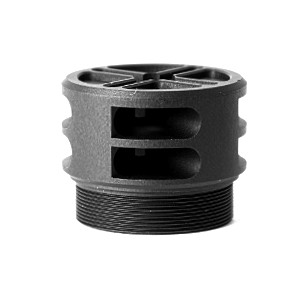
Cleaning and Maintaining a Rimfire Suppressor

Why Rimfire Ammo Is Harder on Suppressors

Centerfire ammunition uses jacketed projectiles and cleaner-burning powders. Most rimfire ammo uses lead bullets. The coating on those bullets, combined with powder residue, creates dense fouling inside the baffles.

Left too long, that fouling hardens and reduces the suppressor’s internal volume. Sound performance drops and disassembly becomes much harder.

Proper Cleaning Frequency and Technique

Liberty recommends cleaning the Regulator approximately every 500 rounds. That lines up with the maintenance schedule most semi-automatic rimfire platforms follow anyway.

Every Liberty rimfire suppressor ships with the tools needed for disassembly. The Regulator Ti adds no-tool takedown and Wavelok technology, which only allows one correct reassembly orientation, removing the guesswork.

Conclusion

The 22 rimfire suppressor is one of the smartest first purchases in the NFA world. Affordable ammo, compact design, real hearing protection, and no tax stamp fee make it the most accessible suppressed shooting experience available. Rimfire delivers the best value per dollar, for first-time buyers and seasoned collectors alike.

Liberty Suppressors builds every can in Trenton, Georgia, with US materials and proven engineering. The Regulator, Regulator Ti, and Vector cover the full range of rimfire calibers. Shop the Liberty rimfire lineup at libertycans.net or call (706) 661-6911 to find the right 22 rimfire suppressor for your setup.

Frequently Asked Questions (FAQs)

1. What makes a 22 rimfire suppressor different from a centerfire suppressor?

Rimfire suppressors are built for lower-pressure cartridges, making them lighter, more compact, and easier to maintain. Only use them with the calibers they are rated for.

2. Do I still need to do paperwork after the tax stamp fee was eliminated?

Yes. The ATF Form 4, background check, fingerprints, and photo are still required. Only the $200 fee was eliminated.

3. Can I use a 22 rimfire suppressor on multiple firearms?

Yes, as long as host firearms share the same thread pitch. Many rimfire suppressors also cover .22 WMR, .17 HMR, and .17 M2.

4. How often should I clean my rimfire suppressor?

Approximately every 500 rounds. Rimfire fouling builds quickly, and waiting too long makes disassembly significantly harder.

5. Is subsonic ammo required to run a rimfire suppressor?

Not required, but strongly recommended. Supersonic loads still produce a downrange crack that no suppressor can eliminate.

1 2 3 5 6
Cart Overview